Ultralight Sleeping Pad Options for Kayak Camping 2026

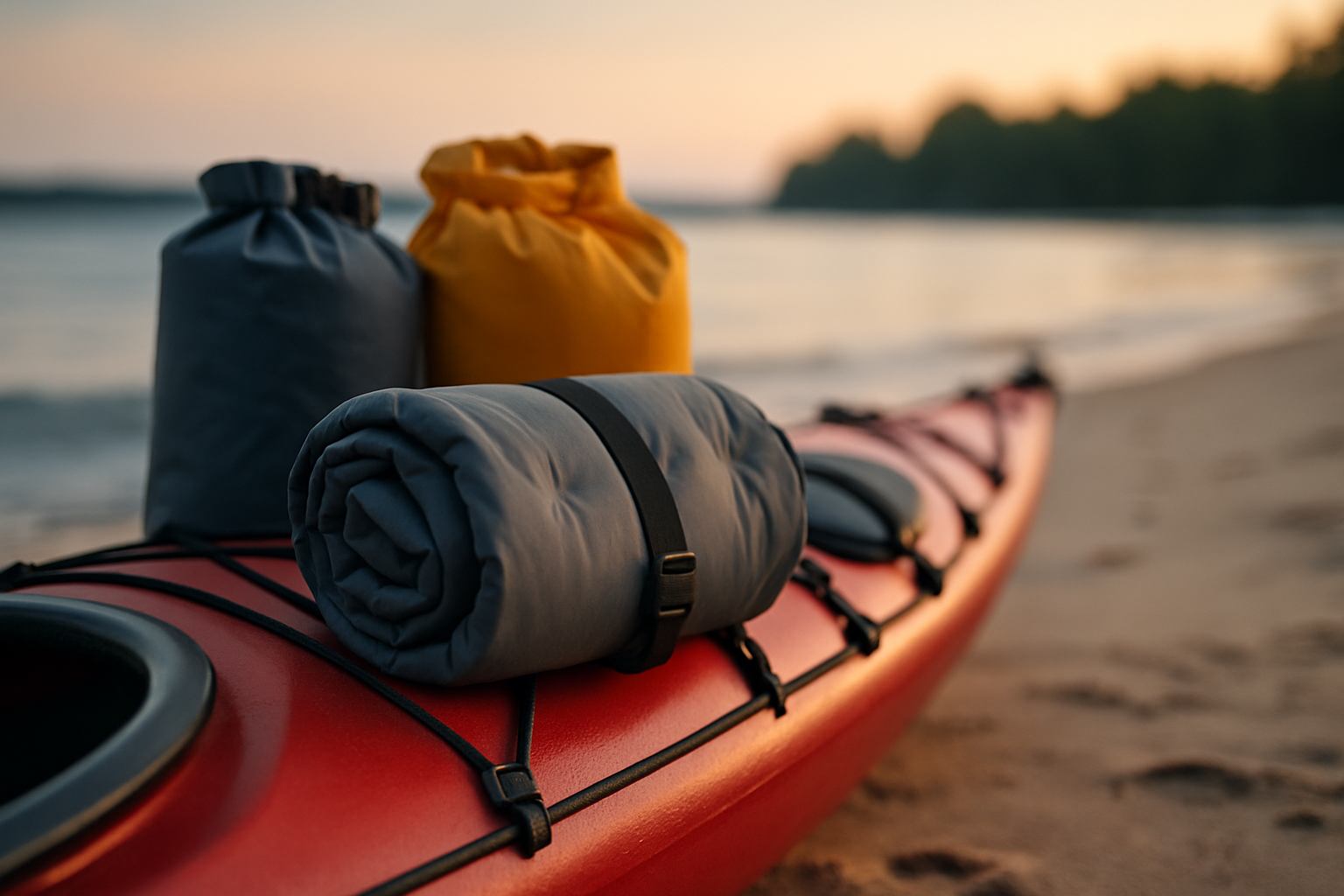
Photo by Lucas Canino on Unsplash
Ultralight Sleeping Pad Options for Kayak Camping
A sleeping pad on a kayak trip does three jobs: insulate you from cold ground (or cold water seeping through sand), cushion your spine on unforgiving gravel, and stay dry when the weather turns. On land, a pad is nice. On a sandbank at dusk with the river rising, it’s essential.
The catch: traditional backpacking pads were designed for pack weight. Kayak camping adds a fourth demand—packability. Your pad needs to compress small enough to fit alongside dry bags, not expand to the size of a rolled-up tent. This guide walks you through the real options, the tradeoffs, and how each type actually performs when you’re 20 miles from the takeout and the forecast just changed.
Why Sleeping Pad Choice Matters for Paddlers
A sleeping pad isn’t optional for overnight paddling trips. It does two things a sleeping bag alone cannot: it blocks the cold radiating up from the ground (or water-logged sand), and it distributes your weight so you don’t wake at 3 a.m. with a numb hip.
The insulation story. Ground cold is ruthless. Even on a summer trip, sand and gravel pull heat from your body faster than air does. A sleeping bag compresses under your weight, losing its insulating value where you need it most. A pad goes underneath and stays lofted, keeping the cold at bay. Most kayak campers underestimate this—they arrive at a gravel bar confident in their summer bag, then spend the night shivering because they forgot the pad. It happens every season.
The weight-versus-space tension. A backpacker can strap a 2-pound pad to the outside of their pack. You can’t. Your pad lives inside the hull, competing with food, water, shelter, and clothes for cubic inches. Every ounce matters, but so does the packed volume. A pad that weighs 8 ounces but expands to the size of a loaf of bread is useless if you’re paddling a 12-foot recreational kayak. This is where kayak camping pads diverge sharply from hiking pads.
Waterproofing and durability. River sand is sharp. Rocks have edges. A pad that tears on day two of a five-day trip becomes a problem fast. You also need to trust that your pad won’t absorb water if you capsize or if the sand beneath your tent soaks through during a rainy night. Closed-cell foam pads win here; inflatable pads demand careful site selection and good ground prep.
Inflatable Pads: The Ultralight Standard
Inflatable pads dominate kayak camping because they compress to the size of a water bottle and weigh almost nothing. The tradeoff is puncture risk and the need to carry a repair kit.
How Inflatables Work and Why Kayakers Use Them
An inflatable pad uses trapped air for insulation (air doesn’t conduct heat well) and cushioning. You pump it up with your mouth or a small sack pump, and the air column beneath you does the work. The pad’s insulation rating—called R-value—depends on the materials inside. Higher R-value means warmer, but also heavier and bulkier.
For kayakers, inflatables are the default because they compress to roughly the size of a nalgene bottle and weigh between 6 and 14 ounces depending on the model and insulation level. That’s 2-3 pounds lighter than a traditional foam pad, and the packed size is a fraction of the volume.
The catch: an inflatable pad is only as good as its seams and fabric. A sharp rock or a careless knife slip puts a hole in it. Most modern pads come with a repair kit, but on a multi-day trip with no resupply, a major leak becomes a real problem. Paddlers who use inflatables religiously learn to inspect their site, clear rocks, and pack the pad carefully.
R-Value and Temperature Rating
R-value measures how well a material resists heat flow. Higher R-value = warmer pad. For kayak camping, based on industry standards:
- R-value 1–2: summer trips only, warm water, temps above 50°F at night.
- R-value 3–4: shoulder season (spring/fall) and mild summer nights.
- R-value 5+: cold water, alpine trips, or year-round use.
Many paddlers combine a pad with a sleeping bag liner (which adds R-value without weight) to stretch the pad’s range. Best Ultralight Sleeping Bag Liners for Kayak Trips covers strategies for adding insulation with minimal weight—you’ll find comparisons of liner materials and how they layer with different pad types.
Closed-Cell Foam Pads: The Bombproof Alternative
Closed-cell foam is the opposite of inflatable: dense, tough, and impossible to puncture. It’s heavier and bulkier, but it never fails.
How Closed-Cell Foam Works
Closed-cell foam is a solid slab of plastic foam, roughly 3/8 inch thick. It doesn’t compress much, so it rolls or folds to a fixed size. It provides modest insulation (typically R-value 2–3 per manufacturer testing) and excellent cushioning. It won’t leak, won’t puncture, and won’t absorb water.
For kayak campers, the appeal is simple: zero failure points. You can’t forget to inflate it. You can’t develop a slow leak three days into a trip. You can drag it across sharp rocks without fear. On a remote river with no resupply, that reliability is worth the extra weight.
The tradeoff: a closed-cell pad weighs 10–16 ounces and packs to roughly the size of a rolled yoga mat. It doesn’t compress, so it takes up fixed volume in your hull no matter how tightly you pack. For paddlers with tight space or obsessive weight targets, that’s a dealbreaker. For those who value simplicity and durability, it’s the right choice.
Hybrid Approach: Foam + Inflatable
Some experienced kayak campers carry both—a thin closed-cell pad as a base layer (for durability and ground insulation) and a lighter inflatable on top (for comfort). This adds weight and volume, but it’s a legitimate strategy for extended trips or cold water. The foam stays on the ground; the inflatable goes on top and can be repaired or replaced if punctured. Ultralight Sleeping Pad Comparison for Kayak Camping breaks down this hybrid approach in detail—you’ll find weight comparisons, cost analysis, and real-world reports from paddlers who use both.
Inflatable Pad Types: Self-Inflating vs. Manual
Self-Inflating Pads
A self-inflating pad has a layer of open-cell foam inside a waterproof shell. When you open the valve, the foam expands and draws air in. You can top it up by blowing through the valve, but most of the inflation happens automatically.
Pros: easier to inflate (less lung work), stable R-value, forgiving if you under-inflate.
Cons: heavier and bulkier than manual inflatables, slower to pack up (you have to squeeze air out), and the foam can degrade over years.
Weight range: 12–20 ounces for a kayak-sized pad.
Manual (Air) Inflatables
A manual inflatable is just a thin shell with an air chamber inside. You pump it up with your lungs or a small hand pump. No foam, no automation—just you and the air.
Pros: lightest option (6–10 ounces), smallest packed size, fast to pack up.
Cons: requires lung power to inflate (tiring on day three), prone to under-inflation if you’re not careful, and no margin for error if the seal isn’t perfect.
Weight range: 6–10 ounces for a kayak-sized pad.
Most ultralight kayak campers choose manual inflatables because the weight and volume savings are real. You learn to inflate properly, and the trade-off becomes invisible.
Key Specs to Compare
When evaluating ultralight sleeping pads for kayak camping, focus on these numbers:
Packed Weight
This is the pad alone, no pump or repair kit. Most kayak-appropriate pads range from 6 to 16 ounces. Every ounce adds up over a multi-day trip, but don’t sacrifice durability or warmth just to shave 2 ounces.
Packed Volume
Measure in liters or cubic inches. A pad that weighs 8 ounces but packs to 3 liters is less useful than one that weighs 10 ounces and packs to 1.5 liters. Hull space is finite.
R-Value
Know the insulation rating and match it to your typical water temperature and season. Per manufacturer testing, R-value ratings are standardized across the industry. Don’t guess—look it up on the manufacturer spec sheet. A pad rated R-2 won’t keep you warm on a 40°F night, no matter how thick your sleeping bag is.
Length and Width
Most ultralight pads are designed for backpackers and run 20 inches wide and 48–72 inches long. For kayak camping, a 48-inch pad (shorter than a full backpacking pad) is often enough—you’re sleeping on sand or a small tent floor, not a full-length sleeping surface. Shorter pads weigh less and pack smaller. Check the dimensions before you buy.
Repair Kit Included
If you’re choosing an inflatable, make sure a patch kit comes with it. On a multi-day trip, you want patches, adhesive, and sandpaper all in one small pouch. The repair kits that ship with major brands (Thermarest, Sea to Summit, Exped) are reliable and sufficient for field repairs based on owner reports across kayaking forums and gear communities.
On-Water Testing: How Pads Actually Perform
Real-world performance differs from spec sheets. Here’s what anecdotal reports from experienced kayak campers suggest:
Inflatables on gravel bars. An inflatable pad works beautifully on sand and fine gravel, where the ground is smooth. On coarse gravel with sharp edges, even a durable inflatable can develop slow leaks if you’re not careful with site selection. Clearing rocks before you lay down the pad takes five minutes and prevents problems. Many paddlers place a closed-cell foam pad or a lightweight ground sheet beneath the inflatable as insurance.
Self-inflating pads in humid climates. Self-inflating pads perform well in most conditions, but in very wet environments (Pacific Northwest, tropical paddling, extended rain), the foam layer can trap moisture and develop mildew over time. Manual inflatables avoid this problem because they have no foam to absorb water.
Closed-cell foam on wet sand. A closed-cell foam pad is genuinely waterproof, but it floats on water rather than sinking. If your tent floor sits in a puddle, the pad will float slightly and feel unstable. It’s not a deal-breaker, but it’s worth knowing. Most paddlers manage this by site selection (high ground, well-drained sand) rather than pad choice.
Repair durability. Field patches on inflatable pads hold up well for the remainder of a trip, but they’re not permanent fixes. A pad patched on day two of a five-day trip will likely hold, but plan to replace or professionally repair it after the trip. Carry a backup plan (an extra pad or a closed-cell foam backup) on remote expeditions.
Seasonal Considerations
Summer Paddling (Warm Water, 60°F+)
Summer trips prioritize weight and packability over insulation. A lightweight inflatable pad with R-value 2–3 (per manufacturer testing) is ideal. You’re sleeping in a tent, the air is warm, and the ground is the main source of heat loss. An R-2 pad plus a lightweight summer sleeping bag is sufficient for most summer paddlers.
Spring and Fall (Cool Water, 45–60°F)
Shoulder seasons demand more insulation. Step up to an R-value 3–4 pad (based on industry standards), or combine an R-2 pad with a sleeping bag liner to add warmth without much weight. The difference between a comfortable night and a shivering night is often just one layer—and that layer can be your pad choice.
Winter Paddling (Cold Water, Below 45°F)
Cold-water paddling is rare but happens (winter desert paddling, early-season mountain rivers). An R-value 5+ pad (per manufacturer testing) is essential, paired with a serious sleeping bag. This is where closed-cell foam or a hybrid approach (foam + inflatable) makes sense. Weight becomes secondary to warmth. Best Ultralight Sleeping Bag for Cold Water Kayaking covers the full cold-weather sleep system—you’ll find detailed reviews of insulation materials, temperature ratings, and how to layer pads and bags for sub-freezing conditions.
Packing and Care
Inflation Technique
If you’re using a manual inflatable, learn to inflate efficiently. Most paddlers use a technique called “breath stacking”—take several shallow breaths, then exhale forcefully into the valve. It’s less tiring than continuous breathing and fills the pad faster. A small hand pump (2–3 ounces) eliminates the lung work entirely, but adds weight. Many kayak campers skip the pump and just accept the inflation effort.
Storage
Store your pad in a cool, dry place with the valve open. Storing it inflated for months can degrade the seams. Storing it sealed in a compression sack is fine for trips, but not for long-term storage. Per manufacturer guidance, keep pads away from direct sunlight and heat.
Repairs
Carry a patch kit on every trip. Most kits include sandpaper, adhesive patches, and instructions. If you find a leak (listen for a hiss or feel for escaping air), dry the area, sand it lightly, apply the patch, and let it cure for the time specified in the kit. In the field, a quick patch will last the rest of your trip. Plan a permanent repair at home.
Budget Tiers and Value
Budget-tier ultralight pads are lighter and cheaper but sacrifice some durability or R-value. Mid-tier pads balance weight, warmth, and durability—the sweet spot for most kayak campers. Premium-tier pads (+) add features like integrated pumps or advanced insulation, but the gains are incremental and the weight penalty is real.
For kayak camping specifically, a mid-tier inflatable pad offers the best value. You get proven durability, reasonable weight, and a warranty that matters. Budget-tier pads often fail on remote trips; premium pads add features you don’t need.
FAQ
Q: Can I use a regular backpacking pad on a kayak trip? A: Yes, but you’ll regret it. Most backpacking pads are 20 inches wide and 72 inches long—too bulky for a kayak hull. A kayak-specific pad (or a shorter backpacking pad) packs better and weighs less. If you already own a full-size pad, it works in a pinch, but you’ll sacrifice hull space and weight efficiency.
Q: How do I know if my pad is leaking? A: Inflate it fully and listen for a hiss. If you don’t hear anything, submerge it in water and look for bubbles. A slow leak may not be obvious until you’re lying on it and feel it deflating over the night. Check your pad before each trip.
Q: Should I use a ground sheet under my pad? A: Yes. A lightweight ground sheet (2–4 ounces) protects your pad from sharp rocks and extends its life. Many paddlers use a cut piece of closed-cell foam or a thin tarp. The small weight investment pays off in durability.
Q: What’s the Klymit Static V2, and how does it compare? A: The Klymit Static V2 is a budget-friendly manual inflatable with an R-value of 1.3, weighing 10.5 ounces. It’s designed for summer use and warm conditions. Compared to premium options like the Thermarest NeoAir XLite, it’s lighter on the wallet but offers less insulation and durability. It’s best for paddlers on tight budgets doing warm-weather trips, not for cold water or extended expeditions.