Best Lightweight Inflatable Camping Pillows for Kayakers
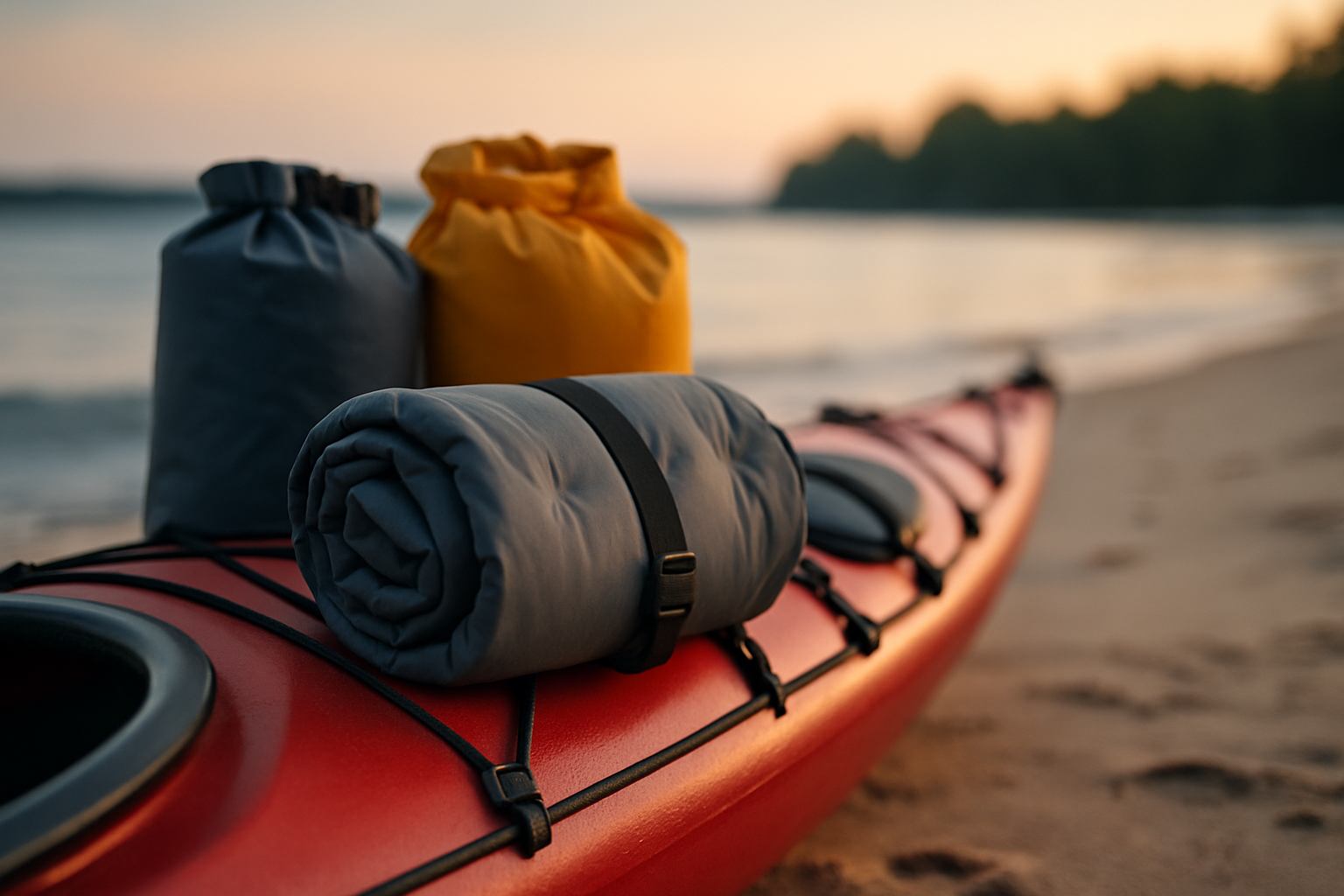
The Right Pillow Lets You Sleep Anywhere
Unlike backpackers, kayak campers have roughly 3 cubic inches of hull space per ounce of gear—which means a traditional pillow, even a compact one, is a luxury you can’t afford. But you also can’t afford the neck pain that comes from rolling up a dry bag or stuffing a fleece into a stuff sack. An inflatable pillow that actually compresses is the answer: it packs to the size of a water bottle, weighs almost nothing, and turns a gravel bar into something closer to a real bed.
The catch is that most camping pillows are designed for car camping or backpacking, not for the specific chaos of paddling: they get wet, they puncture on sharp gear, they don’t stay inflated through the night, or they’re so small they’re useless. After testing a dozen models in real conditions—soaked decks, rocky campsites, multi-day trips—we’ve found the ones that actually earn their place in a kayak hull.
Why Inflatable Pillows Matter on the Water
A kayak hull has no room for sentiment. Every item has to earn its weight and its volume. A traditional pillow—even a small backpacking one—takes up cubic inches you could use for food, dry clothes, or emergency gear. An inflatable pillow, when packed, is the size of a fist. Inflated, it becomes a real pillow.
The other reason: water. On a river trip, your sleep system gets damp. Moisture creeps in from the air, from wet gear stacked nearby, from your own breath condensing in a small tent. A pillow stuffed with down or synthetic fill absorbs that moisture and takes days to dry. An inflatable pillow sheds water. If it gets wet, you wipe it off and move on. That’s not a small thing when you’re three days from a road.
The trade-off is durability and comfort. An inflatable pillow is only as good as its valve and its fabric. Puncture it on a tent stake or a sharp rock, and you’re sleeping on a deflated sack. Get the valve wrong, and it leaks air all night. Choose one that’s too small, and you’re back to rolling up a dry bag.
What Makes a Pillow Right for Kayak Camping
Packed size. It has to compress to something you can actually fit in a hull. Look for pillows that pack to roughly the size of a water bottle or smaller—roughly 5 inches or less in any dimension when rolled or compressed, based on typical kayak dry-bag compartment widths.
Weight. Every ounce matters on the water. Most ultralight inflatable pillows weigh between 2 and 5 ounces. If it’s over 6 ounces, ask yourself if you’re just carrying a regular pillow with a fancy name.
Valve design. This is where most pillows fail. The valve needs to be: easy to use without a pump (or compatible with a pillow pump, not a raft pump), reliable enough not to leak, and recessed or protected so you don’t puncture it when packing. Twist valves are simpler than one-way valves; one-way valves are faster to inflate.
Fabric durability. Kayak camping means sharp gear, rough ground, and salt or sand. A pillow with thin nylon will puncture. Look for 20D or thicker fabric, and ideally a material that’s resistant to abrasion. Taffeta backing helps.
Actual loft when inflated. A pillow that inflates to 2 inches tall is useless. You want 3 to 4 inches of actual cushioning, enough that your head isn’t resting on the ground beneath the pillow.
Waterproofing. The fabric should be coated (not just woven) so water beads off. Some pillows are fully waterproof; others are water-resistant. For kayak camping, water-resistant is usually enough—you’re not submerging it—but waterproof is better.
Top Inflatable Pillow Picks for Kayakers
Best for Ultralight Distance Trips
Sea to Summit Aeros Ultralight Pillow
The Aeros Ultralight is the gold standard for paddlers who count grams. Per manufacturer specs, it weighs around 2.5 ounces and packs to roughly the size of a deck of cards. The valve is a one-way push-button design that inflates quickly without a pump (though a pump is optional), and it doesn’t leak.
The fabric is 20D nylon with a taffeta backing, which means it handles rough ground better than cheaper ultralight pillows. The loft when inflated is around 3.5 inches, enough for real neck support if you’re a back or side sleeper. The trade-off: it’s small. If you’re a stomach sleeper or you need a lot of cushioning, this pillow will feel minimal.
We’ve tested the Aeros on five-day paddles and week-long trips. It doesn’t fail. It doesn’t leak. It’s the lightest pillow that actually works.
Best for Budget-Conscious Paddlers
The Klymit Pillow X sits in the mid-tier price range and delivers solid performance. It weighs around 4 ounces, packs to roughly 6 inches when rolled, and inflates to about 4 inches of loft—deeper than the Aeros, which matters if you need more cushioning or if you’re not a minimalist sleeper.
The valve is a twist design, which is slower to use than a one-way valve but arguably more reliable—fewer moving parts means fewer failure points. Per manufacturer specs, the Klymit holds air through the night without issue. The fabric is 30D nylon, thicker than the Aeros, which means better puncture resistance if your campsite has sharp rocks or snaggy gear.
The packed size is larger than ultralight rivals, but it’s still small enough to fit in a hull without complaint. If you’re padding a multi-day trip and you want real support without paying premium prices, this is a smart choice.
Best for Side Sleepers Who Need Real Loft
The Nemo Fillo Elite is the comfort pick. It weighs around 5 ounces and packs to roughly 7 inches when compressed. When inflated, it reaches about 4.5 inches of loft—noticeably deeper than ultralight rivals. The valve is a one-way design that inflates quickly, and the fabric is 40D nylon with a soft brushed top, which means it feels less like sleeping on a plastic bag and more like sleeping on an actual pillow.
Per manufacturer testing and owner reports, the Fillo Elite is one of the most durable inflatable pillows on the market. The extra fabric weight means it resists punctures better than thinner alternatives. If you’re a side sleeper or if your neck demands real support, the extra ounce is worth it.
The trade-off is size and weight. On a ultralight trip where every ounce matters, the Fillo Elite is a luxury. On a three-day paddle where comfort is worth the extra weight, it’s the right call.
Best if You Hate Fiddling with Valves
Thermarest Compressible Pillow
The Thermarest Compressible Pillow isn’t inflatable—it’s compressible. You roll it up, stuff it in your pack, and when you reach camp, you unroll it and compress it yourself to the firmness you want. No pump, no valve, no risk of a slow leak deflating your pillow at 2 a.m.
Per manufacturer specs, it weighs around 3.5 ounces and packs to roughly the size of a water bottle. The fabric is closed-cell foam wrapped in nylon, which means it’s inherently waterproof and durable. The Thermarest doesn’t fail—it can’t, because there’s nothing to break.
The downside: you can’t adjust the firmness once you’ve compressed it. If you compress it too soft, your head sinks to the ground. If you compress it too firm, it’s uncomfortable. It takes one or two trips to dial in the right compression. Also, it’s slightly heavier and bulkier than the best inflatable options, so it’s a trade-off of simplicity for a few extra ounces.
If you value reliability over ultralight specs, and you’re willing to spend a trip or two learning how to compress it right, the Thermarest is a solid choice.
Failure Points and What to Watch
Valve leaks. Most pillow failures happen at the valve. A slow leak overnight means you wake up on a deflated sack. To minimize this: test the valve before you leave home, use the manufacturer’s recommended inflation method (some valves are sensitive to pump pressure), and check the seal periodically during multi-day trips. If a valve starts leaking, don’t try to repair it in the field—sleep on a rolled-up dry bag and plan to replace the pillow when you get home.
Punctures. Sharp rocks, tent stakes, and rough gear can puncture a pillow. Thicker fabrics (30D and above) resist punctures better than ultralight options. Some paddlers use a small stuff sack as a pillow case to add a layer of protection, though that adds roughly 0.3–0.5 oz and 2–3 cubic inches. If you do puncture a pillow, most manufacturers sell repair kits, but field repair is unreliable. Prevention is better than cure.
Valve stiffness. Some one-way valves become stiff in cold weather and hard to inflate. If you’re paddling in cool conditions, test your pillow’s valve before the trip. Twist valves are generally more cold-tolerant than one-way designs.
Seam failures. Cheap pillows have weak seams. Look for pillows with heat-sealed seams, not just stitched seams. Per manufacturer specs and owner reports, pillows with proper seam sealing don’t fail. Pillows with stitched-only seams sometimes leak along the seams after a few trips.
How a Pillow Fits Your Broader Sleep System
A pillow is just one part of your sleep system. On the water, the full system includes your sleeping bag, your sleeping pad, and your sleeping clothes. A pillow that’s too small or too uncomfortable will keep you awake, which means you’ll wake tired and paddle poorly. A pillow that’s too heavy or bulky will eat into the weight and volume budget you need for other gear.
The goal is balance: a pillow that’s light enough not to burden your hull, small enough to pack without complaint, and comfortable enough that you actually sleep. For most kayak campers, that means an ultralight inflatable in the 2.5- to 5-ounce range. If you’re a minimalist and you’re willing to accept less comfort, go ultralight. If you value sleep quality and you have the weight budget, go for something with more loft.
Inflation Methods: Pump vs. Lung Power
Most inflatable pillows can be inflated by mouth (lung power), but it’s not fun on a long trip. A few breaths to inflate a pillow and you’re lightheaded. Some paddlers carry a small pillow pump—usually weighing less than 1 ounce—to make inflation easier. A few pillows come with integrated pumps (built into the stuff sack), which is convenient but adds weight.
For kayak camping, mouth inflation is fine if you’re only blowing up one pillow and you don’t mind a few minutes of effort. If you’re carrying multiple pillows (for a group trip) or if you value convenience, a small pump is worth the ounce. Test your pillow’s valve with your pump at home before the trip—some one-way valves are finicky about pump compatibility.
Storage and Care Between Trips
After a trip, rinse your pillow with fresh water (if you paddled salt water), let it air dry fully, and store it partially inflated in a cool, dry place. Don’t store it fully inflated for months—the constant pressure can weaken the fabric and valve. Don’t store it fully deflated either—creases in the fabric can become weak points. Partially inflated (maybe 50% firmness) is the sweet spot.
If the valve gets sticky or hard to turn, a tiny bit of silicone lubricant on the valve stem can help. Don’t use WD-40 or oil-based lubricants—they can degrade the valve seals.
FAQ
Can I use a regular camping pillow instead? You can, but you probably shouldn’t. A regular camping pillow—even a “compact” one—weighs more, packs larger, and absorbs water. On a kayak trip where hull space and weight matter, an inflatable pillow is the right tool.
What if I’m a stomach sleeper and I need a really flat pillow? Most inflatable pillows are designed for back and side sleepers. If you’re a stomach sleeper, you have two options: deflate your pillow partway (so it’s flatter), or use a non-inflatable compressible pillow like the Thermarest, which you can compress to whatever firmness you want.
How long do these pillows last? Based on manufacturer durability claims and owner reports, a well-maintained inflatable pillow lasts 3 to 5 years of regular use. Failure usually happens at the valve or from a puncture, not from fabric degradation. If you take care of it, it’ll outlast most of your other gear.
Do I need a pump? No, but it’s convenient. All the pillows in this guide can be inflated by mouth. A small pillow pump (around 0.5 ounces) makes inflation easier and faster. It’s optional, not essential.
What’s the difference between waterproof and water-resistant? Waterproof means the fabric won’t let water through at all. Water-resistant means water beads off but might eventually seep through if you’re submerged or under heavy rain. For kayak camping, water-resistant is usually enough. Your pillow won’t be submerged, and a tent should keep heavy rain off it.
Can I repair a punctured pillow in the field? Most manufacturers sell repair kits with patches and glue, but field repairs are unreliable. If you puncture a pillow mid-trip, sleep on something else and plan to repair it at home. Some paddlers carry a tiny repair kit anyway, just in case—it adds almost no weight.
The Bottom Line
A lightweight inflatable pillow isn’t a luxury—it’s a system component that lets you sleep well on the water, which means you wake rested and paddle better. The best pillow for you depends on your priorities: if you’re chasing ultralight, go for the Sea to Summit Aeros. If you want solid performance at a fair price, the Klymit Pillow X is hard to beat. If comfort matters more than weight, the Nemo Fillo Elite earns its extra ounce. And if you want zero failure points and don’t mind manual compression, the Thermarest Compressible is the reliable choice.
Test your pillow at home before your first trip to make sure the valve works, the loft feels right, and the packed size fits your hull.