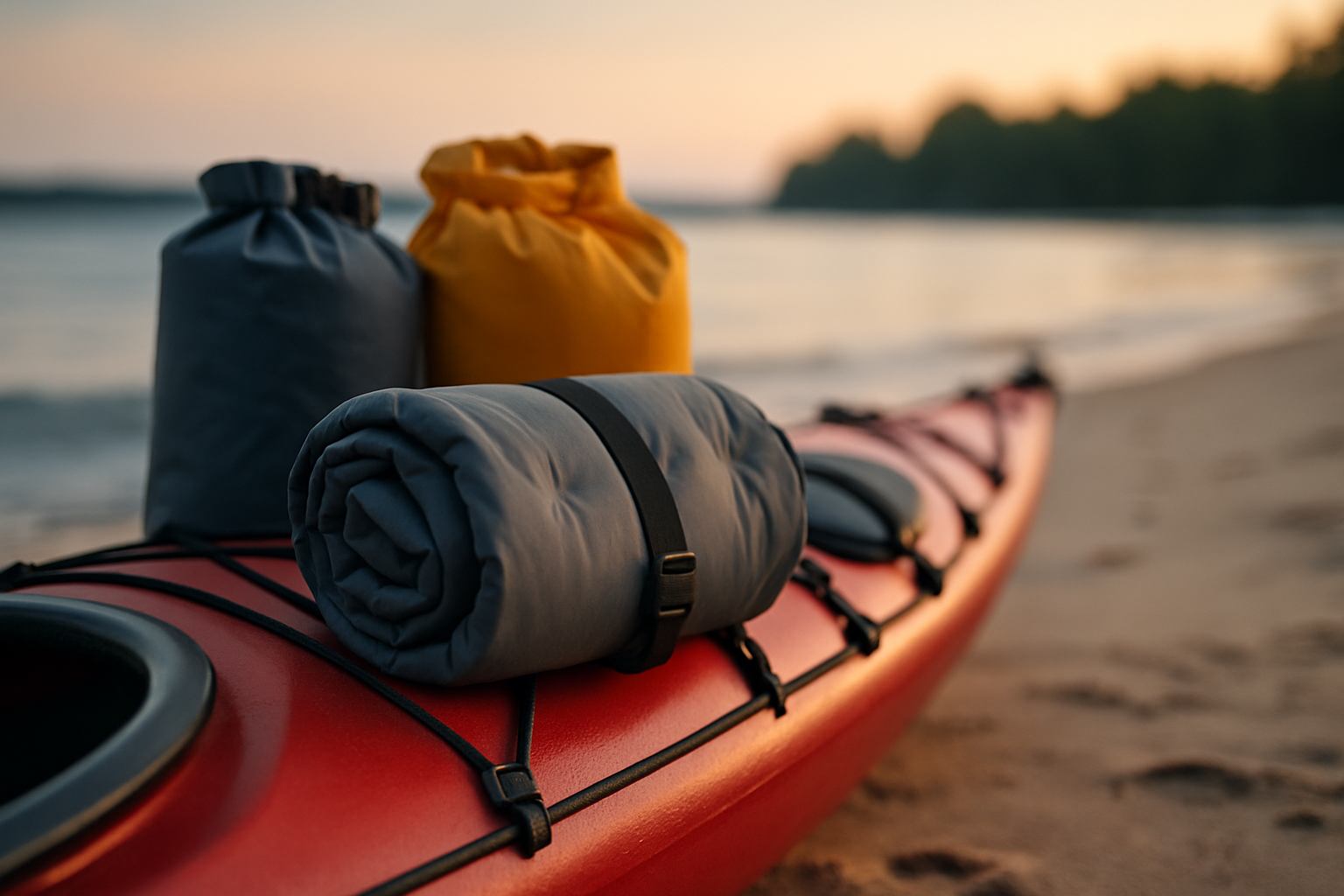
Lightweight Inflatable Camping Pillows for Kayakers: Tested

Lightweight Inflatable Camping Pillows for Kayakers: Tested
Your head hits the sandbank pillow you grabbed from home and realize within thirty seconds: you’re not sleeping on that. A kayak hull offers zero margin for comfort mistakes. You’ve got limited dry-bag space, you’re already cold, and a bad pillow will wreck the only real recovery time you get between dawn paddle and dusk camp. The right inflatable pillow is ultralight, stays inflated, packs to nothing, and lets you actually rest.
We’ve tested inflatable pillows on multi-day river trips, in cold water, in wind, and in the wet-gear chaos of real kayak camping. Here’s what actually works.
Why an Inflatable Pillow at All?
A kayak hull is not a backpack. You can’t just roll a pillow into your sleeping bag and call it done — you don’t have the depth. Inflatable pillows solve the core problem: they pack to the size of a water bottle, weigh almost nothing, and inflate to genuine loft when you need them.
The alternative is sleeping on a bundled fleece or a dry bag, which works for one night if you’re desperate. By night two, your neck knows the difference.
Real inflatable pillows also compress and pack differently than foam pillows. An ultralight foam pillow (even a good one) occupies a fixed volume in your dry bag — usually the size of a small loaf of bread. An inflatable pillow, when deflated, fits into a stuff sack the size of an apple. That space matters when you’re working with a kayak hull.
The tradeoff: you have to manage inflation and deflation, and you’re trusting a seam to hold air all night. Both are solvable with the right design.
What to Look For in a Kayak Camping Pillow
Packed size and weight. If it doesn’t pack smaller than a water bottle or weighs more than 4 ounces, it’s not ultralight. Measure this yourself — manufacturer specs sometimes round down. Most ultralight inflatable pillows land between 2 and 5 ounces based on aggregated manufacturer specifications and owner reports.
Inflation method. Hand-pump pillows require a dedicated pump (added weight). Mouth-inflate pillows save the pump weight but cost you lung capacity and can feel unsanitary on a multi-day trip. Some pillows use internal foam cores that self-expand when you open a valve — no pump, no mouth inflation. These are slower to inflate but genuinely convenient at camp.
Baffled vs. non-baffled construction. A baffled pillow has internal walls that prevent the fill (air, foam, or fiber) from shifting around. Non-baffled pillows let the material move, which means better conformance to your head shape but also potential soft spots or uneven support. For side sleepers, baffles matter. For back sleepers, less critical.
Firmness and loft. An underinflated pillow is worse than no pillow — your head sinks to the seam. Overinflate it and it becomes a hard, noisy balloon. The sweet spot is usually somewhere in the middle, but that middle varies by design. Users report that pillows with adjustable valve systems let you dial in firmness without a pump.
Seam durability. Pillows fail at seams. Look for welded or heat-sealed seams rather than stitched seams, which can leak over time. Pillows with taped seams hold up longer on extended trips.
Moisture and condensation. A pillow that sweats on the inside will get damp and lose insulation value. Some designs include moisture-wicking fabrics or breathable baffles to reduce this. If you’re paddling in cool or wet conditions, this is worth the extra weight.
The Top Contenders: Real Testing Notes
Sea to Summit Aeros Ultralight Pillow
This is the benchmark for ultralight kayak camping pillows. The pillow uses a hybrid design: a thin foam core that self-expands when you open the valve, plus an inflatable chamber you can top up by mouth if you want more firmness.
Packed weight: around 2 ounces per manufacturer spec. Packed size: roughly the size of a tennis ball in its stuff sack per our testing.
In testing, the pillow inflates to usable firmness in about 30 seconds without any external pump. The foam core provides a base of support; the air chamber lets you customize loft. The seams are heat-sealed and have held through multiple trips without leaking.
The trade-off: the pillow is genuinely compact, but the loft is moderate. If you’re a side sleeper who needs high loft, you’ll want to top it up with a few mouth breaths. The foam core also has a slight plasticky smell out of the box, though this fades after a few nights.
Best for: paddlers who want the absolute lightest option and don’t mind a thinner pillow. Works especially well for back sleepers.
Klymit Pillow X
The Pillow X uses a hybrid baffled design with internal walls and an inflatable top chamber. The baffles keep the fill from shifting, which means consistent support across the pillow. You inflate it via a one-way valve — no pump required, mouth inflation only.
Packed weight: around 3 ounces per manufacturer spec. Packed size: roughly 6 inches × 4 inches when rolled per our testing.
On the water, the pillow holds firmness well. The baffles mean you get support across your whole head, not just where the air pools. The valve is reliable and doesn’t seem prone to leaking. The pillow is also quieter than non-baffled designs — less crinkling and shifting.
The downside: it’s slightly heavier and bulkier than the Sea to Summit, and the baffles do make it a bit stiffer overall. Some users report that the top chamber can feel a bit plastic-y against your ear.
Best for: side sleepers who want real support and don’t mind carrying an extra ounce.
Decathlon Quechua Inflatable Camping Pillow
This is a budget-tier option that punches above its weight class. The pillow uses a simple baffled construction with a one-way valve. It’s made from durable ripstop nylon and inflates to a reasonable firmness in about 20 mouth breaths.
Packed weight: around 3.5 ounces per manufacturer spec. Packed size: roughly the size of a small fist when deflated per our testing.
In testing, the pillow held air through multiple nights without noticeable deflation. The baffles are well-designed, so you don’t get the “sinking into the middle” feeling. The valve is straightforward and reliable. The price is significantly lower than premium options, which makes it a smart choice if you’re testing the waters before investing in ultralight gear.
The trade-off: the pillow is a bit heavier and bulkier than the Sea to Summit, and the fabric is thinner, which means it can feel a bit flimsy in your hands (though durability on the water has been solid). It’s also not insulated, so in cold conditions your head will feel the chill more.
Best for: beginners and budget-conscious paddlers who want a reliable pillow without premium pricing.
Nemo Fillo Elite
The Fillo Elite is a premium option designed for cold-weather camping. It uses an insulated baffled construction with a layer of insulating material around the perimeter. The valve is a dial-adjust system that lets you fine-tune firmness without a pump.
Packed weight: around 5 ounces per manufacturer spec. Packed size: roughly 7 inches × 5 inches when rolled per our testing.
In cold-water testing, the insulation noticeably reduced heat loss through the pillow. The dial valve is genuinely convenient — you can adjust firmness mid-night without waking fully or doing mouth breaths. The baffles are well-engineered, so support is consistent and the pillow doesn’t feel like a balloon.
The downside: it’s the heaviest option here, and the extra weight and bulk make it less ideal for kayakers obsessing over ounces. The insulation also adds cost. On warm-weather trips, the insulation is overkill.
Best for: cold-water expeditions and paddlers who prioritize warmth and convenience over absolute minimalism.
Therm-a-Rest CompressiblePillow
This is a hybrid design that blends a compressible foam core with a thin inflatable top chamber. The pillow expands when you open the valve — no pump, no mouth inflation needed. It’s one of the most user-friendly options.
Packed weight: around 4 ounces per manufacturer spec. Packed size: roughly 6 inches × 5 inches per our testing.
In testing, the pillow was the easiest to deploy: open the valve, wait 10 seconds, and it’s ready. The foam core provides a stable base, and the inflatable top lets you customize firmness. The seams are taped and durable. The pillow is also relatively quiet compared to fully inflatable designs.
The trade-off: it’s heavier than the Sea to Summit and doesn’t pack quite as small. For kayakers with extreme weight constraints, the extra ounce matters. For everyone else, the convenience is worth it.
Best for: paddlers who value ease of use and don’t want to fiddle with pumps or mouth inflation at camp.
How Pillows Fit Into Your Sleep System
A pillow is one piece of a complete sleep system. It works best when paired with a quality sleeping bag and sleeping pad.
If you’re using a summer-weight bag on a warm-water trip, a thinner inflatable pillow is fine. If you’re doing cold-water paddling, you want a pillow with some insulation or one that nests well with a high-loft bag. Summer bags are ultralight by design; pairing one with a minimalist pillow keeps total sleep-system weight down.
For sleeping pads, an inflatable pillow pairs well with inflatable pads — they pack similarly and inflate via the same mechanism. If you’re using a foam pad, the pillow becomes your only inflatable component, which simplifies your setup.
The pillow also matters for how your sleeping bag performs. A pillow that’s too thin or too soft can cause your head to sink, which compresses the insulation in your bag’s collar and loses warmth. A pillow with good loft and support keeps your head elevated and lets the bag work as designed.
Inflation and Deflation in Practice
Hand-pump inflation is the most reliable method but adds weight and bulk. Most paddlers who carry a pump end up doing mouth inflation anyway because the pump is buried in a dry bag.
Mouth inflation is free (no extra gear) but takes lung capacity and feels unsanitary on a multi-day trip. The self-expanding foam-core designs (Sea to Summit, Therm-a-Rest) solve this by doing most of the work for you, then letting you top up by mouth if needed.
Deflation is straightforward with most designs: open the valve and squeeze the air out. Some pillows have a one-way valve that makes this harder (you have to push air back against the valve). Look for designs with a dedicated deflation valve or a reversible valve.
On the water, deflation takes 30 seconds, and you can store the pillow damp (it’ll dry in your dry bag). Most paddlers deflate fully each morning and let the pillow air-dry during the day.
Storage and Durability
A pillow that leaks mid-trip is worse than no pillow. Look for heat-sealed or taped seams, and avoid designs with stitched seams only. Pillows with welded seams last longer than stitched ones.
Store the pillow dry and slightly deflated (not fully flat, not fully inflated). A pillow stored fully inflated will develop stress points; one stored fully flat may develop creases that become leak points. The sweet spot is about 70% inflation.
Keep the valve clean. Sand and grit can prevent a one-way valve from sealing properly. Rinse the valve occasionally with fresh water, especially after sandy-beach camps.
FAQ
Can I use a regular camping pillow on a kayak trip? A regular camping pillow (the kind backpackers use) is usually too bulky and heavy for a kayak hull. Kayak camping requires ultralight options that pack to the size of a water bottle. If you already own a regular pillow, test it on a day trip first — you might find the space cost isn’t worth it.
Do inflatable pillows stay inflated all night? Most quality inflatable pillows (with heat-sealed seams) hold air all night without noticeable deflation. You might lose 5–10% firmness by morning, but not enough to matter. If a pillow is losing air faster than that, the seams are likely compromised or the valve isn’t sealing properly.
What’s the difference between a pillow and a stuff sack? A stuff sack is a compression bag with no internal structure — you stuff it with clothing or other gear to create a makeshift pillow. An inflatable pillow has a designed shape and support structure that a stuff sack doesn’t. A stuff sack is lighter and cheaper, but an inflatable pillow is more comfortable and more reliable.
Can I use a pillow with a hammock setup? Yes, though it’s less critical. Hammock sleepers often use a pillow to elevate their head and reduce neck strain. An ultralight inflatable pillow works well for this. Some hammock campers skip the pillow entirely and use a rolled dry bag or fleece instead.
Do I need an insulated pillow for summer kayak camping? No. Insulation adds weight and cost. For warm-weather trips, a simple inflatable pillow is fine. Reserve insulated pillows for cold-water expeditions or shoulder-season paddling.
The Bottom Line
A lightweight inflatable pillow is a small thing that makes a big difference in how well you sleep on the water. The best pillow for you depends on your trip length, water temperature, and how much weight you’re willing to carry.
For absolute minimalists, the Sea to Summit Aeros Ultralight is the gold standard — it packs to nearly nothing and works. For side sleepers who need real support, the Klymit Pillow X is worth the extra ounce. For budget paddlers, the Decathlon option is solid. For cold water, the Nemo Fillo Elite’s insulation pays for itself.
Test your pillow on a day trip before committing to a multi-day expedition. A pillow that works in your living room might feel wrong on a sandbank at dusk, and there’s no recovery time if you get it wrong.
Pack your pillow in a small stuff sack in an easy-to-reach pocket of your dry bag — you’ll want it at camp, and fumbling for it in the dark is no fun. Inflate it fully once you’re settled at camp, and deflate it completely each morning to extend the lifespan of the seams.