Ultralight Sleeping Pad Comparison for Kayak Camping

Photo by Lucas Canino on Unsplash
Ultralight Sleeping Pad Comparison for Kayak Camping
A sleeping pad on a kayak camping trip is not a luxury—it’s the barrier between you and a night of shivering on cold sand or a damp gravel bar that slowly steals your warmth. But unlike backpacking, where you can stuff a full-size pad into a pack, kayak camping demands something different: a pad that compresses tight enough to fit a hull, handles moisture without panic, and weighs almost nothing so you can carry other essentials your paddle-powered life actually needs.
This guide compares the main ultralight sleeping pad types—inflatable air pads, closed-cell foam, and hybrid options—to help you pick the right one for your water and your boat.
How to Choose the Right Pad: Decision Logic
Start with your water temperature, then work backward to R-value, pad type, and weight budget.
Step 1: Identify your water temperature. Check the average water temperature for your paddling season and location. Spring rivers run 40–50°F; summer lakes hit 60–70°F; fall transitions back down.
Step 2: Determine the R-value you need. Use the table below to match water temperature to minimum R-value. Your sleeping bag’s temperature rating also matters—a bag rated for 20°F paired with an R-2 pad handles colder water than a 30°F bag with the same pad.
Step 3: Choose your pad type. Air pads offer the best weight-to-insulation ratio; foam pads offer durability and waterproofing; hybrids split the difference.
Step 4: Check packability. Measure your kayak’s hatch openings and dry bag dimensions. Typical sea kayak day hatches are 6–8 inches in diameter; touring kayak main hatches are 10–12 inches. Confirm your pad choice fits.
Step 5: Set your weight budget. Most ultralight kayak campers aim for 10–14 ounces. If you’re doing multi-week expeditions or cold-water trips, you may accept 16–20 ounces for better insulation.
Why Sleeping Pad Choice Matters on Water
On land, a sleeping pad is about comfort and insulation. On a kayak trip, it becomes a system problem.
Hull space is finite. A 17-foot kayak with gear loaded for three nights has maybe 300 liters to work with. A bulky pad eats into dry bag real estate, forces you to leave behind a stove, a headlamp, or a change of clothes. Ultralight paddlers often carry pads that compress to the size of a water bottle.
Moisture is everywhere. River spray, morning dew, and the fact that you’re sleeping on damp sand or gravel mean your pad will get wet. Some pads absorb water and become heavy and slow to dry. Others shed it completely. That difference matters when you’re three days from a road and your pad is your only insulation.
Insulation keeps you alive. Cold water drains heat faster than cold air. A sleeping pad with poor R-value (thermal resistance) won’t save you on a spring or fall paddle, even if your sleeping bag is rated for the temperature. You need a pad that actually insulates, not just cushions.
Weight compounds. Every ounce in your kit affects how the kayak sits in the water, how much effort paddling takes, and whether you have energy left to set up camp at dusk. A pad that weighs 8 ounces instead of 16 might not sound like much—until you’re paddling the 12th mile of the day.
Inflatable Air Pads: The Ultralight Standard
Air pads dominate ultralight kayak camping because they compress smaller than any other option and offer the best insulation-to-weight ratio.
How they work: A thin nylon or polyester shell holds a layer of air. Some use a single air chamber; others use baffles to prevent heat loss. The air itself doesn’t insulate—it’s the dead air trapped in the baffles and the reflective layer underneath that slows heat loss to the ground.
Pros: - Compress to fist-size or smaller; fit easily in a dry bag or lashed to the outside of a hull. - Light weight: most ultralight models weigh 8–14 ounces. - Good insulation for their size, especially models with reflective layers. - Relatively durable if you avoid sharp gravel and respect the seams.
Cons: - Require an air pump (hand pump, foot pump, or breath inflation—all add weight or effort). - Can fail mid-trip if punctured; repair kits add bulk. - Perform poorly on very cold nights unless paired with a high R-value model. - Sweat and condensation can pool underneath if you’re not careful with ventilation.
Best for: paddlers on multi-day trips where every ounce and every liter of hull space counts. If you have the discipline to avoid sharp edges and the skill to repair a leak with a patch kit, air pads are the industry standard for a reason.
High-End Ultralight Air Pads
Models like Thermarest NeoAir XLite (10 oz, ) and Exped SynMat UL M (12 oz, ) offer R-values in the 4–5 range (meaning they insulate as well as a sleeping bag rated for 20°F), weigh under 12 ounces, and compress to the size of a large water bottle. Per owner reports on r/Ultralight and kayaking subreddits, these pads survive multi-week trips and handle damp conditions well because their fabric sheds water rather than absorbing it.
The trade-off: they cost more than budget air pads, and their thin shells require more care. Sharp gravel can puncture them. Inflate them too hard and they’re uncomfortable; underinflate and they lose insulation. They demand attention.
Budget-Tier Inflatable Pads
Cheaper air pads (often found at big-box outdoor retailers) weigh 16–20 ounces, compress less efficiently, and offer lower R-values (typically 1.5–2.5). They’re fine for summer trips on warm water where insulation is less critical, but they eat more hull space and offer less thermal protection if temperatures drop.
Closed-Cell Foam Pads: The Waterproof Alternative
Foam pads are solid slabs of closed-cell foam (usually EVA or XPE foam) that you roll up or fold. No air, no pump, no puncture risk.
How they work: The foam itself is the insulation. Millions of tiny closed cells trap air. Water can’t penetrate the cells because they’re sealed—the pad sheds moisture rather than absorbing it.
Pros: - Completely waterproof; no fear of getting wet. - No pump needed; inflate by unrolling. - Nearly indestructible; hard to puncture or damage. - Lower cost than equivalent air pads. - No repair kit needed.
Cons: - Heavier and bulkier than air pads of equivalent insulation value. A standard foam pad weighs 16–24 ounces and doesn’t compress much. - Lower R-value per ounce; you need more thickness to match an air pad’s warmth. - Less comfortable; foam is firmer and less forgiving than air. - Doesn’t conform to your body as well, creating cold spots.
Best for: paddlers on short trips (1–2 nights) where comfort and simplicity matter more than saving ounces, or those who prioritize durability and waterproofing over ultralight weight.
The Hybrid Option: Folding Foam Pads
Some manufacturers offer foam pads that fold accordion-style into a compact bundle. Models like 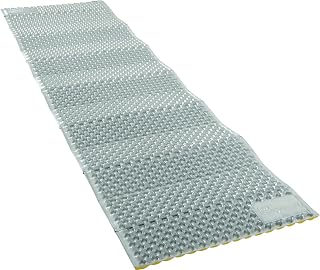
Per long-running threads on r/Ultralight (e.g., the weekly gear discussion megathreads), these pads are popular with minimalists who want the reliability of foam without carrying a full-size slab. They work well under a sleeping bag rated for colder temperatures because the foam’s R-value stacks with the bag’s insulation.
Hybrid Pads: Air + Foam Combination
Some newer designs combine an air chamber with a foam base or use air baffles embedded in foam. Examples include Exped SynMat UL (11 oz, ) and Klymit Static V2 (16 oz, ).
Pros: - Offer better insulation than pure air pads of similar weight. - More durable than single-layer air pads because the foam base adds puncture resistance. - Perform better in very cold conditions.
Cons: - Slightly heavier and bulkier than equivalent air pads. - More complex; more things to go wrong. - Cost more than pure air or pure foam options.
Best for: paddlers who want the packability of air pads but need the insulation of foam, or those who camp in variable temperatures (spring through fall) and want a single pad that handles all seasons.
Comparing Insulation: R-Value Matters on Water
R-value measures thermal resistance. Higher R-value means better insulation. On the ground, you lose heat through conduction (the pad is your only barrier between you and cold earth). On water trips, you’re also losing heat through convection (cold air moving across your body) and radiation, so your sleeping bag and pad work together.
General guidance (per ISO 23537 sleeping bag rating system and REI/manufacturer consensus): - R-value 1–2: Summer only, warm water, temperatures above 50°F. - R-value 2–3: Spring and fall, moderate water, temperatures 40–60°F. Most ultralight pads fall here. - R-value 4+: Cold seasons, cold water, temperatures below 40°F. Heavier or thicker pads needed.
Per manufacturer spec sheets, Thermarest NeoAir XLite achieves R-5.7, making it suitable for three-season use even on cold rivers. Exped SynMat UL M offers R-4.8.
Packability: How Pads Fit Your Hull
A kayak’s storage is measured in liters, but what matters is shape. A dry bag that’s 20 liters can fit almost anywhere; a sleeping pad that’s 24 inches long and 8 inches in diameter might not fit through a hatch.
Air pads compress to roughly 8–10 inches in diameter and 12–16 inches long when rolled tightly. Most fit in a medium dry bag or can be lashed to the outside of the kayak under shock cord.
Foam pads fold accordion-style or roll. A Z-Lite Sol folds to about 20 x 7 x 3 inches—flatter and wider than an air pad, but easier to lash to the deck.
Hybrid pads fall in between; they compress better than foam but not as tight as pure air pads.
Measure your storage before buying. Typical sea kayak day hatches are 6–8 inches in diameter; touring kayak main hatches are 10–12 inches. Test fit your pad choice in your dry bags or against your hatch opening. Many paddlers lash pads to the outside of the hull under bungee cord, accepting a small weight penalty for guaranteed packability. Per owner reports on r/kayakfishing and paddling forums, this is the most reliable approach for pads longer than 16 inches.
Weight Comparison: The Numbers That Matter
Here’s where ultralight camping gets obsessive. A few ounces across your whole kit add up to pounds of effort over a multi-day paddle.
Ultralight air pads: 8–14 ounces (most popular models cluster around 10–12 ounces).
Budget air pads: 16–20 ounces.
Folding foam pads: 12–16 ounces.
Full-size foam pads: 18–28 ounces.
Per aggregated Amazon owner reviews and paddling forums, most kayak campers choose pads in the 10–14 ounce range as a sweet spot: light enough to justify the cost and care required, but not so minimal that you’re sacrificing comfort or insulation.
Durability and Failure Modes
On water, pads fail in specific ways.
Air pads can puncture on sharp gravel, seams can separate (especially at the seams where the valve connects), and valves can leak. Per teardown reviews and owner reports on r/Ultralight, higher-end models like Thermarest NeoAir XLite and Exped SynMat UL M use reinforced seams and better valve designs and rarely fail within the first three years of regular use. Budget air pads from generic retailers sometimes fail within a year if used frequently. Repair kits (patches and glue) add about 0.5 ounces and can fix most punctures in the field, but not all.
Foam pads are nearly indestructible. The main failure mode is compression—after years of use, the foam loses some insulation value. Per long-running owner threads on r/CampingGear, a foam pad used 20–30 nights per year lasts 5–7 years before noticeable degradation. They don’t fail catastrophically; they just get less warm.
Hybrid pads can fail like air pads (puncture) or like foam (compression), depending on design. Models with foam bases are more durable than pure air pads.
Moisture Management: The Water Consideration
This is where kayak camping differs from backpacking. Your pad will get damp.
Air pads shed water from the outside; condensation can form underneath if you’re not careful. Best practice: air out your pad each morning and ensure your tent has ventilation so moisture doesn’t pool. Per owner reports, pads with nylon shells shed water better than pads with polyester shells.
Foam pads are completely waterproof; water can’t penetrate the foam. If your tent leaks or dew soaks the bottom, the foam doesn’t absorb it. This is a major advantage on multi-day trips where drying gear is difficult.
Hybrid pads vary; check the shell material. If it has a foam base, the pad is waterproof from below.
Seasonal Considerations
Summer (warm water, 60°F+): Any ultralight pad works. Weight and packability matter more than insulation. Foam pads are fine; budget air pads are acceptable.
Spring and fall (cool water, 40–60°F): You need R-value 2.5+. High-end air pads or hybrid pads are ideal. Pair with a sleeping bag rated for at least 20°F.
Winter (cold water, below 40°F): R-value 4+ is essential. Thicker foam pads or premium air pads. Many paddlers double-pad (use two thin pads stacked) to reach needed insulation. This adds weight but is often cheaper and more reliable than buying a single very expensive pad.
Per owner reports on r/Ultralight and dedicated kayaking forums, cold-water paddlers often choose Thermarest NeoAir XLite (10 oz, ) or Exped SynMat UL M (12 oz, ) paired with a sleeping bag rated for 15°F or lower, rather than trying to achieve all insulation from the pad alone.
Budget Tiers and Recommendations
Budget-tier: Foam pads like Decathlon Quechua Foam Pad (16 oz, ) or basic air pads from big-box retailers. Simple, cheap, reliable. Trade insulation and packability for cost. Best for summer trips or paddlers with loose weight constraints.
Mid-tier: Hybrid pads, folding foam pads, and mid-range air pads like Klymit Static V2 (16 oz, ). Good balance of weight, insulation, and durability. R-value 2.5–3.5, weight 12–16 oz, price. Covers most three-season paddling.
Premium-tier: High-end air pads like Thermarest NeoAir XLite (10 oz, ) and Exped SynMat UL M (12 oz, ). Best insulation-to-weight ratio, proven durability, and resale value. R-value 4+, weight under 12 oz, price. Worth it for cold-water trips or


