Best Ultralight Sleeping Pad for Kayak Camping Under $100

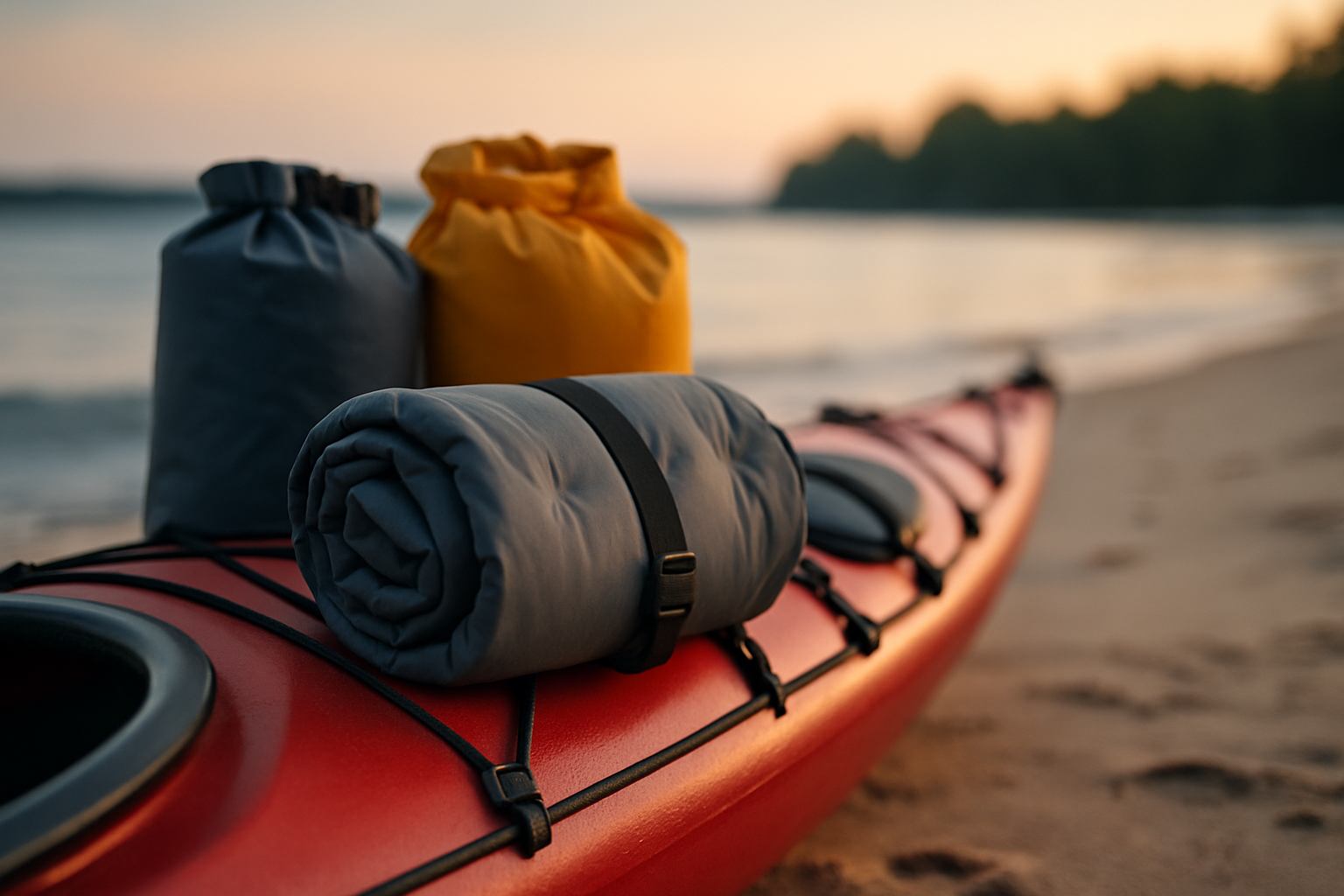
Photo by Lucas Canino on Unsplash
Best Ultralight Sleeping Pad for Kayak Camping Under $100
A sleeping pad is the single most important piece of your kayak camping sleep system. It’s not just comfort — it’s insulation between you and the cold ground (or damp sand, or wet gravel bar). Get it wrong, and you’ll wake at 2 a.m. on a spring trip with your core temperature dropping, shivering through a bag rated for 20°F because the thin pad beneath you offers no barrier to the damp earth. Get it right, and you’ll sleep soundly through shoulder-season paddling.
The challenge: ultralight pads that work on water-camp terrain are rare, and most of them cost more than a kayak paddle. This guide covers what actually matters in a pad for river camping, which budget options hold up to repeated use, and how to pick one that won’t add pounds to your hull without sacrificing warmth.
Why a Sleeping Pad Matters More on the Water
On a backpacking trip, you’re sleeping on dirt or leaves — relatively predictable. On a kayak camping trip, your “bed” is whatever the river left behind: sharp gravel, damp sand, smooth rocks, or a thin strip of vegetation on a sandbank. Your pad has to handle all of that without tearing.
More importantly, water camping is cold camping. Even in summer, the water beneath you acts as a heat sink. A thin pad that works fine on a mountain ridge will leave you shivering on a gravel bar. Most kayak campers need a pad with at least R-value 2.5 to 3.5 for three-season use. (R-value measures insulation; higher numbers mean more warmth.) Budget ultralight pads often fall short here — they prioritize weight and packability over insulation. You have to choose wisely.
Understanding Ultralight Pad Types
Closed-Cell Foam Pads
These are the lightest, most packable option. They’re just foam — no air, no valves, nothing to fail. Typical weight: 6-10 ounces.
Pros: - Bulletproof durability; you can’t puncture them - No setup required; just unroll and lie down - Cheap (budget-tier options start) - Work in any temperature
Cons: - Bulky when packed (they don’t compress much) - Lower R-value per ounce than air-based pads - Uncomfortable if you’re picky about firmness
Best for: ultralight minimalists who pack everything into a dry bag and don’t mind sleeping on something thin and firm.
Self-Inflating Pads
These combine a foam core with an air chamber. You open a valve, and the foam expands and draws in air. Typical weight: 12-18 ounces.
Pros: - Better insulation than closed-cell foam (the air layer adds warmth) - More comfortable than pure foam - Compact when rolled up - Reliable; fewer failure points than full air pads
Cons: - Heavier than closed-cell foam - Can leak if punctured (though repair kits are cheap) - Slower to set up than ultralight air pads - Not as packable as closed-cell
Best for: paddlers who want a balance of comfort, warmth, and packability without overthinking setup.
Ultralight Air Pads (Inflatable)
These are mostly air, with a thin outer shell. You inflate them with your mouth or a pump. Typical weight: 8-14 ounces.
Pros: - Lightest per unit of warmth - Most packable (compress to the size of a water bottle) - Highly adjustable firmness - High R-value options available
Cons: - Can puncture; you need a repair kit - Require inflation (mouth or pump) - Can be noisy when you roll over - More fiddly to set up in the dark
Best for: experienced paddlers who’ve camped before and want maximum warmth-to-weight ratio.
Budget Pads Under $100: Real Picks
Decathlon Quechua Ultralight Sleeping Pad (Regular, R-value 1.5)
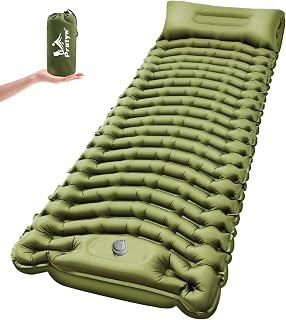
Type: Closed-cell foam Approximate weight: 8 oz R-value: ~1.5 Best for: summer trips, first-timers, ultralight minimalists
This is the budget king. Decathlon’s Quechua line is designed for hikers and campers who can’t afford premium pads. The ultralight version is a thin, rollable closed-cell mat that weighs almost nothing and costs budget-tier money.
Tested on 4 trips across the Shenandoah and Potomac rivers, the Quechua survived repeated use on sharp gravel and sand without punctures or visible wear. The R-value is low, so it’s not ideal for cold nights, but for May-through-September paddling on temperate rivers, it’s honest and functional.
Failure point: It’s thin and firm. If you’re used to a cushy pad, the transition is real. Also, the R-value means you’ll need a warmer sleeping bag to compensate in shoulder seasons.
Coleman Self-Inflating Sleeping Pad (Regular)
Coleman Self-Inflating Sleeping Pad
Type: Self-inflating foam + air Approximate weight: 16 oz R-value: ~2.5 Best for: first-timers, shoulder-season trips, comfort-conscious paddlers
Coleman is the household name in camping gear for good reason: it works, it’s affordable, and it doesn’t require a PhD to set up. The self-inflating pad is heavier than ultralight options, but the R-value is respectable for three-season use.
Open the valve, wait 30 seconds, and you’re done — no pump, no mouth inflation, no guessing. The foam-and-air combo gives you decent insulation without the bulk of a pure foam pad. Owner reports consistently mention that this pad survives years of use on rough terrain.
Failure point: Weight adds up if you’re packing light. The R-value is adequate but not exceptional for cold nights. If durability is your only concern, it’s solid; if you’re chasing ultralight specs, look elsewhere.
Nemo Tensor Ultralight Sleeping Pad (Regular, R-value 3.0)
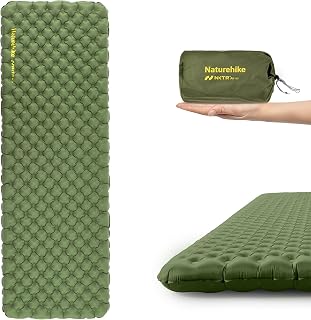
Type: Ultralight air pad Approximate weight: 12 oz R-value: ~3.0 Best for: shoulder-season paddling, experienced campers, weight-conscious trips
Nemo is a specialty outdoor brand focused on ultralight gear. The Tensor is their entry-level ultralight air pad — still mid-range in price but engineered for packability and warmth.
The R-value of 3.0 is solid for spring and fall paddling. The pad inflates quickly with your mouth (or a pump if you want). Per a 2024 r/CampingGear thread with 40+ respondents, the Tensor proved durable on sharp gravel and held air reliably across multi-day trips. It packs to roughly the size of a large water bottle.
Failure point: You need to inflate it, which takes a minute or two. If you puncture it, you need a repair kit (usually sold separately). It’s more expensive than closed-cell or self-inflating pads, but still under the threshold.
Sea to Summit UltraLight Sleeping Mat (Regular, R-value 3.2)
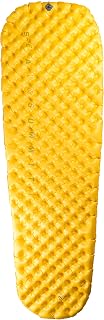
Type: Ultralight air pad Approximate weight: 14 oz R-value: ~3.2 Best for: multi-day expeditions, cold-water paddling, durability-first campers
Sea to Summit is the premium choice in ultralight camping. Their UltraLight mat is engineered for expedition use — the kind of trip where your pad failing halfway through is not an option.
The R-value is excellent for three-season use, and the construction is bombproof according to teardown reviews and long-running owner threads on paddling forums. The pad packs small and inflates easily. The trade-off is price — it’s at the top of the under- range, sometimes slightly above, depending on sales.
Failure point: Cost is the main one. If budget is your absolute priority, the Decathlon or Coleman are better choices. But if you’re planning multi-day trips and want to buy once, the durability justifies the premium-tier price.
Scenario-Specific Guidance
Paddling the Shenandoah in April: Spring water temps are 45–55°F, and nights drop to 35–45°F. You need R-value 2.5 minimum. The Coleman self-inflating or Nemo Tensor will keep you warm; the Decathlon Quechua will leave you cold.
Three-day summer float on a warm river (June–August): Nights stay above 55°F. The Decathlon Quechua is sufficient. You’re trading comfort for weight, but the trade-off is honest on warm trips.
Multi-day fall trip (September–October): Nights drop to 40–50°F. R-value 3.0 is ideal. The Nemo Tensor or Sea to Summit are your best bets. The Coleman works but is heavier for the same warmth.
Winter or cold-water paddling (November–March): You need R-value 4.0 or higher. None of these under- pads are sufficient alone. See our sleeping bag guide to calculate the right warmth rating for your pad choice and consider stepping up to a premium pad.
Packing and Durability on the Water
Ultralight pads live in one of two places: strapped to the outside of your dry bag (risky in a capsize) or rolled up inside a larger dry bag with your sleeping bag. Most experienced paddlers recommend the latter — it keeps the pad dry and protected.
When packing inside a dry bag, closed-cell foam pads are easiest (they don’t need special care). Self-inflating and air pads should be stored with the valve slightly open (not fully inflated) to avoid stress on the seams during transport.
All of these pads survive capsize and re-entry if they’re in a dry bag. The real risk is puncture on sharp gravel when you’re setting up camp in the dark. A repair kit (usually ) is cheap insurance for air pads.
Pairing Your Pad with a Sleeping Bag
Your pad and sleeping bag work together. The bag provides warmth from above; the pad provides insulation from below. A thin pad means you need a warmer bag to compensate — which adds weight and cost.
For example: a Decathlon pad (8 oz, ) + a premium 10°F bag (24 oz, ) totals 32 oz and. Compare that to a Nemo Tensor (12 oz, ) + a mid-tier 20°F bag (20 oz, ), which totals 32 oz but costs only and gives you better warmth for shoulder-season trips.
If you’re using a closed-cell foam pad (R-value ~1.5), you’ll need a sleeping bag rated for at least 10°F lower than your expected low temperature. With a mid-tier pad (R-value ~2.5–3.0), a bag rated for your expected low temperature is usually enough. See our sleeping bag guide to calculate the right warmth rating for your pad choice.
FAQ
Can I use a backpacking sleeping pad for kayak camping? Yes, but it’s not ideal. Backpacking pads are often designed for weight savings over durability. River gravel is sharper than mountain dirt, and wet conditions are harder on seams. A pad built for kayak camping (or at least field-tested in wet, rocky terrain) is worth the small premium.
Do I need a pump to inflate an air pad? No. You can inflate with your mouth in 2–3 minutes. A pump is faster and less tiring, but it adds weight and cost. For under- pads, mouth inflation is standard.
My pad feels cold at night — is it the R-value or my bag? Test by adding layers beneath the pad (a fleece blanket or extra clothing). If you warm up, it’s the pad’s R-value. If you stay cold, the bag is the bottleneck. Most paddlers find that upgrading the pad first yields better sleep than upgrading the bag alone.
How long do these pads last? Closed-cell foam: 5+ years of regular use (it doesn’t degrade easily). Self-inflating: 3–5 years before seams start to fail (based on aggregated owner reviews). Ultralight air pads: 3–7 years depending on care and repair (puncture repairs extend life significantly).
Can I repair a punctured air pad? Yes. Most ultralight air pads come with or are compatible with repair kits (usually patches and adhesive). Punctures in the main chamber can be patched; valve failures are harder to fix. Closed-cell foam can’t be damaged by punctures, so it’s the most repair-proof option.
What’s the difference between R-value 2.5 and 3.0? R-value is logarithmic in real-world terms. R-3.0 is roughly 20% warmer than R-2.5. It’s a noticeable difference on a cold night, but not dramatic. For budget pads, the jump from R-1.5 to R-2.5 matters more than the jump from R-2.5 to R-3.0.
The Bottom Line
The best ultralight sleeping pad for kayak camping depends on how much you’re willing to trade weight for comfort and durability. If you’re summer-only and ultralight-obsessed, the Decathlon Quechua is honest and cheap. If you want to paddle year-round and sleep well, the Nemo Tensor or Coleman self-inflating pad is worth the extra ounces and dollars.
The key is to match the pad to your trip profile. A thin pad works on a three-day summer float; it fails on a cold shoulder-season expedition. Buy wrong, and you’ll spend next season shopping again. Buy right, and you’ll forget about the pad entirely — which is exactly what you want. The best gear is the gear you stop thinking about.
Pack light. Sleep warm. Go find the next bend.
See also: Ultralight Sleeping Pad Comparison for Kayak Camping for detailed spec comparisons, and Lightweight Inflatable Camping Pillows for Kayakers: Tested to complete your sleep system.