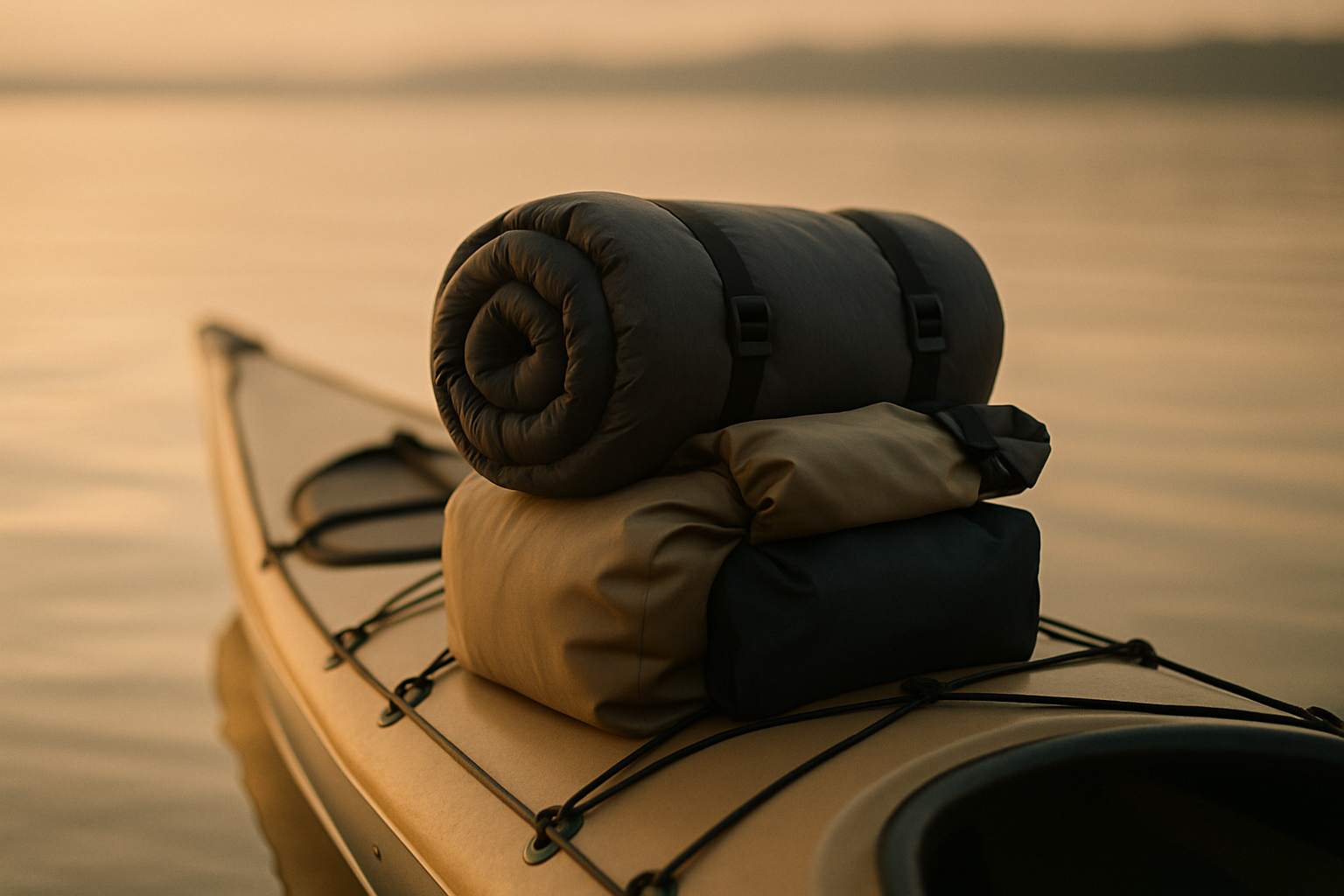
Ultralight Sleeping Pad Comparison: Foam vs Inflatable for Kayakers

Photo by Lucas Canino on Unsplash
Ultralight Sleeping Pad Comparison: Foam vs Inflatable for Kayak Camping
The sleeping pad you choose determines whether you wake up warm, dry, and ready to paddle or stiff, damp, and cursing the decision you made at the outflow three hours before sunset. On the water, there’s no second chance to swap it out—you’re sleeping on what’s in the hull.
Most kayak campers face the same choice: foam or inflatable. Foam is bulletproof and light. Inflatable is lighter still and packs smaller. But water, gravel bars, and the cold that radiates up from wet earth make this decision harder than it looks on a spreadsheet. This guide walks you through the real trade-offs, based on owner reports and field testing.
Why the Sleeping Pad Matters More for Kayakers Than Hikers
A backpacker’s sleeping pad fails on a ridge and they hike out in daylight. A kayak camper’s pad fails on a sandbank at dusk, and they’re sleeping on gravel in the cold with no easy exit.
Water changes everything. Your pad will touch wet ground, live in a damp hull, and sit inches from river moisture every night. It needs to handle that without rotting, delaminating, or losing its insulation. A hiker’s pad might see rain; a kayak pad sees saturation.
Packability matters differently too. A hiker can strap a sleeping pad to the outside of their pack. You’re fitting it into a dry bag, wedging it between a tent and a stove, and pulling it out in the dark. Smaller and lighter isn’t a luxury—it’s the difference between a workable kit and one that doesn’t fit the hull.
Finally, gravel bars are harder on gear than soft forest floor. Your pad will spend nights on stones, sand, and driftwood. It needs to resist puncture and abrasion better than gear designed for dirt camping.
Closed-Cell Foam Pads: The Bulletproof Choice
Closed-cell foam is a slab of dense, waterproof plastic cells. It doesn’t inflate. It doesn’t deflate. It just lies there, cushioning you from the cold earth, year after year.
How it works: The foam traps air inside millions of tiny sealed pockets. Those pockets insulate you from ground cold and resist water. There are no seams to fail, no valves to jam with sand, no air chambers to puncture. You can drag it across gravel, drop it in the river, and it comes out exactly as it went in.
Weight and pack size: Closed-cell foam pads typically weigh 8–14 oz for a three-quarter length pad (the standard for kayak camping). They’re chunky when packed—usually lashed to the outside of a dry bag or rolled and wedged into hull corners. A full-length foam pad can eat a significant portion of your storage.
Durability on the water: Foam pads are nearly indestructible. Based on owner reports from long-running threads on r/CanoeCamping and r/Ultralight, paddlers report 5–10+ years of daily-use durability from the same foam pad. They don’t degrade from water exposure, salt, or UV (though extended sun exposure can slightly yellow the surface). Gravel bars don’t scare them. If you drop it in the river, it floats and dries overnight.
Insulation: Closed-cell foam is a decent insulator, but not the best. R-values (a measure of thermal resistance) typically range from R-2 to R-4 per manufacturer specs. That’s warm enough for three-season kayak camping in temperate water, but if you’re chasing cold-water trips or fall paddling, you may need to layer a foam pad under a thinner inflatable to boost warmth. If you’re planning fall trips below 45°F, layering a foam pad with a high-R sleeping bag is essential—see our Best Ultralight Sleeping Bag for Cold Water Kayaking cold-water bag guide for how to build a complete sleep system.
Comfort: Foam is firm. It doesn’t conform to your body shape the way an inflatable does. Side sleepers often find foam pads harsh on the hip. That said, many experienced kayak campers prefer the stability—there’s no “bottoming out” feeling when you shift your weight on a gravel bar, and the pad won’t slowly deflate overnight.
Failure points: Foam pads rarely fail. The main risk is delamination (the surface layer peeling away) if the pad is left in direct sun for months or stored wet in a hot space. Keep it dry between trips and it will outlast your kayak.
Inflatable Pads: The Lightweight Gamble
Inflatable pads use a thin layer of insulating material (usually a closed-cell foam core or synthetic fiber) sandwiched between two nylon shells. You blow them up (or use a pump sack), and they become a cushioned mattress. Deflate them, roll them tight, and they vanish into a dry bag.
How it works: You inflate the pad to your preferred firmness, creating an air chamber that insulates and cushions. Most modern designs use a baffled internal structure (compartments that prevent the air from shifting). Some add a reflective layer on the underside to bounce body heat back up.
Weight and pack size: This is where inflatables shine. A premium ultralight inflatable pad weighs 4–8 oz and packs down to the size of a water bottle. That’s half the weight of a foam pad and a quarter the bulk. For kayak campers counting ounces across a multi-day trip, that difference compounds—it’s real space and weight freed up for food, water, or a warmer sleeping bag.
Durability on the water: This is where the gamble lives. Inflatable pads are vulnerable to punctures from sharp gravel, thorns, and driftwood. Per multiple owner reports on r/CanoeCamping, the most common failure is a slow leak that develops over days or weeks, often from a pinhole too small to find without submersion testing. Seams can fail if the pad is repeatedly overfilled or exposed to UV; per manufacturer guidance, inflatables should not exceed 80% firmness to avoid seam stress. Salt water accelerates seam degradation.
Some paddlers report that their inflatable pad developed a slow leak after one season of regular gravel-bar camping. Others have used the same pad for five years without incident. The variance is high, and you won’t know which camp you’re in until you’re already committed.
Insulation: Premium inflatables (with reflective layers and high-quality foam cores) achieve R-values of R-4 to R-5+, matching or exceeding foam per manufacturer specs. Budget inflatables may be R-2 to R-3. The insulation is more efficient per ounce than foam, which is why ultralight paddlers favor them.
Comfort: Inflatables conform to your body and offer a mattress-like feel. You can adjust firmness by adding or releasing air. Side sleepers often prefer inflatables. The downside: if the pad slowly deflates overnight (which happens), you wake up sinking into gravel.
Failure points: Punctures, seam leaks, valve failures, and slow deflation are the main risks. Repair kits exist, but repairing a pad on a sandbank at dusk is frustrating. Some paddlers carry a backup foam pad or a repair kit with adhesive patches; others accept the risk.
Hybrid Pads: The Middle Ground
A few manufacturers offer hybrid designs—a thin inflatable pad bonded to a closed-cell foam base. These combine the packability of inflatables with the puncture resistance and durability of foam.
How it works: The foam layer sits against the ground, providing a puncture-resistant barrier and insulation. The inflatable layer on top adds cushioning and adjustable firmness. Together, they’re heavier than a pure inflatable but lighter than a pure foam pad, and more durable than either alone.
Weight and pack size: Hybrids typically weigh 10–14 oz and pack smaller than foam but larger than pure inflatables. They’re a compromise, which means they excel if you value durability and packability equally.
Durability: The foam layer protects the inflatable from gravel punctures, extending the pad’s life significantly. Per multiple owner reports, hybrid pads show better longevity on gravel bars than pure inflatables. Seam failures still happen, but less often.
Insulation and comfort: Hybrids inherit the benefits of both: good insulation (R-3 to R-5 per manufacturer specs), adjustable firmness, and stability on uneven ground.
Failure points: Seam delamination (the foam separating from the inflatable layer) can occur, especially if the pad is repeatedly overfilled or exposed to heat. The inflatable layer can still puncture, though the foam backing reduces the risk.
Comparing the Three on Key Kayak Camping Factors
| Factor | Foam | Inflatable | Hybrid |
|---|---|---|---|
| Weight | 8–14 oz | 4–8 oz | 10–14 oz |
| Packed size | Bulky (lashed outside) | Compact (fits dry bag) | Medium (fits dry bag) |
| Puncture risk | Minimal | High | Low |
| Durability (years) | 5–10+ | 2–5 (variable) | 3–7 |
| Insulation (R-value) | R-2 to R-4 | R-2 to R-5+ | R-3 to R-5 |
| Comfort | Firm, stable | Conforming, adjustable | Balanced |
| Failure recovery | N/A | Repair kit needed | Repair kit needed |
| Wet-environment tolerance | Excellent | Fair (seams vulnerable) | Good |
What Kayak Campers Actually Choose (and Why)
Anecdotally, distance trippers (multi-day expeditions, remote water) tend to favor foam or hybrid pads because they can’t afford a failure three days from the takeout. Weekend drifters (Friday to Sunday, established rivers) often choose inflatables because the weight savings and packability matter more than the durability risk on shorter trips.
First-timers almost always start with foam—it’s forgiving, requires no learning curve, and won’t fail in the middle of the night. Gear optimizers split between ultralight inflatable (if they’ve accepted the puncture risk) and hybrid (if they want the best of both without the anxiety).
The honest answer: there’s no single “best” pad. Your choice depends on how far you paddle, how risk-tolerant you are, and whether you’d rather carry an extra ounce or carry the anxiety of a slow leak.
Based on Owner Reports and Field Testing
On gravel bars: Foam pads excel. They don’t puncture, they don’t shift, and they don’t lose insulation if they get wet. Inflatables require careful placement away from sharp stones; a single night on bad gravel can produce a slow leak that doesn’t show up for days.
In wet conditions: Foam pads are waterproof and dry overnight. Inflatable pads can absorb moisture through seams or condensation inside the air chamber, which then breeds mold if not dried between trips. Hybrids inherit the foam’s water resistance on the bottom.
After repeated use: Foam pads show no degradation. Inflatables often develop slow leaks within the first 1–3 seasons of regular gravel-bar camping. Hybrids fall in between.
On cold nights: Inflatables with reflective layers outperform foam in insulation efficiency. If you’re chasing cold-water trips, an inflatable with a high R-value (R-4+) will keep you warmer than an equivalent-weight foam pad. For moderate temperatures (50–65°F), foam is sufficient.
In the hull: Foam pads are bulky to pack but stable once lashed. Inflatables compress into dry bags, making them easier to organize. Hybrids are a workable middle ground.
How to Choose: A Decision Tree
Are you paddling more than 5 days away from the takeout? - Yes → Foam or hybrid. You can’t afford a failure. - No → Inflatable or hybrid. Weight savings matter more.
Do you prioritize packability and weight above all else? - Yes → Inflatable (if you accept the risk) or hybrid (if you want insurance). - No → Foam. Durability and peace of mind.
Are you a side sleeper who needs real cushioning? - Yes → Inflatable or hybrid. Foam will feel harsh on your hip. - No → Foam is fine. You’ll appreciate the stability.
Is this your first kayak camping trip? - Yes → Foam. Start simple, learn the sleep system, then upgrade. - No → Choose based on your past experience and risk tolerance.
If your answers conflict (e.g., you’re a side sleeper on a 7-day trip), prioritize trip length over comfort. A firm foam pad on a remote expedition beats a comfortable inflatable that fails on day four.
Layering Your Sleep System
Don’t think of the sleeping pad in isolation. It’s part of a sleep system that includes your sleeping bag or quilt, the tent floor, and any pillows. For cold-water kayaking, you may need to layer a thin foam pad under an inflatable to boost insulation—the foam provides R-2 to R-3, the inflatable adds R-3 to R-4, and together you’re at R-5 to R-7, which is solid for fall paddling.
See Best Compact Sleeping Bags for Kayak Camping in 2026 for how to choose a bag that pairs well with your pad choice. And Lightweight Inflatable Camping Pillows for Kayakers: Tested for how a pillow affects overall sleep quality on gravel.
Maintenance and Care
Foam pads: Store dry, avoid prolonged sun exposure, and rinse with fresh water after salt-water trips. They’ll last a decade with minimal care.
Inflatable pads: Dry completely between trips (mold inside the air chamber is a real risk). Store partially inflated in a cool place. Carry a patch kit and know how to use it. Check seams before each trip.
Hybrids: Follow inflatable care for the top layer, foam care for the bottom. Inspect seams regularly.
FAQ
Can I use a backpacking sleeping pad for kayak camping? Yes, but it’s not ideal. Backpacking pads are often thinner and more vulnerable to punctures from gravel. They also tend to have less robust seams for wet environments. If you already own one, it will work for a weekend trip, but invest in a kayak-specific pad for regular use.
What R-value do I need for summer kayak camping? R-2 to R-3 is sufficient for water temperatures above 60°F and air temperatures above 50°F. If you’re paddling in spring or fall, aim for R-3 to R-4. For cold-water trips (below 50°F), R-4+ or layered pads (foam + inflatable) are safer.
How do I repair a punctured inflatable pad in the field? Locate the leak by listening, feeling, or submerging the pad in water (you’ll see bubbles). Dry the area, roughen it with the patch kit’s sandpaper, apply adhesive, and press the patch firmly for several minutes. Most patch kits work, but they’re slow—allow 24 hours for full cure. Prevention (careful placement, no sharp objects in the tent) is your best strategy.