As an affiliate, we may earn from qualifying purchases. This doesn't affect which products we recommend.
Lightweight Inflatable Camping Pillows for Kayakers
A good inflatable camping pillow for kayakers weighs under 4 ounces, packs to roughly 20 cubic inches or smaller, holds 3–5 inches of loft under head pressure, and uses a face fabric that wipes dry after a paddle splash. Below is how to choose one, what trade-offs matter on the water, and the specific models worth carrying in a hull.
Why kayakers need a different pillow than backpackers
Backpackers buy pillows by weight and packed size, full stop. Paddlers have to think about two more things: water and hull geometry.
Water first. Anything fabric on a kayak trip will get touched by something wet — a paddle drip, a bilge sponge, condensation off the deck. A pillow with a brushed-polyester face feels great against your cheek but holds moisture and mildews if you stuff it back in a dry bag damp. A pure TPU or coated-nylon face wipes clean and dries in minutes, but feels plasticky against bare skin. In my experience the workable compromise is a synthetic face with a quick-dry weave — comfortable enough, dries by lunch.
Hull geometry second. You’re not packing a vertical bag with a sleeping bag at the bottom and a pillow on top. You’re stuffing soft items into the bow and stern voids around a hatch ring. A pillow that packs to the size of a tennis ball — rather than a Nalgene — slides into gaps that would otherwise hold air. Small wins like that are how a hull starts to feel uncluttered.
For the broader sleep system context, see our [guide to sleeping pads that won’t shift inside a kayak hull]Best Ultralight Sleeping Pad for Kayak Camping 2026 and our [breakdown of compact sleeping bags built around paddler pack volumes]Best Compact Sleeping Bags for Paddling: Weight & Warmth — the pillow is the cheapest part of the system but the one that decides whether your neck cooperates the next morning.
What “lightweight” actually means here
The honest weight band for a usable inflatable camping pillow runs from roughly 2 ounces (gram-counted, minimalist) up to about 5 ounces (full-loft, side-sleeper-friendly). Per manufacturer spec sheets across Sea to Summit, Nemo, Therm-a-Rest, and Klymit, almost every mainstream model falls in that range.
Things you can ignore as marketing:
“Ergonomic shape.” Every brand claims this. What matters is whether the contour actually matches your neck — and that’s personal.
“Premium fabric.” Usually means brushed polyester. Nice. Not magic.
Inflated dimensions to the millimeter. Pillows compress under your head; the listed loft and the slept-on loft are different numbers.
Things worth paying attention to:
Packed weight, measured. Manufacturer spec is usually within a gram or two of reality on a kitchen scale.
Valve type. Multi-stage valves (separate inflate / deflate / micro-adjust) are worth the half-gram penalty — you can dial firmness without starting over.
Anti-slip backing. Critical if you sleep on a smooth sleeping pad. Without it, the pillow migrates north all night and you wake up with your head on the tent floor.
How to size a pillow to your sleep style
Back sleepers
Low loft, broad contour. You want the pillow to fill the gap between the back of your head and the pad without pushing your chin toward your chest. A 3-to-4-inch inflated height, partially deflated for fine-tuning, works for most back sleepers in my testing.
Side sleepers
This is where loft matters. Your ear-to-shoulder distance is the gap the pillow has to fill, and in my experience most inflatables are too thin for it — a typical adult side sleeper needs 4.5–5 inches of loft, while most mainstream models inflate to 3.5–4. Look for the tallest models in the category; I’ve found the Sea to Summit Aeros Premium and the Therm-a-Rest Air Head Down to be the two most consistently adequate.
Stomach sleepers
Honestly? Skip the pillow or bring the thinnest, flattest one you can find. In my opinion most stomach sleepers do better with a folded fleece layer than any inflatable — the loft of even a half-deflated pillow tends to twist the neck.
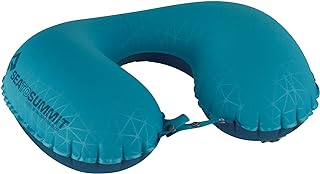
The reference design. A scalloped, dipped center that actually holds the back of your head instead of squirting it sideways. The brushed 50D polyester face is the most cheek-friendly of the mainstream options. Multi-function valve. Packs to roughly the size of a small lemon. Mid-tier price.
Failure point to watch: the seam where the face fabric meets the TPU bladder is the first thing to delaminate after a few seasons of hard use, especially if you store it inflated. Deflate and store loose.
The gram-counter’s pillow. Sub-3-ounce packed weight per Nemo’s spec sheet, and it stuffs into its own integrated pocket about the size of a golf ball. The trade-off is loft — it’s thinner than the Aeros and stomach-to-back sleepers will get along with it better than dedicated side sleepers.
This is the pillow I’d recommend for the distance tripper who’s also working through our [ultralight loadout strategy for multi-day kayak trips]How to Pack Ultralight for Multi-Day Kayak Trips. The volume savings genuinely matter when you’re trying to close a stern hatch.
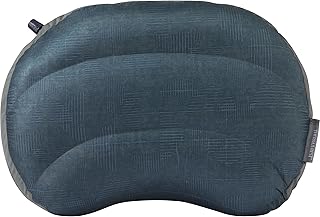
A down-filled top layer over an inflatable bladder. The down does two things: it adds warmth against your face on cold nights, and it muffles the squeaky-balloon noise that bare TPU pillows make every time you shift. For shoulder-season and cold-weather paddling — covered in more depth in our [cold-weather kayak camping gear guide on insulation layering]Ultralight Kayak Camping in Cold Weather: Gear Guide — this is the upgrade you actually feel.
Watch point: it’s a down product. If you let it get soaked and don’t dry it properly, the down clumps and the loft is gone. Treat it like you’d treat a down quilt.
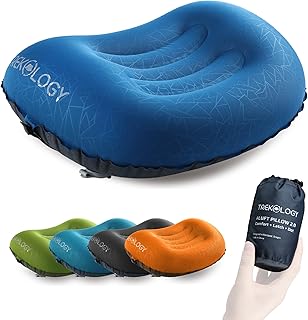
The budget gateway. Heavier than the premium options, slightly bulkier packed size, but priced in the entry tier that lets a first-timer figure out whether they even like sleeping on an inflatable before committing to a premium model. Build quality is genuinely fine for casual weekend trips; longevity over hundreds of nights is where it falls behind the Sea to Summit and Nemo offerings.
The oddball. An X-shaped chamber design that leaves a hollow in the middle for the back of your head, so the pillow cradles rather than pushes. Polarizing — some sleepers love it, some find the X-channel uncomfortable against the base of the skull. Worth trying if you’re a hammock sleeper, because the X-shape works well with the curved profile of a hammock-asymmetric lay.
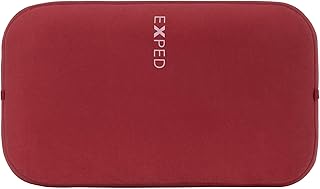
Quiet, well-built, mid-loft, with one of the better fine-tuning valves in the category. Packed weight is in the 2.5–3 ounce range per Exped’s spec sheet, packed size is roughly that of a golf ball, and it sits at a mid-tier price point similar to the Aeros. Less buzzed about than the Sea to Summit but a strong sixth pick if the Aeros is sold out or if you want a quieter face fabric.
Inflation, deflation, and on-water habits
A few small habits that make any of these pillows better — each one ties to a specific failure mode I’ve seen or had to deal with.
Inflate with your mouth closed-ish. Breathe out, don’t huff. Moist breath inside a pillow accelerates mildew on the inside of the bladder — on humid river trips I’ve seen it bloom in as few as five or six nights, visible as dark speckling through translucent TPU or a sour smell when you deflate. Once it’s in there, you can’t get it out; the pillow is done.
Under-inflate by one breath. A pillow filled rock-hard feels great for ten minutes and awful for eight hours. Overinflate and you’ll wake up at 3 a.m. with a stiff neck and the pillow squirting sideways every time you shift.
Deflate fully before stuffing. A half-inflated pillow stuffed into a dry bag bulges and wastes hull volume — easily an extra liter of dead space, which on a tight stern hatch is the difference between the lid closing and not.
Dry it before you pack it. Wipe the face with your camp towel, leave it open in the sun for ten minutes while you pack the rest of camp. Skip this for a few trips in a row and the face fabric develops a permanent musty smell and, eventually, visible mildew spotting that no wash gets out.
Store it loose at home. Not stuffed, not rolled tight. Loose in a gear bin. Long-term compression at the same fold lines is what causes the seam delamination noted under the Aeros above — bladders stored loose routinely last 5+ years; stored compressed, I’ve seen them fail in two.
How the pillow fits the rest of the hull
The pillow is the small piece that lets the whole sleep system work. A premium pad with a bad pillow still ruins your sleep; a budget pad with a well-matched pillow can be perfectly fine. If you’re building the kit from scratch, start with the pad, then the bag or quilt, then the pillow — and use our [full ultralight kayak camping checklist for first-time multi-day trippers]Ultralight Kayak Camping Checklist: Essential Gear List to make sure nothing else gets forgotten in the shuffle.
For paddlers coming from a backpacking background, see [where kayak camping gear priorities diverge from backpacking ones]Ultralight Kayak Camping vs Backpacking Gear: Key Differences — pillows are one of the items where the backpacking pick translates almost directly, but the storage and drying habits don’t.
FAQ
Are inflatable pillows really better than just stuffing a fleece in a stuff sack?
For one or two nights, the stuff-sack trick is fine. For multi-night trips, a proper inflatable holds its shape through the night, doesn’t require donating your only warm layer to head duty, and at 2–4 ounces weighs less than the fleece you’d otherwise be sacrificing. It also packs smaller, which on a kayak matters more than it does in a backpack. The break-even point is roughly the third night out — beyond that, the inflatable wins on every axis.