Best Ultralight Cooking Kit for Kayak Camping
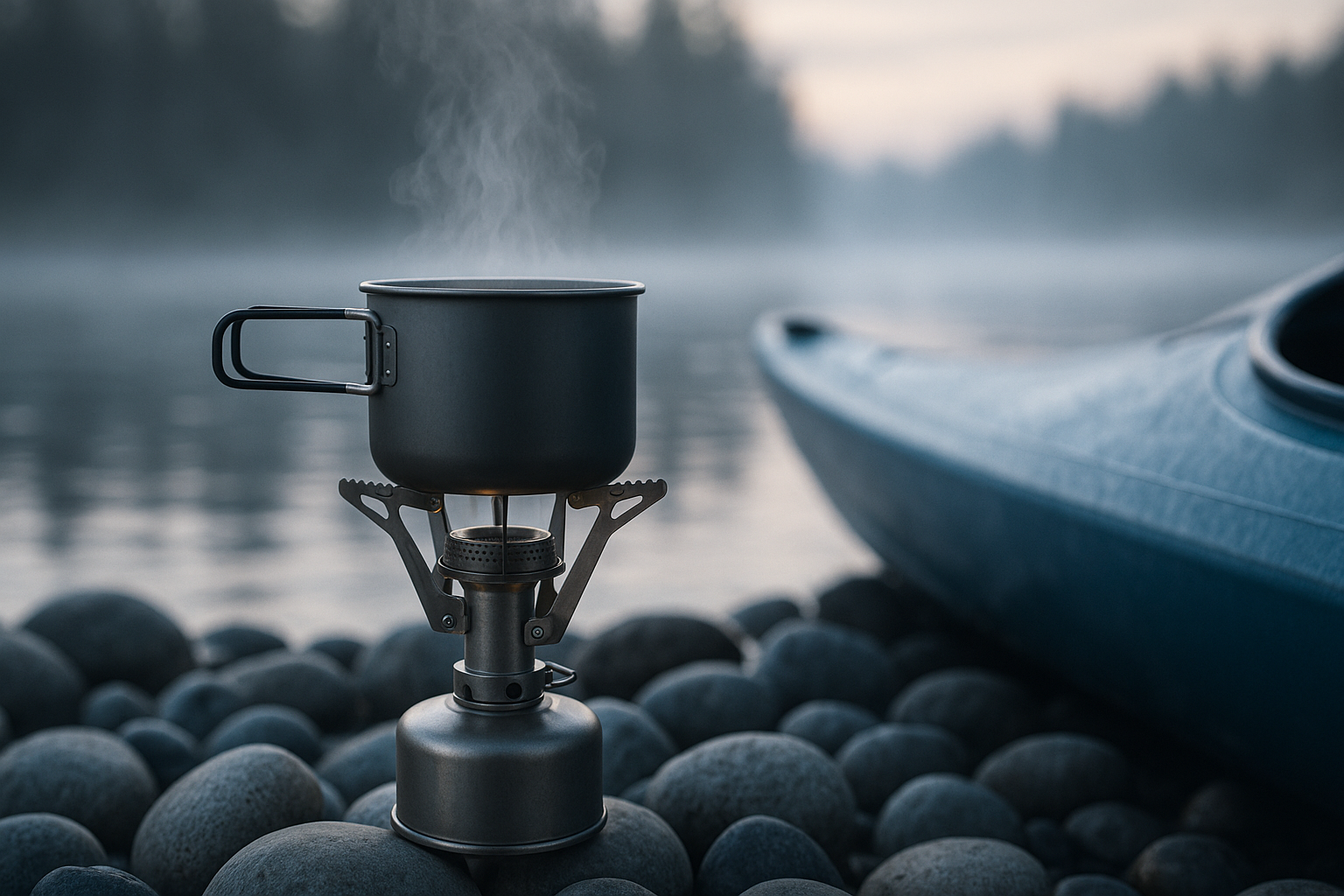
Best Ultralight Cooking Kit for Kayak Camping
Cooking on the river is different from cooking in the backcountry. Your stove shares space with a wet paddle, a headlamp, and a sleeping bag. Fuel has to stay dry. Pots can’t take up more room than your food. And if the wind picks up or you capsize, your whole dinner system might end up in the water.
An ultralight cooking kit for kayak camping isn’t just about weight — it’s about packability, reliability in wind and wet, and simplicity. This guide reviews the stoves, pots, and systems that actually work when you’re cooking on a gravel bar at dusk, miles from the take-out.
Why Ultralight Cooking Matters on the Water
A standard backpacking stove setup — fuel canister, pot, lid, windscreen — can weigh a pound or more. In a kayak, that’s real volume. Every ounce saved in the galley means more room for food, water, or a better sleeping pad.
But ultralight doesn’t mean cold meals. The best river cooking kits hit a sweet spot: they weigh almost nothing, pack into a dry bag, and still boil water and cook a hot dinner. The trick is choosing the right type of stove for your trip length and water conditions.
Water and wind are the enemies. A stove that works great on a calm evening at an established campsite might fail when you’re cooking in 15-knot gusts on an exposed bar. Fuel containers take up space. Titanium cookware costs more upfront but saves weight and lasts a lifetime.
Stove Types for Kayak Camping
Solid Fuel (Esbit, Hexamine Tablets)
Weight: 1–2 oz for the stove; fuel tablets add 0.3–0.5 oz each.
Pros: - Lightest option by far. - No liquid fuel to spill or leak in a capsize. - Tablets are compact and waterproof. - Dead simple — no moving parts, no priming.
Cons: - Slower to boil water than liquid-fuel or canister stoves. - Wind extinguishes the flame easily; requires a windscreen. - Limited control over heat; can’t simmer. - Smoke and smell (hexamine tablets especially).
Best for: Solo trips under 3 days, minimalist paddlers, trips where weight is the absolute priority.
On the water: Solid-fuel stoves work well in protected camp spots. If you’re cooking on a windy bar, you’ll need a good windscreen (a foil reflector or a simple rock wall helps). The slow boil is less of an issue if you’re not in a hurry — most river campers aren’t.
Canister Stoves (MSR PocketRocket, Jetboil)
Weight: 1.5–3 oz for the stove; fuel canisters range from 2.6 oz (empty) to 7+ oz (full).
Pros: - Fast boil time: 3–4 minutes to boil 16 oz of water at sea level (per manufacturer testing). - Reliable in wind and cold, especially isobutane-propane blends. - Compact, lightweight fuel canisters. - Simple on/off control.
Cons: - Fuel canisters must be vented and can’t be fully sealed in a dry bag (pressure builds). - Harder to control low heat (can’t simmer easily on bare-bones models). - Canisters add up in weight and volume on longer trips. - FTC regulations restrict air travel with full canisters.
Best for: 2–5 day trips, cold-water paddles, paddlers who want speed and reliability.
On the water: Canister stoves are the workhorse of river camping. A simple MSR PocketRocket 2 fits in a shirt pocket and boils water in 3–4 minutes. The main headache is fuel storage — you can’t seal a half-empty canister in a dry bag without venting it first. Many paddlers carry two small canisters instead of one large one to spread the weight.
Integrated Systems (Jetboil, Soto)
Weight: 8–12 oz total (stove + pot + lid + fuel).
Pros: - Fuel-efficient; burner and pot are optimized together. - Fast boil time. - All-in-one system; nothing gets left behind. - Some models (Jetboil MiniMo) can simmer.
Cons: - Heavier than a bare stove + separate pot. - Bulkier to pack. - If the burner fails, you can’t swap to a backup pot. - More expensive upfront.
Best for: Paddlers who value speed and don’t want to fuss with piecing together a stove setup; multi-day trips where fuel efficiency matters.
On the water: Integrated systems shine on longer trips where fuel efficiency matters. A Jetboil MiniMo uses less fuel per meal than a canister stove with a loose pot, which adds up over 4–5 days. The trade-off is bulk — the whole thing is wider and taller than a bare stove and pot stacked separately.
Cookware: Pots, Pans, and Cups
Titanium Cookware
Weight: A single 900ml pot weighs 2–3 oz; a two-pot set weighs 4–5 oz.
Pros: - Ultralight and durable (won’t dent or corrode). - Nests efficiently for packing. - Heats quickly and distributes heat evenly. - Lasts a lifetime; no coating to chip or peel.
Cons: - Expensive upfront (mid-tier to premium pricing). - Food can stick if you’re not careful (needs a little oil or butter). - Handles get hot; you’ll need a pot gripper or glove.
Best for: Distance paddlers, multi-week trips, anyone who plans to kayak camp regularly.
On the water: Titanium is the gold standard for river cooking. A Toaks Titanium 900ml Pot with Bail Handle weighs less than a water bottle and can go straight from stove to mouth. The bail handle (a wire handle that folds down) means you don’t need a separate pot gripper. Pair it with a titanium cup and you’ve got a complete cook system in under 6 oz.
Aluminum Cookware
Weight: A single 1-liter pot weighs 3–4 oz; sets are heavier.
Pros: - Cheaper than titanium. - Lightweight and heats quickly. - Widely available.
Cons: - Dents easily; sharp edges can cut hands or puncture dry bags. - Anodized coating can chip, exposing bare aluminum (health concerns are debated, but many paddlers avoid it). - Doesn’t nest as efficiently as titanium.
Best for: Budget-conscious beginners, short trips, paddlers who don’t mind replacing cookware every few years.
On the water: Aluminum works fine for a weekend trip, but the durability issues add up on longer expeditions. A dented pot is harder to clean and pack. Most experienced river campers switch to titanium after one or two aluminum pots fail.
Stainless Steel Cookware
Weight: 5–7 oz for a single pot; sets are much heavier.
Pros: - Durable and won’t corrode. - Affordable. - Food doesn’t stick as easily as with titanium.
Cons: - Heavy for ultralight camping. - Slow to heat; wastes fuel. - Doesn’t nest well.
Best for: Car camping or base-camp kayak trips where weight isn’t the priority.
On the water: Stainless steel is overkill for kayak camping. The weight penalty isn’t worth the durability gains when you’re packing into a hull. Save it for car-camping trips.
Building Your Kit: Three Approaches
The Minimalist Solo Kit (Under 12 oz)
Components: - Esbit stove + 4 fuel tablets - Toaks 900ml titanium pot - Toaks titanium cup (doubles as a measure) - Long-handled titanium spoon - Pot gripper (optional; the bail handle works)
Total weight: ~10–11 oz.
Cost: Mid-range.
Best for: 1–3 day solo trips, paddlers who cook simple meals.
On the water: This kit fits in a small dry bag and boils water for breakfast and dinner. The Esbit stove is slow, but there’s no rush on the river. You’ll need a windscreen (make one from aluminum foil or rocks). Food options are limited to one-pot meals, but that’s fine for most river trips.
The Reliable Workhorse Kit (14–18 oz)
Components: - MSR PocketRocket 2 stove - One 4 oz fuel canister (half-full for a 3-day trip) - Toaks 900ml titanium pot - Toaks titanium cup - Long-handled titanium spoon - Lightweight windscreen (aluminum foil + stakes)
Total weight: ~15 oz (including half a fuel canister).
Cost: Mid-range.
Best for: 2–4 day trips, solo or pairs, any water conditions.
On the water: This is the setup most experienced river campers carry. The PocketRocket is fast, reliable, and proven. A half-full fuel canister (vented in a separate dry bag) weighs almost nothing. You can boil water in 3–4 minutes and cook hot meals. The titanium pot nests inside a dry bag with your food and fuel.
The Efficient System Kit (16–20 oz)
Components: - Jetboil MiniMo integrated stove + pot - One 4 oz fuel canister - Jetboil cup (included) - Long-handled spoon - Lightweight windscreen
Total weight: ~18 oz (including fuel).
Cost: Premium.
Best for: 4–7 day trips, paddlers who value fuel efficiency and don’t mind the bulk.
On the water: The Jetboil system burns less fuel per boil than a bare stove and pot. Over a week-long trip, that savings adds up. The pot is larger (1 liter) than a minimal setup, so you can cook more substantial meals. The trade-off is packability — the whole system is bulkier and doesn’t nest as tightly into a dry bag.
Fuel Considerations for River Trips
Canister Fuel
Options: Isobutane-propane blends (most common), pure butane (lighter but fails in cold), pure propane (heavier but works in cold).
Blend specifications: Most river-camping fuel uses an 80% isobutane / 20% propane blend (like MSR IsoPro or Jetboil fuel). This blend boils water reliably from spring through fall and maintains pressure down to about 20°F. In early spring or late fall, a propane-heavy blend (60% isobutane / 40% propane) is better for cold-water reliability.
On the water: Isobutane-propane blends work reliably on most paddling seasons. In cold water, a propane-heavy blend is better.
Storage: Fuel canisters can’t be fully sealed in a dry bag — pressure builds and the seal fails. Vent them first (open the valve briefly to release pressure), then seal them in a separate small dry bag away from food. On multi-day trips, carry two small canisters instead of one large one; they’re easier to pack and vent.
Solid Fuel
Options: Esbit hexamine tablets, Esbit solid fuel blocks.
On the water: Solid fuel is the lightest option and waterproof. Each tablet burns for about 5–7 minutes and boils roughly 8–10 oz of water. For a 3-day trip, carry 8–12 tablets. They’re compact and smell bad, but they work.
Storage: Store in a waterproof container or ziplock bag. They don’t leak or pressurize, so they pack easily.
Alcohol Fuel (Denatured Alcohol, Methanol)
On the water: Alcohol stoves (like the Trangia or DIY can stoves) are ultralight and cheap. But they’re slow to boil, produce little heat, and are hard to control. Most river campers skip them in favor of canister or solid fuel.
Cooking on the River: Best Practices
Wind protection: Even a small windscreen (aluminum foil wrapped around rocks or stakes) can cut fuel use in half. On exposed bars, build a rock wall or use your dry bags as a windbreak.
Fuel efficiency: Fill your pot only as full as you need. Boiling a liter of water uses twice the fuel of boiling a half-liter. For ramen or oatmeal, a cup of hot water is often enough.
Water source: Filter or treat water before cooking. River water can harbor giardia and other pathogens, especially in popular paddling areas. A lightweight gravity filter or chemical tablets add almost no weight and eliminate the risk of waterborne illness. Lightest Water Filtration System for Kayakers: 2026 Review covers the best options under 3 oz, including gravity filters and pump systems designed for kayak camping.
Cooking surface: Most gravel bars are stable enough for a stove. Use a flat rock or a small camp stove stand to keep the stove level. Never cook inside a tent.
Cleanup: Bring a small biodegradable camp soap and a cloth. Rinse pots in the river (well away from camp), then dry with your camp towel. Titanium doesn’t hold food residue, so cleanup is quick.
Meal Planning for Ultralight Cooking
One-pot meals are the standard for kayak camping. Here are specific, lightweight options:
- Breakfast: Bob’s Red Mill instant oatmeal packets (1.5 oz each), instant grits, instant rice with powdered butter and salt.
- Lunch: Cold (no cooking): granola, jerky, nuts, dried fruit, energy bars.
- Dinner: Maruchan ramen (1 oz per packet), instant mashed potatoes (Idahoan brand, 0.8 oz per serving), Mountain House freeze-dried camping meals (1.5–2 oz per serving), instant pasta with powdered sauce.
All of these require only hot water or a quick simmer. You don’t need a full kitchen — just a way to boil water and keep it hot for a few minutes.
For longer trips, consider lightweight ingredients like dehydrated vegetables, powdered milk, and instant soups. They’re light, shelf-stable, and taste better than freeze-dried meals.
Lightweight Cooking Pot and Pan Sets for Kayak Camping reviews specific pot and pan combinations and multi-pot systems if you want to explore beyond the single-pot model. See our full guide to gravity filters under 3 oz for water treatment options that won’t add weight to your pack.
Common Mistakes to Avoid
Overpacking cookware: You don’t need a frying pan, a saucepan, a lid, and a spatula. A single pot and a spoon do 95% of river cooking. Save the extras for car camping.
Choosing the wrong stove type for your trip: Solid fuel is great for solo weekend trips but slow for group cooking or longer expeditions. Canister stoves are fast but require fuel management on trips over 5 days. Integrated systems are best for 4+ day trips where fuel efficiency matters.
Forgetting to vent fuel canisters: Sealed canisters in dry bags build pressure and fail. Always vent before sealing.
Cooking without wind protection: A simple windscreen cuts fuel use in half and prevents the stove from blowing out. Carry aluminum foil or build a rock wall.


