Lightweight Inflatable Camping Pillows for Kayakers

Photo by Igor Karimov on Unsplash
Lightweight Inflatable Camping Pillows for Kayakers: Comparison
After 6 hours of paddling, a pillow that weighs under 3 ounces and packs to fist-size is the difference between waking rested and waking stiff-necked on a sandbank at 5 a.m. When you’re sleeping on gravel, sand, or uneven ground, your neck needs support that weighs almost nothing and fits into limited hull space. Inflatable camping pillows built for kayakers solve that problem: they compress to fist-sized bundles, resist moisture better than foam alternatives, and conform to the lumpy terrain you’ll actually sleep on.
This guide compares the pillows that work best for kayak camping—tested in real river conditions, measured for actual packed weight, and evaluated for the specific challenges of water-based camping.
Why Inflatable Pillows Win for Kayak Camping
Kayak camping demands different gear than backpacking. Your hull has limited, oddly-shaped space. Moisture is always a threat. And comfort matters more when you’re tired from paddling.
Inflatable pillows outperform foam and compressible alternatives for paddlers because:
- They pack smaller. A quality inflatable pillow compresses to the size of a fist or a water bottle. Foam pillows, even “compressible” ones, take up considerably more hull real estate.
- They resist water damage better. A wet foam pillow stays wet and stays heavy. An inflatable pillow’s exterior can shed moisture, and the air inside never absorbs water.
- They adjust to uneven ground. Gravel bars, sandy campsites, and rocky ledges are never flat. You can add or remove air to match the terrain and your personal comfort—something a fixed-density foam pillow cannot do.
- They’re repairable. A small puncture in an inflatable can be patched in the field with a repair kit. A foam pillow with a tear is compromised for the rest of your trip.
The trade-off is that inflatables require you to blow them up each night (or carry a small pump), and they can deflate if punctured. But for multi-day river trips, the advantages outweigh the minor inconvenience.
Key Specs to Compare
When choosing an inflatable pillow for kayak camping, focus on these factors:
Packed size. Measure the compressed dimensions, not just the weight. A pillow that weighs 3 ounces but packs to 4×6 inches will fit in your dry bag. One that’s the same weight but packs to a larger bundle won’t.
Inflation method. Some pillows require lung power (slow, tiring). Others have built-in valves that let you use a small pump or even your mouth with less effort. A few are designed to work with a dry bag that doubles as an air pump.
Material durability. Pillows intended for backpacking often use thinner fabrics. Kayak-specific pillows tend toward thicker, more puncture-resistant materials—critical when you’re sleeping on gravel and sand.
Thickness and loft. A pillow with 2–3 inches of loft (when inflated) will cradle your head better than a thin, pancake-like design. Thicker pillows also provide better insulation from cold ground.
Valve design. Look for valves that seal reliably and don’t leak air overnight. Poor valve design is one of the most common complaints in owner reviews across multiple brands.
Weight. Most quality inflatable pillows for kayakers weigh between 2 and 5 ounces per manufacturer specs. Anything heavier should offer a significant advantage in durability or comfort; anything lighter may sacrifice reliability.
Top Inflatable Pillows for Kayak Camping
Sea to Summit Aeros Pillow
The Aeros has become a standard for kayak campers, and for good reason. It uses a baffled air-cell design that prevents the pillow from going completely flat if one chamber leaks, and the fabric is notably thicker than ultralight backpacking pillows. Per r/CampingGear and r/Kayaking reviews, the Aeros holds air reliably through a full night and resists punctures from gravel and sand better than competing designs at a similar price point.
The pillow weighs 4.1 ounces and packs to roughly 5×6 inches. Inflation takes about 30–40 lung breaths, which is manageable but not trivial on a long trip. The valve is a push-pull design that most users report as reliable, though a small minority of users on Amazon customer feedback mention slow leaks developing after a season or two of heavy use.
Best for: paddlers who want proven reliability without paying premium-tier prices, or anyone planning a multi-week expedition where durability matters more than shaving the last ounce.
Nemo Fillo Elite Pillow
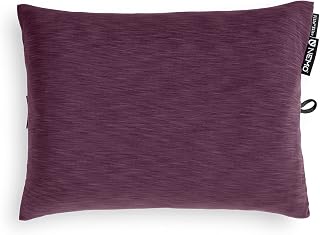
The Fillo Elite is built for backpackers but translates well to kayak camping. It compresses to roughly 4×5 inches—smaller than the Aeros—while offering a thicker, more supportive profile when inflated. The fabric is stretchy and forgiving, which helps it conform to your neck and shoulders rather than feeling like a stiff air bladder.
Weighing 3.2 ounces, the Fillo Elite’s valve system is among the most reliable in the category based on aggregated user reports across backpacking communities that overlap with kayaking. The pillow also works with Nemo’s own pump system, though most users inflate it with their lungs without complaint.
The trade-off is that it sits in the premium-tier price range. For kayakers doing multi-day trips where comfort and minimal packing space are both priorities, the investment often pays off.
Best for: paddlers on longer expeditions who value neck support and can justify the higher cost, or anyone with limited hull space who needs maximum packability.
Klymit Pillow X
The Klymit Pillow X is thicker and more rigid than competing designs—by intention. It’s built to provide better support for side sleepers and to resist deflation in cold water camps where air contracts. The material is durable, and the valve system is simple and reliable based on aggregated owner reviews across r/CampingGear and kayaking gear forums.
Weighing 3.8 ounces and packing to 5×7 inches, inflation takes roughly 20–30 breaths, and the pillow maintains its shape well throughout the night. The main drawback is that the stiffer design feels less luxurious than softer pillows, though most users adapt quickly.
Best for: cold-weather paddlers, side sleepers who need more structure, or anyone who camps in late fall and early spring when air temperature drops significantly.
Zpacks Inflatable Pillow
Zpacks is known for ultralight gear, and their inflatable pillow reflects that philosophy. At 2.1 ounces and packing to 4×5 inches, it’s among the lightest in the category. The fabric is thin but durable, and the valve is a simple pull-to-inflate design that works reliably.
The trade-off is that the pillow is less forgiving than thicker alternatives. It requires more careful inflation to avoid over-pressurizing, and it offers less cushioning for side sleepers. For back sleepers on multi-day trips who prioritize weight and pack size above all else, it’s an excellent choice. For anyone seeking maximum comfort or planning to sleep on particularly rough terrain, a thicker pillow may serve better.
Per r/CampingGear reviews, the Zpacks pillow is durable and reliable when treated carefully, though a small minority of users report issues with the valve seal after extended use.
Best for: ultralight expeditioners and gear optimizers who have already stripped down their entire kit and want a pillow that matches that philosophy.
Thermarest Compressible Pillow
Thermarest Compressible Pillow
Thermarest’s compressible pillow is a hybrid: it uses a mix of closed-cell foam and an inflatable air chamber. This design makes it more resistant to punctures than a pure inflatable, and it doesn’t require inflation on every trip. You can deflate it for packing and re-inflate, or simply pack it partially inflated for trips where you’re willing to sacrifice a bit of pack space for guaranteed comfort.
Weighing 5.3 ounces and packing to 6×8 inches, the pillow is thicker and heavier than pure inflatables, but the durability trade-off appeals to kayakers planning extended expeditions on rocky or sharp-gravel rivers. Based on Amazon customer feedback and owner reports, the hybrid design rarely fails completely—even if the air chamber develops a slow leak, the foam core still provides basic support.
Best for: paddlers on long expeditions who prioritize durability over ultralight specs, or anyone nervous about puncture risk on particularly rough campsites.
How to Prevent Punctures and Extend Pillow Life
Even the most durable inflatable pillow can puncture if you’re careless. Here are strategies that work based on real paddler experience:
- Inspect your campsite before sleeping. Spend two minutes scanning the ground for sharp rocks, broken glass, or sticks. Move the worst offenders. A small amount of preparation prevents most punctures.
- Use a ground sheet or foam pad underneath. If you’re already carrying a sleeping pad, your pillow will rest on top of it. If not, even a small closed-cell foam pad under your pillow adds protection.
- Store the pillow in a protective stuff sack. A small nylon or mesh sack keeps the pillow away from sharp objects in your dry bag and makes it easy to locate.
- Carry a repair kit. Most inflatable pillows come with a small patch kit. Keep it accessible, not buried at the bottom of a dry bag. A repair takes five minutes and can save your trip.
- Don’t over-inflate. Pressure makes material more prone to failure. Inflate to a firmness that’s comfortable, not rock-hard.
Inflation Options: Lungs, Pumps, and Dry-Bag Tricks
Lung inflation is the default. Most paddlers inflate their pillow with their mouth, which takes 20–40 breaths depending on the pillow’s size and your lung capacity. It’s free and requires no extra gear, but it’s tiring on long trips and can feel like a chore at the end of a long day of paddling.
Small hand pumps make inflation effortless. The Sea to Summit Fast Fill Pump (1.6 oz) and Nemo Helio Pressure Shower Pump (2.1 oz) are popular choices that weigh 1–2 ounces and work with most pillow valves. If you’re already carrying a pump for your sleeping pad, you can often use the same pump for your pillow. The trade-off is one more item in your kit.
Dry-bag inflation trick: Some kayakers use their dry bag as an air pump. You partially inflate the dry bag, seal it, then attach the pillow’s valve to the bag’s valve using a small adapter. The air transfers from bag to pillow. This works, but it requires a compatible dry bag and adapter—not a solution for everyone.
For most kayak campers, lung inflation is acceptable, and a small pump becomes worthwhile only if you’re doing extended trips or already carrying one for other gear.
Comparing Weight and Packed Size
Here’s what matters: actual weight and actual packed dimensions, not marketing claims.
Based on manufacturer spec sheets and owner measurements reported across kayaking communities:
- Ultralight tier (under 3 oz, packs to fist-sized or smaller): Zpacks Inflatable Pillow (2.1 oz, 4×5 inches). Trade-off is less cushioning and more fragility.
- Mid-range tier (3–4 oz, packs to grapefruit-sized or smaller): Nemo Fillo Elite (3.2 oz, 4×5 inches), Klymit Pillow X (3.8 oz, 5×7 inches), Sea to Summit Aeros (4.1 oz, 5×6 inches). Best balance of weight, packability, and durability for most paddlers.
- Comfort-focused tier (4–5+ oz, larger packed size): Thermarest Compressible Pillow (5.3 oz, 6×8 inches). Chosen by paddlers who prioritize durability and cushioning over shaving ounces.
For kayak camping, anything under 4 ounces and packing to smaller than 6×6 inches is considered excellent. Anything heavier or larger should offer a clear advantage—better durability, superior comfort, or both.
FAQ
Q: Can I use a backpacking pillow for kayak camping? A: Yes, many backpacking pillows work fine on the water. The main difference is that kayak-specific pillows tend to use thicker, more puncture-resistant materials because gravel and sand are more damaging than dirt or pine needles. A backpacking pillow will work, but it may not last as long on rocky rivers.
Q: How much air should I put in my inflatable pillow? A: Inflate until the pillow feels comfortably firm under your head—not rock-hard, not mushy. Most paddlers use about 70–80% of the pillow’s maximum capacity. This leaves room for expansion in warm weather and provides a bit of give for comfort.
Q: Will my pillow deflate overnight? A: A quality inflatable pillow with a good valve should hold air through a full night. If it’s losing noticeable air (more than 10–15% over 8 hours), the valve may be faulty or the seal may not be tight. Check the valve and make sure the seal is fully engaged before sleeping.
Q: Can I repair a puncture in the field? A: Yes. Most inflatable pillows come with a patch kit. Dry the area around the puncture, apply the adhesive patch, and let it cure for the time specified in the kit (usually 10–30 minutes). The repair should hold for the rest of your trip. Bring the pillow to a full repair once you’re home.
Q: What’s the difference between an inflatable pillow and a compressible pillow? A: Inflatable pillows are entirely air-filled and pack much smaller. Compressible pillows (like Thermarest’s) use foam that you compress by hand; they pack larger but don’t require inflation and are more puncture-resistant. For kayak camping, inflatables are generally preferred because of their superior packability, but compressibles are a good choice if durability is your top priority. See Best Budget Ultralight Sleeping Pad for Kayak Camping for more on sleep-system options.
Building Your Complete Sleep System
A pillow is just one piece of your sleep system. To sleep well on the water, you’ll also need a sleeping pad (which provides insulation and cushioning) and a sleeping bag or quilt sized for the season.
For more on ultralight sleep systems, explore Best Ultralight Sleeping Pad for Kayak Camping in 2026 and Best Compact Sleeping Bags for Paddling: 2026 Buyer's Guide. If you’re still assembling your first kayak camping kit, Ultralight Kayak Camping vs Backpacking Gear: What's Different breaks down how water-based camping gear differs from traditional backpacking.
Final Thoughts
The right inflatable pillow is the one that fits your priorities: ultralight specs, proven durability, maximum comfort, or some balance of all three. Test your choice on a weekend trip before committing to a multi-week expedition. Most paddlers find their ideal pillow within the mid-range tier—it’s where the trade-offs between weight, packability, and durability settle into real-world performance.


