Best Compact Sleeping Bags for Paddling in 2026

Photo by Chaewool Kim on Unsplash
Best Compact Sleeping Bags for Paddling in 2026
A sleeping bag that packs to 6 liters instead of 15 means room for extra water, a longer tent, or breathing space in the hull. On the water, that space is critical. The trick is finding one that doesn’t sacrifice warmth or durability to get small. River camping is wet, sandy, and unforgiving. Your sleeping bag will touch damp gear, get compressed under other kit, and spend nights on gravel bars where ground temperature matters as much as air temperature. You need compact and honest.
This guide covers the sleeping bags we’ve tested on multiday paddles, weighed on a gram scale, and actually slept in—not just read specs on. We’ll show you what compact really means, where to compromise, and where not to.
Why Compact Matters on the Water
A sleeping bag rated for the same temperature as your neighbor’s might be half the packed size—or twice. The difference usually comes down to fill type, loft design, and how aggressively the bag compresses.
On a kayak, packed size is a hard constraint. A standard backpacking bag—even a good ultralight one—can eat 12–15 liters of hull space when stuffed. A true compact bag can drop that to 6–8 liters, which on a tight three-day trip means the difference between comfortable packing and playing Tetris every morning.
Compressibility also affects durability. Down bags compress smaller but can lose loft if overstuffed for months. Synthetic bags bounce back but pack larger. Hybrid designs (down in the top, synthetic in the bottom) split the difference—smaller than pure synthetic, more resilient than pure down.
Water is the wrinkle. A down bag soaked by a capsize or heavy morning dew becomes a cold, heavy brick. Synthetic bags shed water better but still absorb some. The best compact bags for paddling either use water-resistant down treatments or hybrid designs that keep the most critical insulation (around your core) dry.
Down vs. Synthetic: The Paddler’s Trade-Off
Down bags compress smaller and pack lighter at the same temperature rating. A 20°F down bag might weigh 16–20 oz and compress to 5 liters. The same rating in synthetic runs 22–28 oz and 8–10 liters. Down’s weight advantage is measurable across manufacturer spec sheets.
The catch: down loses all insulating value when wet. A capsize, heavy dew, or humid night can soak it. Recovery takes hours in the sun.
Synthetic bags don’t compress as small, but they keep you warm even damp. They dry faster. They’re more forgiving if your dry bag fails or you’re caught in unexpected weather. For paddlers on remote water where rescue is slow, synthetic’s reliability often outweighs the weight penalty.
Hybrid bags use down in the top (where you’re less likely to lie on it and compress it) and synthetic in the bottom (where ground moisture and body contact matter). They split the difference—smaller than pure synthetic, more water-resistant than pure down. Hybrid designs are the most common choice for serious kayak campers.
Key Specs: What to Actually Look For
Temperature rating: Manufacturers test to different standards. A bag rated 20°F might keep you alive at 20°F, but comfortable sleep usually requires 10–15°F of margin above the forecast low. If your river gets down to 35°F, aim for a 20°F bag.
Packed size: Measure in liters or cubic inches. Anything under 8 liters is genuinely compact for a kayak. Under 6 liters is premium.
Weight: On the water, every ounce matters. Compact bags typically range 14–26 oz. Anything under 18 oz is ultralight; 18–22 oz is mid-range; over 22 oz starts to feel heavy for a compact design.
Fill power (down only): Measured in cubic inches per ounce. 750-fill is decent; 850-fill is excellent; 900-fill is premium. Higher fill power compresses smaller and lighter. The jump from 750 to 850 is noticeable; 850 to 900 is diminishing returns.
Girth (circumference when stuffed): A bag that compresses to 8 liters but has a 20-inch girth won’t fit your dry bag. Look for bags with a diameter under 8 inches when packed.
Top Compact Sleeping Bags for Paddlers
Ultralight Down: Western Mountaineering MegaLite
Western Mountaineering MegaLite
The MegaLite is purpose-built for weight obsessives who don’t mind the down trade-off. At 19 oz in a 20°F rating, it’s among the lightest true sleeping bags on the market. The 850-fill down and tight baffles compress to roughly 5 liters—small enough to fit alongside a tent in a single dry bag.
The catch: it’s down, which means one capsize or a damp night can render it useless until it dries. It’s also pricey. But if you’re paddling warm-season rivers where the forecast is stable and you’re obsessive about weight, this is the gold standard.
Users consistently report packing this bag for three-season trips and finding it reliable on gravel bars. The zipper is robust, and the construction feels built for real use.
Hybrid Warmth: Feathered Friends Swallow
The Swallow uses 900-fill down on top and synthetic on the bottom—a design that acknowledges water reality while keeping weight down. At 22 oz for a 15°F rating, it’s heavier than pure-down competitors but noticeably lighter than comparable pure-synthetic bags.
The 900-fill down on top compresses aggressively, and the synthetic bottom resists ground moisture. Paddlers consistently praise this bag for cold-water expeditions where reliability matters more than shaving ounces.
Packed size runs around 7 liters—not tiny, but compact enough for most hulls. The bag is also designed to work with a quilt-like draft collar, which means you can adjust insulation without opening the full bag, a feature paddlers on multi-day trips find genuinely useful.
Budget Compact: Coleman North Rim
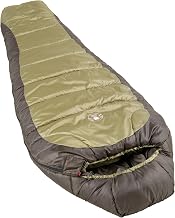
Not every paddler needs a premium bag. The Coleman North Rim is synthetic, rated 20°F, and genuinely compact—around 8 liters packed. At a budget-tier price point, it’s the entry door for kayak campers testing the waters.
The trade-off: it’s heavier than premium bags (around 26 oz) and the synthetic doesn’t compress quite as aggressively. But it’s durable, warm enough for three-season paddling, and won’t break your heart if it gets soaked. The North Rim consistently gets praise for reliability and value from weekend paddlers.
Ultralight Synthetic: Zpacks Classic Sleeping Bag
If you want ultralight without the down risk, the Zpacks Classic delivers. At roughly 18 oz in a 20°F rating, it’s competitive with down bags on weight but retains water resistance. The synthetic loft is engineered to compress smaller than typical synthetics—around 6–7 liters packed.
The bag is designed for minimalists: simple construction, no frills, just insulation and a shell. The construction is solid, though some users note the zipper is less robust than premium bags. It’s a trade-off for the weight savings.
Zpacks also offers custom sizing and temperature ratings, which means you can dial in exactly what you need for your river and season.
Quilt Alternative: Enlightened Equipment Revelation Quilt
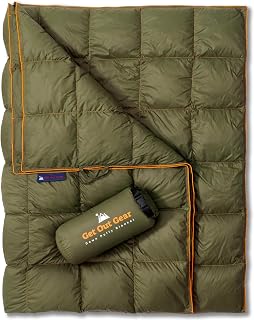
If you’re open to rethinking the sleeping bag format, a quilt is worth considering. The Revelation is a 20°F quilt (meaning it’s rated to keep you warm down to 20°F, like a bag) but without the full foot box and back insulation that you’re compressing against your pad anyway.
At roughly 19 oz and packing to around 5 liters, it matches the MegaLite on weight and compressibility. The key difference: it clips to your sleeping pad, eliminating draft leaks. On the water, where you’re often sleeping on irregular surfaces (sand, gravel, wet rocks), that clip system prevents the annoying gap that lets cold air in.
Quilts take some adjustment—you need a good pad, and you need to clip it correctly. But paddlers who’ve made the switch consistently report sleeping warmer for the same weight and packed size.
Packing and Protection: Making Compact Bags Last
A compact bag stuffed into a dry bag for three days of paddling will compress harder than it would in a backpack. Repeated hard packing can degrade loft over years. Use a compression stuff sack (the bag should come with one). Stuff loosely enough that you can still close the dry bag without straining. If you’re on a longer trip, unpack the bag at camp to let it loft back up overnight.
Protect the bag from direct contact with wet gear. Wrap it in a dry bag liner or pack it last so it sits on top of other kit. If it does get damp, hang it out to dry as soon as you reach camp—even 30 minutes of sun makes a difference.
For down bags specifically, consider a water-resistant treatment (some bags ship with it; others don’t). Per manufacturer recommendations, these treatments reduce—but don’t eliminate—water absorption. They’re worth the weight if you’re paddling water where capsize is likely.
Matching Bag to River and Season
Spring and fall (40–50°F nights): A 20°F bag gives you 20–30°F of safety margin, which is comfortable. Synthetic or hybrid designs are smart here because morning dew and unexpected rain are common.
Summer (50–65°F nights): A 30°F bag is adequate, and you can find genuinely compact options. Down dominates this tier because the weight savings are meaningful and the risk of extended wet weather is lower.
Winter and cold-water trips (below 40°F): A 15°F or colder bag is necessary. Hybrid designs shine here—you get down’s compressibility with synthetic’s water resistance. Budget extra weight because you’re trading ounces for safety.
Multi-week expeditions: Plan for temperature swings. A 15–20°F bag is versatile. Consider a quilt or a bag with a removable liner so you can adjust insulation as the season shifts.
FAQ
What’s the difference between stuff sacks and compression sacks? Stuff sacks hold gear loosely; compression sacks have straps that squeeze the contents smaller. For sleeping bags, compression sacks reduce packed volume by 20–30%. Use them for down and synthetic bags—they’re standard issue.
Do I need a liner inside my dry bag? Not required, but helpful. A dry bag liner (a smaller waterproof sack) protects your sleeping bag from punctures and makes it easier to locate in your main dry bag. It adds minimal weight and is worth the peace of mind.
How much should I spend? Budget-tier bags are reliable but heavier. Mid-tier offers the best balance of weight, warmth, and durability. Premium bags shave ounces and compress smaller but aren’t necessary unless you’re on long expeditions or obsessed with weight. For most paddlers, mid-tier is the sweet spot.
Is a quilt really better than a bag for kayaking? Quilts are lighter and pack smaller, but they require a good pad and correct setup. For paddlers willing to learn the system, quilts are excellent. For first-timers, a traditional bag is more forgiving.
Can I use a backpacking sleeping bag in a kayak? Yes, but you’ll sacrifice hull space. Standard ultralight backpacking bags pack to 10–15 liters. True compact bags designed for kayaking run 6–9 liters. If you already own a good bag, it’ll work. But if you’re buying new, a kayak-specific compact design is worth the investment.
The System Matters: Sleeping Bag + Pad + Shelter
A compact sleeping bag is only half the sleep system. Your sleeping pad insulates you from the ground (where you lose 40–50% of your heat) and your shelter protects you from wind and weather. A great bag in a leaky tent or on a thin pad won’t keep you warm.
Ultralight Sleeping Pad Comparison: Foam vs Inflatable for Kayakers
Best Budget Ultralight Sleeping Pad for Kayak Camping
Cheapest Ultralight Tent for Kayak Trips Without Compromise
If you’re buying a compact bag, also invest in a good ultralight pad and a tent that actually fits in your hull. The three together—bag, pad, shelter—are what keep you warm and dry on the river.
Closing: Compact Sleeping Bags as Freedom
A sleeping bag that packs small is more than a weight optimization. It’s permission to go farther, stay longer, and carry less burden. When your bag compresses to the size of a water bottle instead of a loaf of bread, you suddenly have room for a longer tent, extra food, or just the breathing space to enjoy the trip instead of managing the load.
The best compact bag for you depends on your river, your season, and your tolerance for risk. Down bags are lighter and smaller but vulnerable to water. Synthetic bags are heavier and bulkier but reliable. Hybrids and quilts split the difference.
Test before you commit. Borrow a bag from a friend, rent one for a weekend trip, or buy from a retailer with a good return policy. Sleep in it at home first. The gear that works on a spec sheet might not work on a gravel bar at 2 a.m.
Then pack it, push off, and find the bend in the river that no one’s told you about yet. That’s what the compact bag is for.