Best Budget Ultralight Sleeping Pad for Kayak Camping

Photo by Lucas Canino on Unsplash
Best Budget Ultralight Sleeping Pad for Kayak Camping
You’re loading a kayak for a three-day river trip, and you’ve already cut 8 pounds from your base kit. A sleeping pad sits between you and the gravel bar—it keeps you warm, keeps you dry, and takes up space you don’t have. The pad you choose can weigh 12 ounces or 2 pounds. It can or. And it can make the difference between a night of actual rest and a long, cold wait for dawn.
This guide walks you through the best budget ultralight sleeping pads built for kayak camping, where water gets in everywhere, hull space is sacred, and every ounce matters.
What Makes a Sleeping Pad “Ultralight” for Paddlers
Before you start comparing models, understand what ultralight means in a kayak context—it’s different from backpacking.
Weight matters, but packability matters more. A pad that weighs 14 ounces but rolls into a 3-inch cylinder beats a 10-ounce pad that’s the size of a rolled newspaper when you’re jamming a dry bag into a hatch. On water, bulk is weight. A pad that compresses to 4 liters instead of 8 liters means you can fit your sleeping bag, repair kit, and food in the same compartment without a second dry bag.
Insulation value (R-value) is critical. Water pulls heat from you 25 times faster than air. A pad with an R-value of 1.5 works fine for summer float trips; anything below freezing (shoulder season or northern rivers) demands R-value 2.5 or higher. Budget pads often sacrifice insulation to hit a low price point—know what you’re giving up before you buy.
Durability on rough surfaces is real. Gravel bars, sharp rocks, and wet sand shred cheap foam. Budget ultralight pads often use thinner materials to save weight; they’re more prone to punctures. Look for pads with reinforced bottom layers or tough external fabrics if you’re camping on anything harder than sand.
Inflatable vs. Closed-Cell Foam: The Budget Choice
Budget ultralight pads come in two types, and the choice shapes everything else.
Inflatable pads (air-core or hybrid) are lighter and more packable. You pump them up with your lungs or a small sack pump, and they compress to the size of a water bottle. The trade-off: they’re louder (your movement echoes every time you shift), they can puncture, and they need a repair kit. Budget inflatables are reliable if you’re careful, but they’re more fragile than premium models. Most have a single air chamber, so a pinhole is a real problem on a multi-day trip.
Closed-cell foam pads (EVA or similar) are heavier and bulkier, but nearly indestructible. You can drag them across rocks, sleep on them wet, and they’ll still work. No pump needed, no repair kit required. The catch: they don’t compress well, and they’re not warm. A 3/8-inch foam pad gives you almost no insulation—it’s a moisture barrier more than a thermal layer. Budget foam pads are best for summer-only trips where you’re layering a foam pad under a warmer insulated pad.
For true ultralight kayak camping on a budget, go inflatable. The weight and packability savings are too valuable to ignore. Just carry a repair kit and be careful where you set up.
Key Specs to Compare
When you’re looking at sleeping pads, these numbers tell the real story.
R-value: This measures insulation. Higher is warmer (per manufacturer specs). - R-value 1–1.5: Summer only, warm climates. - R-value 2–2.5: Three-season (spring through fall), most river trips. - R-value 3+: Winter and cold water, northern expeditions.
Budget pads rarely exceed R-value 2.5, so if you’re paddling in cold water, you’ll likely layer a foam pad underneath for extra insulation.
Packed size (liters): How small does it compress? Budget pads range from 4–8 liters. Anything under 5 liters is genuinely ultralight; 5–6 liters is standard; above 6 liters, you’re losing hull space.
Weight (ounces): Budget ultralight pads range from 10–20 ounces. Under 14 ounces is excellent for the price; 14–18 ounces is typical; above 18 ounces, you’re not really ultralight.
Baffled or single-chamber: Budget pads often have one big air chamber. If it punctures, you’re sleeping on the ground. Baffled pads (multiple chambers) cost more but give you redundancy. For budget options, a single chamber is normal—just accept the risk and carry a patch kit.
Valve type: Twist valves are slow but reliable. One-way valves are fast but can leak if not sealed perfectly. Budget pads use twist valves; premium pads use one-way. Twist is fine—it just takes longer to inflate.
Top Budget Ultralight Sleeping Pads for Kayak Camping
Decathlon Quechua Forclaz Ultralight Mat
Decathlon Quechua Forclaz Ultralight Mat
This is the sleeper pick—literally. Decathlon’s ultralight mat is purpose-built for weight-conscious campers and genuinely costs less than most competitors. Per owner reports, it delivers on the basics: R-value around 2, packed size under 5 liters, and weight in the 13–14 ounce range. The valve is a slow twist design, but the pad holds air reliably. The fabric is basic but tough enough for gravel bars if you’re not camping on sharp rock.
The catch: it’s single-chamber, so a puncture is a full deflation. But at this price point, you can afford a backup repair kit or even a second pad. Many paddlers use this as their primary summer pad and layer a closed-cell foam pad underneath for shoulder-season trips.
Best for: Weekend trips, summer water, paddlers who want to test ultralight sleeping without spending premium dollars.
Sea to Summit Ultralight Sleeping Mat
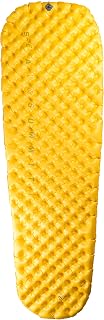
Sea to Summit’s ultralight line is the gold standard for packability. This pad compresses to roughly 4 liters and weighs around 14 ounces—it’s genuinely the size of a water bottle. R-value hovers around 1.5, so it’s best for warm-season trips, but the insulation is adequate for three-season use if you layer clothing underneath.
The valve inflates in about 10 breaths, and the pad holds air without drift. Per owner reports, it’s durable on sand and lighter gravel, though rough rock camping requires a ground sheet. The fabric is thinner than heavier pads, which is why it packs so small.
Best for: Minimalist paddlers, short trips, warm water, kayakers who obsess over hull space.
Klymit Static V
Klymit’s Static V is the workhorse of budget ultralight pads. It weighs around 12–14 ounces, packs into 5–6 liters, and offers R-value around 2.3—solid for three-season use. The V-shaped baffle design is clever: it creates a natural valley where your body sits, which concentrates warmth and reduces the pad’s footprint on the ground.
The trade-off is that the V-shape can feel odd if you’re used to flat pads, and some sleepers report sliding toward the center during the night. But once you adjust (usually by night two), most paddlers prefer it. The valve is a one-way design that inflates fast, and the pad is tough—it survives rough ground better than comparably priced competitors.
Best for: Cold-water trips, shoulder-season paddling, kayakers who want real insulation on a budget, sleepers who don’t mind a shaped pad.
Trekology Ultralight Sleeping Pad
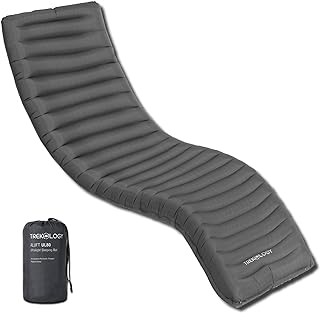
Trekology’s ultralight pad is the entry point—it’s what you buy when you want to try ultralight sleeping without committing serious money. Weight is around 14–16 ounces, packed size is 5–6 liters, and R-value is a modest 1.5. The pad is single-chamber, inflates with a manual pump (included), and uses a standard twist valve.
The reviews are honest: it works, it’s reliable, it won’t blow your budget. It’s not fancy, and it’s not the lightest option. But for a first ultralight pad on a kayak trip, it’s a safe, proven choice. Failure rates are low per owner feedback on Amazon and kayak-specific forums.
Best for: First-time ultralight buyers, summer trips, paddlers testing the waters before investing in premium gear.
Nemo Tensor Ultralight Insulated
Nemo Tensor Ultralight Insulated
Nemo’s Tensor Ultralight is mid-range in price but worth mentioning for one specific use case: if you sleep hot. Most ultralight pads trap heat to maximize warmth, but that means you wake up sweating in summer. The Tensor uses a minimalist insulation layer (R-value 1.3 per manufacturer spec) and emphasizes airflow. It weighs around 12 ounces and packs into 4.5 liters.
The pad is durable, the valve is fast, and the minimalist design means fewer failure points. Per owner reports, it’s excellent for warm-water trips and paddlers who generate their own heat.
Best for: Kayakers who sleep hot, summer-only trips, minimalist paddlers who want durability without insulation overhead.
Layering Strategy: How to Extend Your Pad’s Temperature Range
Here’s the secret that budget-conscious ultralight paddlers use: layer two pads instead of buying one expensive insulated pad.
A budget inflatable pad (R-value 1.5–2) layered under a lightweight closed-cell foam pad (R-value 0.5–1) gives you combined insulation of 2–3, which covers three-season paddling. The foam pad adds 8–12 ounces and 2–3 liters of volume—not ideal, but cheaper and more reliable than a single premium insulated pad.
Many paddlers carry a thin foam pad (like a Decathlon foam mat or EVA yoga mat, 6–10 ounces) specifically for this. In summer, they leave it behind. In shoulder season, they layer it underneath. This approach lets you buy a budget inflatable pad and adapt it to different seasons without replacing it.
Repair and Maintenance
Budget ultralight pads are more fragile than premium options, so maintenance matters.
Carry a patch kit. Every inflatable pad should ship with one; if yours doesn’t, buy a self-adhesive vinyl repair kit (1 ounce). On a multi-day trip, a self-adhesive vinyl patch kit is essential because a pinhole in the middle of a river means you’re sleeping on gravel without insulation—a night of hypothermia risk that a repair kit prevents.
Inspect before you pack. Blow up your pad at home, listen for hissing, and feel for air leaks. A pinhole you find at home is a 10-minute fix; one you find at camp is a sleepless night.
Dry it fully before storage. Moisture inside the pad leads to mold and corrosion of the valve. After each trip, inflate it and leave it in the sun for a few hours.
Use a ground sheet. A thin tarp or ultralight footprint under your pad prevents punctures from sharp rocks and extends the pad’s life by years.
Store it loose, not compressed. Keeping an inflatable pad compressed for months weakens the seams. Store it partially inflated or flat in a cool, dry place.
Budget Pad Limitations: What You’re Trading
Before you commit to a budget ultralight pad, know what you’re giving up compared to premium options.
Single air chamber instead of baffled. A pinhole is a total loss. Premium pads have multiple chambers—one fails, you still sleep (uncomfortably, but you sleep). Budget pads don’t have that redundancy.
Thinner fabrics. Budget pads use lighter, thinner materials to save weight. They’re more prone to punctures on sharp gravel or rock. You need a ground sheet; premium pads are tougher and can get away without one.
Lower R-value. Budget pads max out around R-value 2.5. If you’re paddling cold water or winter trips, you’ll need to layer a foam pad underneath. Premium insulated pads go to R-value 4+, but they cost two to three times as much.
Slower inflation. Budget pads use twist valves; you’re inflating by mouth or hand pump. Premium pads use one-way valves and inflate in 10 seconds. On a cold night, this matters less than you’d think, but it’s a real difference.
Fewer color and size options. Budget pads come in one or two colors and one length. Premium pads offer multiple options.
None of these are deal-breakers for kayak camping. You just need to know what you’re managing.
How Budget Ultralight Pads Compare to Backpacking Pads
Kayak camping pads and backpacking pads are often the same products, but the use case is different.
A backpacker cares about weight above all else—every ounce goes on their back. A kayak camper cares about packability and water resistance. You’re not carrying the pad; you’re fitting it into a dry bag. Water resistance matters more because you’re sleeping next to a river.
Most budget ultralight pads are equally good for both, but some backpacking-focused pads are optimized for weight at the expense of packability. When you’re comparing, check the packed size (liters), not just weight (ounces). A pad that weighs 12 ounces but packs into 8 liters is less useful for kayak camping than a 14-ounce pad that fits into 5 liters.
Internal Sleep System: How the Pad Fits Your Full Sleep Kit
A sleeping pad is one piece of a three-part sleep system. The other two are your sleeping bag and your insulation layer (clothing or a quilt).
For budget ultralight kayak camping, most paddlers use: - Budget inflatable pad (R-value 1.5–2, 12–16 ounces) - Compact sleeping bag (20–35 ounces, rated for your season) - Insulation layer (fleece or down jacket, 8–12 ounces)
Together, this system weighs 40–60 ounces and keeps you warm in three-season conditions. It’s lighter and more packable than a single premium insulated pad with a heavy sleeping bag.


