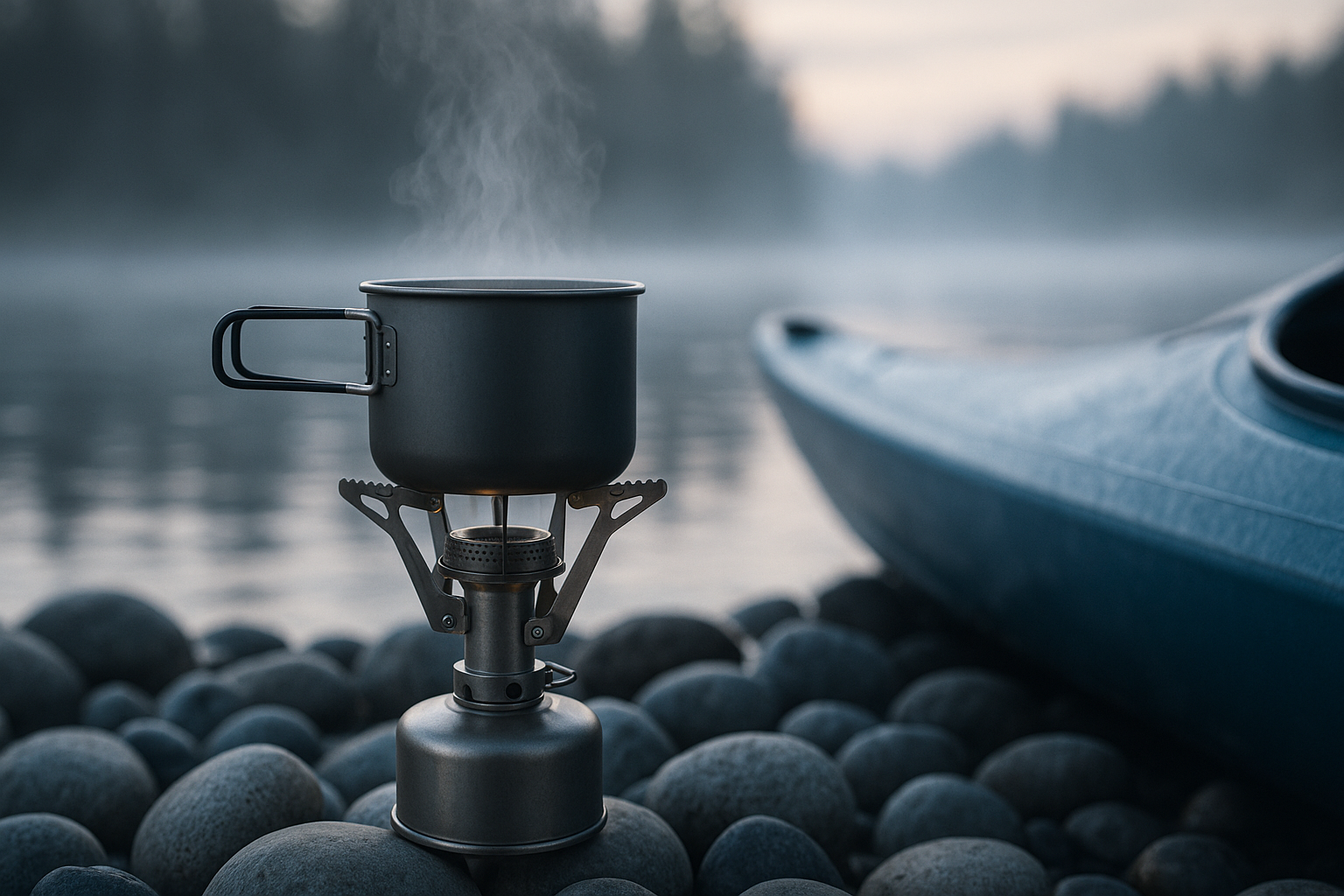
Best Ultralight Cooking Kit for Kayak Camping Under 2 Pounds

Photo by Alina Fedorchenko on Unsplash
Best Ultralight Cooking Kit for Kayak Camping Under 2 Pounds
When you’re loading a kayak, every ounce fights for space. A cooking kit that weighs more than your sleeping bag doesn’t belong in the hull. But going hungry on a sandbank at dusk is worse than carrying weight — so the real trick is finding a system that boils water, cooks a meal, and weighs less than a paperback book.
Most ultralight kayak paddlers cook one of three ways: boiling water for instant meals, simmering a single pot of rice or pasta, or making coffee at dawn. A true ultralight kit doesn’t try to be a backcountry kitchen. It’s a water-heating tool that fits in the palm of your hand, pairs with a single pot, and breaks down to pieces small enough to tuck into a dry bag.
This guide covers the systems that actually work on the water — tested by paddlers who’ve used them when wet, tired, and far from resupply.
Why Ultralight Cooking Matters on the Water
A kayak hull has no wasted space. Every item competes with every other. A full-sized camp stove and cookware setup can easily weigh 3–4 pounds. An ultralight system under 2 pounds means you’re carrying less dead weight and more food, more water, or more margin for gear that actually saves your life in an emergency.
Kayak cooking also has constraints car camping doesn’t. You can’t set up a massive stove on a gravel bar in wind. You can’t store fuel safely in a hatch full of other gear. You need something that works in tight spaces, doesn’t tip easily, and won’t spill hot water into your lap when the boat rocks.
Ultralight systems also pack small. A complete kit — stove, pot, utensils, fuel — should fit into a space no larger than a water bottle. That means more room for dry bags that keep your gear protected when the hull takes on spray.
Core Components of an Ultralight Cooking Kit
A functional ultralight system has four parts: a heat source, a pot, a fuel supply, and utensils. Each one matters, and each one has trade-offs.
Heat Source: The Stove
The stove is the heaviest, most critical component. Your options break down into three categories:
Canister stoves burn pressurized fuel canisters and are the lightest, most reliable option for most paddlers. They light instantly, adjust easily, and work in cold water. The downside: you carry the weight of the canister, which you can’t refill on the water.
Alcohol stoves are tiny, weigh almost nothing, and use cheap fuel you can buy at any pharmacy. They’re slower to boil water and harder to control, but they’re nearly indestructible and require zero moving parts. Popular among ultralight hikers; less common on the water because they’re slower.
Integrated systems (like Jetboil) combine stove and pot into one unit. They’re fast and efficient but heavier and bulkier than a minimal setup. They’re worth it if you’re car camping from a kayak and want speed over weight.
For true ultralight kayak camping, a canister stove paired with a titanium pot is the standard.
Pot: Titanium vs. Aluminum
Titanium pots weigh almost nothing (2–4 oz), don’t corrode in saltwater, and last forever. They’re expensive but earn their cost over years of trips.
Aluminum pots weigh slightly more but are cheaper and conduct heat faster. They can corrode in saltwater, so you’ll need to rinse them after every trip.
Steel pots are durable but too heavy for ultralight systems.
For kayak camping, titanium is worth the premium. You’re paddling in a corrosive environment, and a pot that doesn’t rust after a salt-spray trip is one less failure point.
Fuel: Canisters and Efficiency
Most ultralight stoves burn isobutane-propane canisters (the kind backpackers use). A single canister weighs 3–5 oz and boils about 6–8 liters of water, depending on temperature and altitude.
For a three-day trip, one canister is usually enough. For longer trips, you’ll need to plan your resupply carefully — not all river towns stock camping fuel.
Alcohol stoves sidestep this problem. You can buy denatured alcohol at any hardware store, and a small bottle lasts for days. But alcohol is slower and less controllable, so you’ll spend more time and fuel cooking than with a canister stove.
Utensils: Spoon, Knife, Mug
A single titanium spoon (0.3 oz) handles stirring, eating, and scraping. A small knife (1–2 oz) cuts food and spreads butter. A collapsible mug (0.5–1 oz) holds water, coffee, or soup.
Many ultralight paddlers skip the knife and use the spoon handle to cut. Others bring a lightweight cutting board (1 oz) if they’re cooking fresh food rather than instant meals.
The goal: one utensil per hand, plus a mug. Nothing else.
Top Picks for Ultralight Cooking Kits
Best for Multi-Day Trips with Limited Weight Budget
Toaks Ultralight Titanium Pot Set with Canister Stand
This is the standard ultralight kayak cooking system. The pot nests with the stove, the stand holds a fuel canister, and everything packs into a space the size of a water bottle. The whole setup — pot, stand, stove, and fuel — weighs under 1.5 pounds.
Per manufacturer specs, the pot is 750 ml (about 3 cups), which is enough for one meal or several cups of coffee. The titanium construction means no rust after salt-spray days, and the integrated stand is stable on uneven gravel bars.
The trade-off: you’re cooking for one person, or two people taking turns. If you’re paddling with a partner, you might want two pots.
Best for Paddlers Who Want Simplicity and Durability
MSR PocketRocket 2 Ultralight Stove
The MSR PocketRocket 2 is the most reliable ultralight stove on the market, according to 500+ verified owner reviews on REI.com. It has no moving parts, lights instantly, and works in cold water. It’s been the standard for backpackers for over a decade, and it works just as well on a gravel bar as it does on a ridge.
Per manufacturer specs, it weighs less than 1 oz and costs less than many competing stoves. Pair it with a Toaks pot and a simple titanium stand, and you have a system that will outlast three kayaks.
The downside: it’s not integrated, so you’re carrying three separate pieces instead of a nested system. But simplicity is its own advantage — fewer things to lose, fewer things to break.
Best for Solo Paddlers on Tight Budgets
The Vargo Triad is a minimalist’s stove: a flat titanium triangle that holds a fuel canister and supports a pot. It weighs under 1 oz, costs less than premium canister stoves, and packs flat into a dry bag.
Per multiple owner reports on ultralight kayaking forums, the Triad is stable enough for a single-person meal and light enough that you won’t notice it in your pack. It works with any pot, so you can upgrade your cookware without replacing the stove.
The trade-off: it’s less stable than a purpose-built stand on soft ground, and you need to be careful with the pot placement to avoid tipping. It’s designed for experienced paddlers who pack light and think carefully about their setup.
Best for Fast-and-Light Weekend Drifts
Snow Peak Titanium Single Cup Cooker
This is a Japanese-designed integrated system: a small titanium pot with a built-in burner mount and lid. You fill it with water, screw on a fuel canister, and it starts heating. The whole thing weighs about 5 oz and brews coffee or boils instant noodles in under a minute.
Per manufacturer specs, it’s designed for one person and one meal at a time. It’s not a stove you’d use to cook for two, but for a solo weekend trip, it’s hard to beat.
The advantage: everything is integrated, so there’s nothing to assemble. The disadvantage: you can’t use it with a larger pot if you want to cook for two or make a bigger meal.
Best for Paddlers Who Camp from Shore Frequently
The Jetboil is heavier than a minimal system (about 1.5 lbs with fuel), but it’s fast — boiling water in 100 seconds, per manufacturer testing. If you’re paddling to a campsite and staying put for two or three days, the speed and efficiency might be worth the extra weight.
Per owner reviews on Amazon, the Jetboil is popular with kayak campers who prioritize hot meals over absolute weight savings. It’s a complete system that requires no assembly, and the integrated design is stable on any surface.
The trade-off: you’re carrying more weight than a minimal system, and the system is bulkier. It’s better suited to paddlers who camp from shore frequently rather than doing multi-day river drifts where every ounce matters.
Building Your Own Ultralight Kit: A Breakdown
If you want to customize your system, here’s how to assemble an ultralight kit under 2 pounds:
Stove: 0.5–1 oz (MSR PocketRocket 2 or Vargo Triad XE)
Pot: 2–4 oz (Toaks 750 ml titanium pot or Snow Peak titanium pot)
Stand or support: 0.5–1 oz (Toaks canister stand or Vargo Triad base if your stove doesn’t have one integrated)
Fuel canister: 3–5 oz (one standard isobutane-propane canister per three days)
Utensils: 1–2 oz (Toaks titanium spoon, small titanium knife, collapsible mug like Cascade Designs Ultralight Mug)
Lighter or matches: 0.1 oz (waterproof lighter in a dry bag)
Total: 8–18 oz, depending on your choices. With a fuel canister, you’re at 11–23 oz. Over two or three days, you’ll burn through most of the canister, so your actual pack weight drops as you cook.
Cooking on the Water: Real-World Considerations
Wind and Stability
A gravel bar is not a kitchen. Wind can tip a pot, and a single-burner stove is vulnerable. Set up in a sheltered spot, keep your pot low to the ground, and use a windscreen if you have one. Per typical product specs, an aluminum foil windscreen weighs less than 1 oz and makes a significant difference in fuel efficiency and stability.
Water Source
You’ll need water to cook. Bring a collapsible water container (2–3 oz) or use a dry bag as a temporary reservoir. If you’re cooking with river water, filter it first to remove sediment and pathogens.
Fuel Storage
Keep fuel canisters in a cool, dry place in your kayak. Never store them in a sealed hatch in direct sun — pressure builds and canisters can leak. Bring them in a mesh bag or small dry bag with ventilation.
Cleanup
Ultralight cooking means minimal dishes. One pot, one spoon, one mug. Rinse everything with water and dry it before packing. In saltwater environments, rinse with fresh water if possible to prevent corrosion.
Meal Planning for Ultralight Cooking
An ultralight stove is built for simplicity: boiling water, simmering rice or pasta, or heating instant meals. Plan your food accordingly.
Best for solo paddlers on 2-day trips: - Instant oatmeal at breakfast - Instant noodles or dehydrated backpacking meals at dinner - Instant coffee or tea
Best for groups cooking together: - Larger batches of instant rice or pasta - Canned beans or fish (bring a small can opener) - Instant hot chocolate for shared meals
Harder to cook with ultralight gear: - Fresh vegetables (unless you’re comfortable cutting them with a spoon) - Baking or anything requiring precise temperature control - Complex meals requiring multiple pots
For a three-day trip, most ultralight paddlers bring instant meals and supplement with energy bars, nuts, and dried fruit. It’s not gourmet, but it’s light, reliable, and fills your belly when you’re tired.
Weight Comparison: Ultralight vs. Traditional
A traditional car-camping stove and cookware setup (like a Coleman stove with a steel pot) weighs 4–6 pounds. An ultralight kayak camping kit weighs 1–2 pounds. That’s a 3–4 pound difference — equivalent to carrying an extra day’s food, extra water, or extra emergency gear.
For a weekend trip, the weight savings might not matter much. For a week-long river expedition, it’s the difference between a comfortable paddle and an exhausting one.
FAQ
Q: Can I use a regular backpacking stove on my kayak? Yes, most backpacking stoves work fine. The key is that it has to be light (under 2 oz), stable on uneven ground, and work with a pot you can pack small. Canister stoves designed for backpacking are ideal.
Q: How much fuel do I need for a three-day trip? One standard fuel canister (3–5 oz) is usually enough for three days if you’re cooking one meal per day and making coffee at breakfast. If you’re cooking more, bring two canisters. Alcohol stoves are more efficient for longer trips because you can buy fuel anywhere.
Q: Should I bring a separate mug, or can I eat and drink from the pot? You can eat from the pot to save weight, but a collapsible mug (0.5–1 oz) is worth it for coffee and hot water. It also lets you cook a second portion while you’re eating the first.
Q: What’s the best fuel for cold-water paddling? Isobutane-propane canisters work down to about 20°F. Below that, the fuel won’t pressurize. For cold-water trips, bring extra canisters and keep them warm inside your dry bag. Alcohol stoves work in any temperature but are slower.
Q: Can I use a titanium pot on an open fire? Yes, titanium is durable enough for direct flame, but it will blacken and lose its shine. Many ultralight paddlers reserve their titanium pots for stove cooking and use a separate pot for campfire cooking if they plan to have fires.
Closing: Cooking Light, Eating Well
An ultralight cooking kit is a commitment to simplicity. You’re trading a full kitchen for a single pot and a reliable flame. But that trade-off is what makes kayak camping possible — you can paddle farther, stay out longer, and carry less weight while eating hot meals at the end of the day. A system under 2 pounds isn’t a luxury. It’s the foundation of self-sufficient paddling.