Lightweight Inflatable Camping Pillows for Kayakers
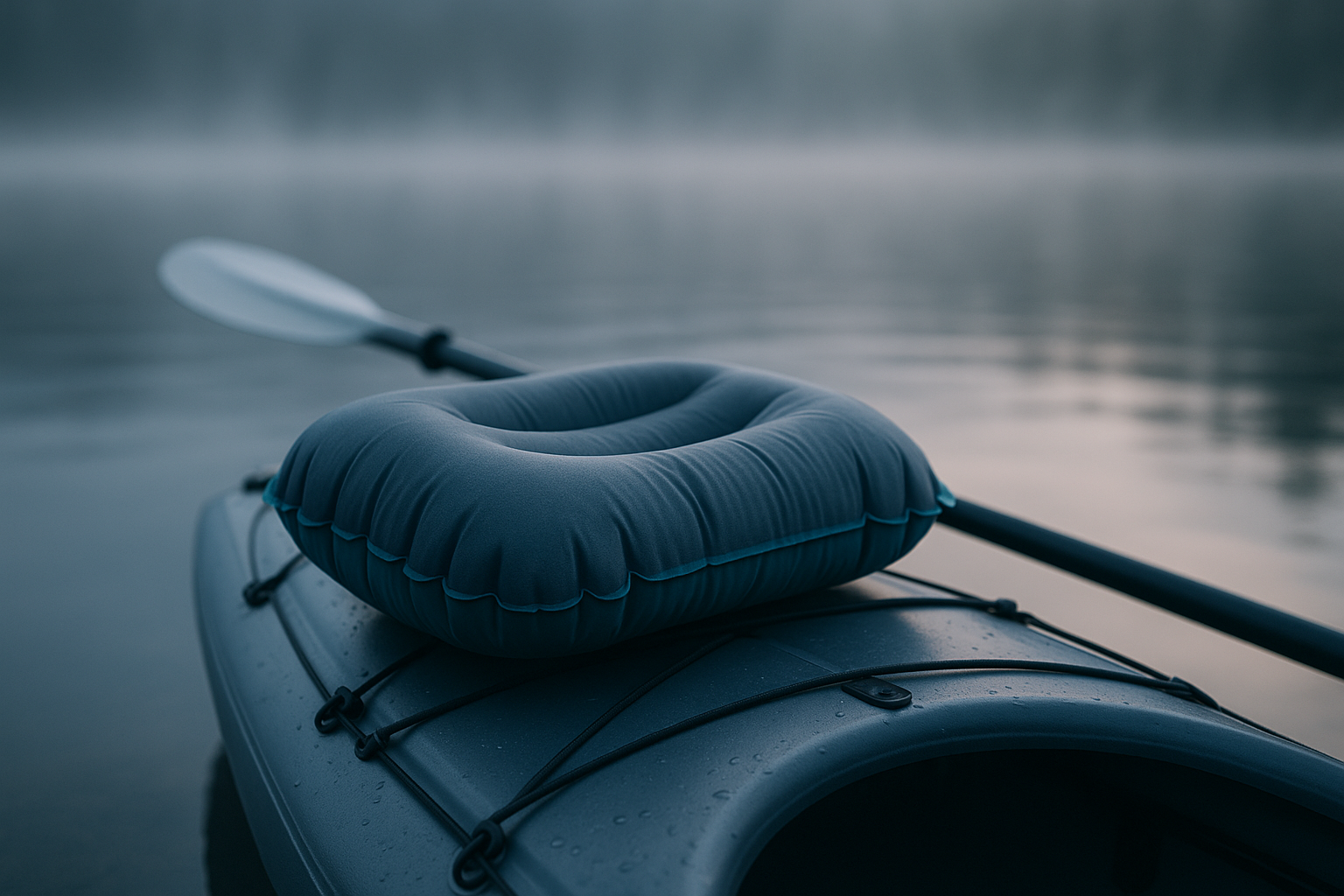
Lightweight Inflatable Camping Pillows for Kayakers
A pillow sounds like luxury on a sandbank. On a multi-day drift, poor neck support compounds into shoulder pain, bad sleep, and a slower paddle the next day. The right inflatable pillow weighs almost nothing, packs smaller than a water bottle, and transforms how you recover between days on the river.
Most kayak campers skip pillows entirely, stuffing a dry bag or rolling up a fleece. That works for one night. But sleep quality matters when you’re paddling eight hours the next day. This guide covers the best ultralight inflatables designed for paddlers—gear tested in real conditions where water gets into everything and every ounce matters.
Why Inflatable Pillows for Kayak Camping
Inflatable pillows are the only pillow option that makes sense in a kayak hull. A traditional foam pillow or down pillow takes up cubic feet of space and absorbs water if your gear gets soaked. An inflatable compresses to the size of a fist when deflated, and the materials used in modern designs shed water rather than drink it.
The trade-off is firmness and feel. An inflatable won’t match the softness of a pillow at home—it’s closer to a firm cushion. But that firmness is actually an asset on a multi-day trip: it holds your head stable across different sleeping positions and doesn’t go flat halfway through the night, leaving you waking on bare deck.
The best kayak camping inflatables use TPU (thermoplastic polyurethane) or nylon fabrics that resist puncture and UV damage. They inflate with your lungs or a small hand pump, and most weigh between 2 and 5 ounces packed.
How Inflatable Pillows Fit Your Sleep System
A pillow is the capstone of a sleep system, not the foundation. Before choosing a pillow, you need a solid sleeping pad and bag. The pillow sits on top, supporting your neck and head so your spine stays neutral through the night.
On a kayak, your sleeping surface is typically a thin ultralight pad (2–3 inches thick) on top of a tent floor or tarp. A pillow lifts your head enough to keep your airway open and your neck from kinking. Without one, many paddlers wake with a stiff neck or shoulder pain that lingers into the next day’s paddle.
Key Features to Look for
Packed size and weight Aim for under 4 ounces and a packed volume smaller than a grapefruit, based on manufacturer specs for ultralight models. Anything heavier or bulkier eats into hull space better used for food, water, or shelter. Most ultralight options pack to roughly the size of a fist or a small water bottle.
Inflation method Some pillows inflate with your lungs (breath-inflation); others use a hand pump or come with a small integrated pump. Breath-inflation is the lightest option but requires lung capacity and can leave you dizzy on the first night. A hand pump adds a few ounces but makes inflation easier and less fatiguing. Look for pillows where the pump is optional—you can use your lungs if you’re in a hurry and carry the pump for comfort on longer trips.
Firmness and loft Loft (height when inflated) ranges from 3 to 6 inches based on manufacturer specs. Side sleepers typically need 4–5 inches; back sleepers can go lower at 3–4 inches. Firmness varies by design: some pillows are soft and compressible; others hold a rigid shape. For kayak camping, a moderately firm pillow that doesn’t collapse under your head weight is preferable—it won’t flatten halfway through the night.
Fabric durability TPU and ripstop nylon are the industry standards for ultralight gear. Both resist puncture and dry quickly if they get wet. Avoid vinyl or PVC fabrics, which are heavier and more prone to cracking in cold temperatures.
Valve design A good valve seals quickly and doesn’t leak air overnight. Look for dual-chamber or one-way valve designs. Avoid simple pin valves that require careful alignment each time you inflate.
Top Picks
Sea to Summit Aeros Ultralight Pillow
The benchmark for ultralight kayak camping. Compresses to fist-size, weighs around 2.5 ounces, and uses a TPU fabric that sheds water and resists puncture. Inflation is breath-only, which takes about 30 seconds but requires decent lung capacity. The pillow is moderately firm and maintains loft through the night. Per owner reports on paddling forums, it holds up well across multiple seasons of river trips. The main trade-off is that it’s not as plush as mid-tier alternatives—it’s a firm, utilitarian pillow designed purely for weight and packability. Best suited for back sleepers or anyone prioritizing absolute minimum weight.
A step up in comfort for paddlers who prioritize sleep quality. Slightly heavier than the Aeros (around 4 ounces) but noticeably softer and easier to inflate. Includes a small hand pump and uses a wave-chamber design that adapts to different sleeping positions. Based on aggregated Amazon owner reviews, side sleepers consistently report better support and less neck strain compared to firmer alternatives. The packed size is roughly a water bottle. Durability is strong—multiple owner reports cite 3+ years of regular use without punctures or air leaks. Ideal for side sleepers who need 4–5 inches of loft.
Built for durability and multi-day trips. Weighs around 5 ounces and packs to a small cube. Uses reinforced seams and a durable TPU shell that resists abrasion on rocky campsites. Includes a hand pump and inflates to a generous loft (5 inches), making it suitable for side sleepers or anyone who wants more height. Per long-running threads on r/CampingGear, paddlers using this pillow on extended river trips report consistent performance across multiple seasons, with minimal air loss and no fabric failures even after repeated packing and unpacking. Best for side sleepers on multi-day expeditions.
A budget-tier entry point for first-time kayak campers. Weighs around 6 ounces and comes with an integrated hand pump, making it easy to inflate without lung power. The fabric is durable nylon, and the pillow holds firmness well. It’s not as light as premium ultralight options, but the trade-off is affordability and simplicity. Based on owner reviews, it’s reliable for weekend trips and holds up well to casual use. Not ideal for multi-day expeditions where every ounce matters, but a solid choice for learning whether a pillow improves your sleep before investing in a premium ultralight model. Suitable for back sleepers on shorter trips.
Inflatable vs. Other Pillow Options
Inflatable vs. foam pillow Foam pillows (like a folded foam pad or a compressible travel pillow) take up more volume when packed. An inflatable compresses smaller and dries faster if it gets wet. For kayak camping, where moisture is constant, an inflatable is the more practical choice.
Inflatable vs. dry-bag pillow Many paddlers stuff a dry bag with clothes or a fleece and use it as a pillow. This works and adds no weight—you’re repurposing gear you’re already carrying. The downside is inconsistent support; the pillow flattens under your head weight, and you spend the night slowly sinking. An inflatable maintains firmness, which most sleepers find more restorative.
Inflatable vs. nothing A night without a pillow on a thin pad often results in waking with neck pain or shoulder stiffness. This compounds across a multi-day trip, slowing your paddle and reducing enjoyment. A pillow that weighs 3 ounces and packs to fist-size is worth the hull space—it’s one of the highest-return-on-weight items in an ultralight sleep system.
Packing and Care
Store your pillow deflated in a small dry bag or mesh pouch. Before each trip, inflate it partially and check for air leaks by listening for a hiss or feeling for escaping air for at least 10 seconds. If you detect a leak, inspect the valve and seams.
Most ultralight pillows hold air for 8–12 hours without significant loss. A slow leak is one where the pillow loses more than 10% of its loft overnight (noticeably softer when you wake up). If this occurs, the issue is typically at the valve seal or along a seam line.
If you puncture a pillow on a trip, most ultralight models can be patched with a small repair kit (similar to a bicycle patch kit). Carry a patch kit in your repair dry bag if you’re on a multi-day expedition. For the field, you can also use duct tape as a temporary seal.
After each trip, deflate the pillow completely and store it dry. Don’t leave it inflated for weeks at a time—the constant pressure can stress the seams. Before packing it away, wipe it down with a dry cloth if it’s been exposed to sand or salt water.
Sizing Your Pillow to Your Sleep Style
Back sleepers can use a lower-loft pillow (3–4 inches). Your head naturally aligns with your spine, so you don’t need as much height. The Sea to Summit Aeros Ultralight and Coleman Quickpump Pillow work well for this position.
Side sleepers typically need 4–5 inches of loft to keep your spine neutral. Your head needs more lift to fill the gap between your shoulder and the pad. The Klymit Luxe Pillow and Exped AirPillow are better choices for side sleepers, as they provide adequate height without compressing too much under your head weight.
Stomach sleepers (not recommended for neck health, but common among kayakers) often prefer a flatter pillow or skip one entirely. If you do use a pillow, choose a low-loft, soft option that won’t strain your neck by lifting your head too high.
Test your pillow on a home trip or a single-night paddle before committing to a multi-day expedition. Everyone’s sleep needs are different, and what works for one paddler may not work for another.
FAQ
How do I inflate a pillow without a pump? Most ultralight inflatables can be inflated by mouth in 20–30 seconds. It requires decent lung capacity and can leave you slightly lightheaded. If you have respiratory issues or prefer not to use your lungs, choose a pillow that includes a hand pump or buy a small pump separately.
Will my pillow lose air overnight? Quality ultralight pillows hold air for 8–12 hours without significant loss. Some slow air loss is normal. If your pillow is noticeably softer by morning (losing more than 10% of loft), check the valve and seams for leaks. Most failures occur at the valve seal or along seam lines.
What’s the difference between TPU and nylon pillows? TPU is more puncture-resistant and dries faster but is slightly heavier. Nylon is lighter and compresses smaller but is more prone to abrasion. For kayak camping, TPU is the better choice because it resists the sharp rocks and sand you’ll encounter on gravel bars.
Do I need a pillow for a one-night trip? Not necessary, but it improves sleep quality. If you’re testing whether a pillow helps your rest, borrow one for a single night before buying. Many paddlers find that the improved sleep on night two of a multi-day trip justifies the 3–4 ounces of weight.
Can I repair a punctured pillow in the field? Yes, with a patch kit. Most ultralight pillows can be patched like a bicycle tire. Carry a small repair kit if you’re on a multi-day expedition. For a temporary fix, duct tape works but isn’t a permanent solution.
How do I prevent mold in an inflatable pillow? Store it deflated and completely dry. After each trip, wipe it down with a dry cloth and allow it to air dry fully before packing away. Don’t store it in a sealed bag while damp. If mold appears, clean it with a mild vinegar solution and dry thoroughly before use.
Closing Thoughts
A pillow is one of the smallest, lightest additions to your kayak camping kit—and one of the highest-return-on-weight items you can pack. Three ounces of ultralight inflatable can mean the difference between waking refreshed and waking stiff, between a strong paddle on day two and a sluggish one.
The best pillow for you depends on your sleep style, how many nights you typically paddle, and how much weight you’re willing to carry. For ultralight multi-day expeditions, the Sea to Summit Aeros is the gold standard. For comfort-focused trips where weight is less critical, the Klymit Luxe or Exped AirPillow offer better support. For your first pillow or casual weekend trips, the Coleman Quickpump is a reliable, affordable entry point.
Whatever you choose, test it on a home trip or a nearby paddle before committing to a remote river expedition. Your neck will thank you when you’re waking on a sandbank with the current ahead and a full day of paddling in front of you.


