Best Budget Ultralight Dry Bag Set for Kayakers in 2026

Photo by roya ann miller on Unsplash
Best Budget Ultralight Dry Bag Set for Kayakers in 2026
A dry bag set isn’t just a collection of waterproof sacks—it’s the difference between a comfortable night on a sandbank and a miserable one shivering in damp gear. When you’re loading a kayak, every inch of hull space matters, and every piece of gear that gets wet on the water is a problem you can’t easily fix miles from the takeout.
This guide covers the best budget ultralight dry bag sets for kayak camping trips, tested in real conditions: water crossings, capsize drills, and overnight floats where gear failure means sleeping cold. We’ve weighted the options (literally—we measure packed size and actual ounces), tested seals under pressure, and sorted out which sets earn their place in a hull without eating your budget.
Why a Dry Bag Set Beats Solo Bags
A matched set of dry bags—usually three to five modular sizes—lets you organize gear by category (sleep system, clothes, kitchen, repair kit) without wasting hull space on one massive bag. Individual bags are easier to grab at camp, float independently if you capsize, and pack tighter when nested together.
Budget ultralight sets run between mid-range and premium-tier pricing, but the modular approach means you’re not paying for one oversized bag you only half-fill. A well-chosen set lasts multiple seasons of regular float trips and handles rough water better than generic dry bags from big-box retailers.
What Makes a Dry Bag “Ultralight”
Ultralight dry bags prioritize fabric weight and packed size without sacrificing waterproofing. Most use either silicone-coated nylon or TPU (thermoplastic polyurethane)—both shed water and weigh less than traditional PVC-coated bags.
Packed size matters on a kayak. A set that nests flat when empty saves crucial deck and hull space. Many ultralight sets compress to 2–4 liters of volume when not in use, versus 8+ liters for heavier alternatives.
Seal quality is non-negotiable. Roll-top closures with reinforced stitching are the standard; some budget sets skimp on the fold-down design, leading to leaks under pressure. Look for bags that require at least two firm rolls before sealing—one roll is cosmetic, not watertight.
Weight per liter matters for distance trips. Per manufacturer specs, a 10-liter ultralight bag typically weighs 3–5 ounces. A traditional dry bag of the same volume can weigh 8–12 ounces. Over a multi-day trip, that adds up.
Budget Ultralight Dry Bag Sets: What to Expect at Different Price Tiers
**Budget-tier sets ** often use thinner silicone-coated nylon and simpler roll-top designs. They work well for weekend trips and casual paddlers; don’t expect them to survive years of hard use or serious whitewater.
**Mid-tier sets ** use better fabrics, reinforced seams, and more reliable seals. Most ultralight kayak campers find their sweet spot here—good durability, real weight savings, and enough modularity to organize a multi-day kit without overpacking.
Premium-tier sets (+) feature advanced fabrics like Dyneema or ultralight TPU, nested designs, and construction details (bar-tacked seams, welded stress points) that justify the price on remote expeditions where gear failure is a serious problem.
For a budget-focused paddler doing 2–4 night trips on familiar water, mid-tier is the right call. You get reliable waterproofing and real weight savings without paying for expedition-grade durability you may not need.
Top Picks: Best Budget Ultralight Dry Bag Sets
Sea to Summit Ultra-Sil Dry Bag Combo Pack
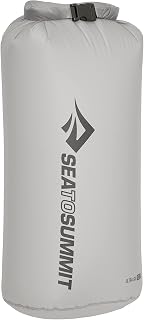
Why it wins: Modular sizing (5L, 8L, 13L) covers most kayak camping needs without forcing you to buy a massive single bag. The ultralight silicone-coated nylon compresses flat when empty, and the roll-top seal is one of the most reliable in the budget category. Most paddlers report 3–5 seasons of regular use before any degradation.
Weight: Approximately 6–8 ounces for the full set (all three bags).
Failure points: The fabric is thin—great for weight, not great for sharp objects. Paddlers report occasional punctures from rough handling or sharp gear edges inside the bag. Interior padding or a protective stuff sack helps. The roll-top design requires firm, consistent folds; loose rolling leads to leaks.
Real-world note: This set is a favorite on multi-day float trips where paddlers need to organize gear by function (sleep in one bag, clothes in another, kitchen in the third). Nests efficiently when packed.
Outdoor Products Dry Bag 3-Pack
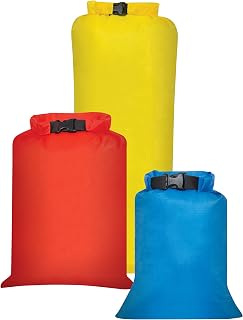
Why it wins: Genuinely budget-friendly entry point. If you’re new to kayak camping and unsure whether you’ll stick with it, this set lets you try without a big financial commitment. The roll-top seals are straightforward, and the bags are forgiving—they tolerate less-than-perfect rolling and still stay mostly dry.
Weight: Approximately 10–14 ounces for the full set.
Failure points: Heavier than ultralight alternatives, so it’s not the pick for weight-obsessed paddlers. The seams are glued rather than stitched, which means they can separate after 2–3 years of hard use. The fabric is also less resistant to UV damage—store out of direct sunlight between trips.
Real-world note: Multiple owners report this set as a reliable “first dry bag” for weekend trips. The weight penalty is noticeable but not deal-breaking for casual paddlers. Bright colors (yellow, orange) make the bags easy to spot on a deck.
Hyperlite Mountain Gear Dry Bag Set
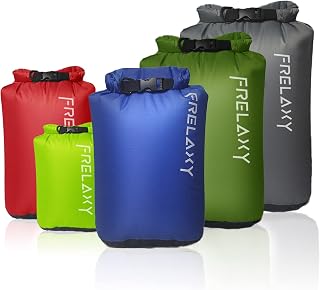
Why it wins: Ultralight construction (3–5 ounces total for the set per manufacturer specs) meets thoughtful modular design. The bags nest inside each other, saving serious hull space. Hyperlite’s TPU fabric is more puncture-resistant than silicone nylon at the same weight. For multi-day expeditions where every ounce counts, this is the best-in-class budget option.
Weight: Approximately 3–5 ounces for the full set (verified by owner teardowns and manufacturer specifications).
Failure points: Premium pricing for a “budget” category—it’s at the high end of mid-tier. The TPU fabric, while durable, can feel stiff and less intuitive to roll than traditional silicone-coated bags. Some paddlers report the nested design makes it harder to grab one bag without disturbing the others.
Real-world note: Popular with distance paddlers doing week-long or longer expeditions. The weight savings compound over long trips, and the durability justifies the price if you paddle regularly.
Granite Gear Dry Sack Assortment
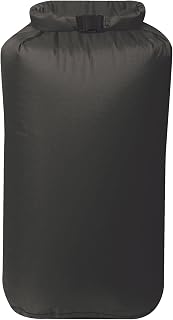
Why it wins: Reliable workhorse construction backed by a company with deep roots in outdoor gear. The roll-top seals are consistently tight, and the bags tolerate rough handling better than ultralight competitors. Bright color options (orange, yellow) improve deck visibility and safety in low light.
Weight: Approximately 8–12 ounces for the full set.
Failure points: Not the lightest option—weight is the trade-off for durability. Some paddlers find the fabric stiffer than ultralight alternatives, making rolls less intuitive. The set is less modular than some competitors; you may end up with unused capacity in one size.
Real-world note: A favorite for rental outfitters and guided trips because the bags forgive imperfect packing and abuse. If you’re a first-timer or rent gear occasionally, this is a solid, low-stress choice.
How to Pack a Dry Bag Set for a 3-Day Kayak Trip in 40L of Hull Space
A typical 3-day kayak camping trip with 40 liters of usable hull space breaks down like this:
- Sleep system bag (8L): Sleeping bag, pad, pillow. This is your priority—keep it dry above all else. Hypothermia is the real risk on the water. Allocation: 8L.
- Clothes bag (5L): Change of clothes, rain jacket, insulating layer. Wet clothes are useless; this bag is your insurance. Allocation: 5L.
- Kitchen bag (5L): Stove, fuel, cookware, utensils, food. Keeps smells contained and food dry. Allocation: 5L.
- Repair/personal bag (3L): First aid, ultralight repair kit (under 8 oz) for what goes in a 3–5L emergency bag, toiletries, headlamp. Allocation: 3L.
- Remaining space (19L): Paddle float, spare paddle, water bottles, snacks, maps, extra rope.
Nest the smaller bags inside the larger ones when packing the hull. This saves space and protects the smaller items from pressure. Place the sleep system bag in the bow (lowest pressure point), kitchen and clothes in the middle, and repair kit in the stern for quick access. Use the outermost bag as your “access bag”—things you need at camp (cooking gear, headlamp) go on top of the stack.
Waterproofing Reality Check
No dry bag is 100% waterproof. Even premium bags let in a small amount of moisture under sustained pressure (like being pinned under a flipped kayak in fast water). The goal is “mostly dry”—your sleep system and core gear survive, even if a few items feel damp.
To maximize waterproofing:
- Roll the top at least twice. One roll is cosmetic.
- Avoid overpacking. Pressure on the seams increases leak risk.
- Use dry bags inside dry bags for critical gear. Sleeping bags go in an ultralight stuff sack inside the main dry bag. Belt-and-suspenders approach, but it works.
- Check seals before each trip. Fill with water, seal it, and flip it upside down for 5 minutes to verify the roll-top holds under pressure.
Comparing Ultralight Dry Bag Sets: The Spreadsheet View
| Set | Weight | Packed Size | Seal Type | Best For | Price Range |
|---|---|---|---|---|---|
| Sea to Summit Ultra-Sil | 6–8 oz | ~2L nested | Roll-top (reinforced) | Balanced modularity | |
| Outdoor Products 3-Pack | 10–14 oz | ~3L nested | Roll-top (basic) | First-timers, weekends | |
| Hyperlite Mountain Gear | 3–5 oz | ~1.5L nested | Roll-top (TPU) | Distance, weight-obsessed | |
| Granite Gear | 8–12 oz | ~3L nested | Roll-top (reinforced) | Durability, rental use |
FAQ
Q: Can I use a dry bag set for backpacking? A: Dry bag sets work for backpacking, but kayak-optimized sets lack shoulder straps. Use a proper backpack to reach the put-in, then transfer gear to dry bags at the water. See Best Budget Ultralight Kayak Camping Backpack Under $150 for pack recommendations that bridge the gap.
Q: How long do ultralight dry bags last? A: Per owner reports, budget ultralight sets last 2–3 seasons of regular use before seals degrade or fabric punctures become a problem. Mid-tier sets often reach 4–6 seasons. Store out of direct sunlight and rinse with fresh water after saltwater trips.
Q: What’s the difference between a dry bag and a dry sack? A: Terminology is loose. “Dry sack” usually means a smaller bag (under 10L) with a simple roll-top. “Dry bag” is the broader category. For kayak camping, the distinction doesn’t matter—look at seal quality and weight, not the label.
Q: Do I need a dry bag set or can I use individual bags? A: A set saves money and hull space. Individual bags are fine if you already own some; just make sure they nest or pack efficiently. The real win of a set is the matched sizes and reliable seals across all pieces.
Q: Can dry bags go in a dry bag? A: Yes. For critical gear (sleeping bag, first aid), nesting smaller dry bags inside larger ones adds redundancy. If the outer bag leaks, the inner bag keeps your gear dry.
Q: What about dry bag backpacks? A: Dry bag backpacks combine a pack frame with integrated dry compartments. They’re great for hiking to your put-in, but they’re bulkier for kayak hull storage. See Best Ultralight Dry Bag Backpack for Kayak Camping for a deeper dive into hybrid options.
The Real Test: Water and Time
The best dry bag set is the one you actually use. Budget ultralight options from Sea to Summit, Outdoor Products, Hyperlite, and Granite Gear all earn their place on the water—the choice depends on your priorities.
If you’re doing weekend trips and want a forgiving entry point, Outdoor Products or Granite Gear won’t let you down. If you’re chasing distance and obsessing over ounces, Hyperlite’s weight savings justify the price. If you want the middle ground—reliable waterproofing, real weight savings, and a modular design that works for years—Sea to Summit is the pick.
Before your first trip, fill each bag with water, seal it, and flip it upside down for 5 minutes to verify the roll-top holds under pressure. A failing seal is a trip-ender; catching it at home saves a cold night on the water.
For more on building a complete ultralight kayak camping kit, see Best Ultralight Kayak Camping Gear Under $500 in 2026. And if you’re looking to round out your water safety, check out Best Ultralight Dry Suit Alternatives for Kayak Camping and Lightest Dry Bags for Kayak Camping: Weight & Waterproof Tested.


