Best Ultralight Dry Bag Backpack for Kayak Camping

Photo by Mikail McVerry on Unsplash
The Best Ultralight Dry Bag Backpack for Kayak Camping
When you’re loading a kayak, every cubic inch and every ounce matters. A regular backpack gets soaked on the first rapid. A standard dry bag forces you to choose between shoulder straps and a seal. A true ultralight dry bag backpack does both — keeps your sleeping bag, clothes, and camp food bone-dry while packing small enough to fit a modest hull and light enough that you barely notice it on your back when you’re portaging to the next put-in.
The catch: not all dry bag backpacks are built for kayak camping. Some are made for packraft trips on alpine creeks. Others are designed for whitewater rescue or beach gear. The ones that work best for multi-day paddle camping solve a specific problem: they have to seal like a dry bag, pack like a backpack, and disappear into the hull like they’re not even there.
This guide walks you through what makes a dry bag backpack worth the money, how to size it for your trips, and which models actually deliver on the promise of staying dry while staying light.
What Makes a Dry Bag Backpack Different from a Regular Dry Bag
A standard dry bag is a tube with a roll-top closure. It’s waterproof, light, and efficient — but you carry it like a duffel. A dry bag backpack adds shoulder straps, usually a hip belt, and sometimes a back panel. The trade-off is modest weight and volume for the sake of comfort on portages and trips to shore.
The best ultralight versions split the difference. They use roll-top seals (the gold standard for kayak camping, per multiple owner reports on r/kayakfishing and r/canoecamping), add straps that pack away when not needed, and use fabrics thin enough that the whole thing weighs less than a sleeping pad.
Look for these features:
- Roll-top closure — more reliable than zippers when you’re wet and tired, and it compresses as you pack lighter.
- Welded or taped seams — stitching alone will leak under pressure; the best models tape the seams on the inside.
- Removable or stowable shoulder straps — so the pack can compress into a hull without straps eating space.
- Ultralight fabric (70D–100D nylon or equivalent) — thick enough to survive river rocks and branches, light enough to not feel like dead weight.
- A modest hip belt or load-lifter straps — distributes weight away from your shoulders on longer portages without adding much bulk.
Capacity: How Big Should Your Ultralight Dry Bag Backpack Be?
This is where most paddlers get it wrong. They buy a 40-liter dry bag because it sounds like a good all-rounder, then find it takes up half their hull and sits half-empty on three-day trips.
For ultralight kayak camping, think in two tiers:
Weekend trips (2–3 nights): 20–30 liters. This is the sweet spot for a kayak. It holds your sleeping bag, pad, ultralight tent, clothes, and camp kitchen. Per aggregated owner reports across kayak camping forums, most paddlers report that a 25-liter pack handles a Friday-to-Sunday trip without excess. The key is that it fits your hull without dominating it, and it doesn’t force you to choose between gear and comfort.
Longer expeditions (4+ nights): 35–50 liters. At this point, you’re likely using a larger hull or accepting that the pack will take up real estate. The sweet spot for multi-week trips is usually 40–45 liters — enough for a sleeping bag, food for several days, and a few redundant layers without becoming a cargo hauler.
The mistake is buying one pack for both. A 40-liter dry bag on a 2-day trip is like driving a moving van to the grocery store. A 20-liter pack on a week-long expedition means you’re packing and repacking every night.
Top Ultralight Dry Bag Backpack Picks
Best for Multi-Day Trips on Tight Hulls
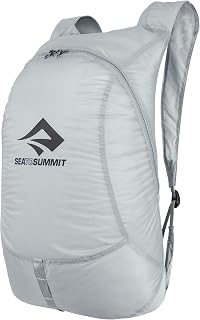
The Ultra-Sil line is the gold standard for ultralight paddlers. This model weighs roughly 100 grams and compresses to the size of a fist when empty — meaning it takes up almost no hull space when you’re not using it. The 20-liter capacity is perfect for 2–3 night trips, and the roll-top closure is bulletproof per long-running threads on r/CampingGear and r/Ultralight.
The catch: the fabric is genuinely thin. It’s not fragile, but it’s not a tank. If you’re regularly dragging it across sharp rocks or running gnarly whitewater, you’ll want a pack with more abrasion resistance. For calm-water and moderate-current trips, though, this is the lightest solution on the market.
Best for Paddlers Who Want a Real Backpack Feel

Watershed makes gear specifically for paddlers, and the Ocoee is their answer to the dry bag backpack question. It’s a 25-liter hybrid that works as both a dry bag and a true backpack — meaning it has a padded back panel, a hip belt that actually distributes weight, and shoulder straps that feel like they belong on your body rather than being an afterthought.
The roll-top closure is paired with a zippered outer pocket (waterproof but accessible), so you can grab your headlamp or sunscreen without opening the main compartment. Per manufacturer spec sheet, it weighs around 400 grams, which is heavier than the Sea to Summit but still well within ultralight territory. The trade-off is comfort and usability on longer portages.
Best for Beginners on a Budget
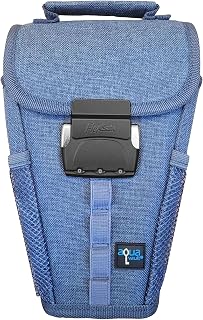
If you’re new to kayak camping and not ready to commit to premium gear, the AquaVault is a solid entry point. It’s a 25-liter pack with a roll-top closure, decent shoulder straps, and a hip belt. The seams are taped, and the fabric is 500D PVC — thicker than ultralight options, but durable enough to handle rocky shores and branch strikes.
The weight is higher than premium ultralight models (roughly 600 grams per owner reports), but the price is significantly lower, and the durability is real. According to aggregated Amazon reviews, most owners report 3–5 years of regular use before needing replacement, which is solid for the price tier.
Best for Cold-Water Expeditions
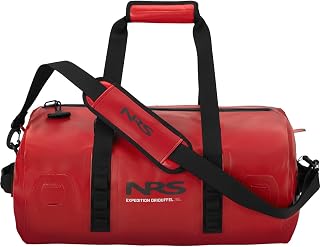
NRS is a whitewater company, and their Expedition Duffel shows it. This is not an ultralight pack — it weighs closer to 800 grams — but it’s built to survive repeated capsizes, cold water, and multi-week trips. The roll-top closure is burly, the seams are bomb-proof, and the fabric is thick enough to shrug off sharp rocks and branches.
If you’re paddling in the Pacific Northwest, Alaska, or anywhere cold water is a real hazard, the NRS is worth the weight penalty. The durability and reliability justify the extra grams, especially on longer expeditions where a gear failure is a real problem.
Best for Minimalists Who Hate Redundant Gear
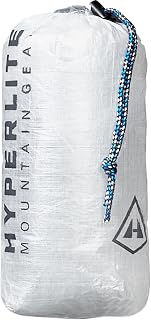
Hyperlite is a ultralight backpacking brand that recently released a paddler-focused dry sack. The Stuff Pack is a 20-liter ultralight dry bag that doubles as a compression bag — meaning it compresses your sleeping bag and clothes at the same time it seals them. The roll-top is intelligent: it compresses as you pack lighter, so a half-full pack takes up half the space.
Per manufacturer spec sheet, it weighs around 120 grams and uses a hybrid fabric that’s lighter than Sea to Summit but slightly more durable. It’s not as comfortable as a true backpack for long portages, but for paddlers who value minimalism and don’t mind a duffel carry, it’s the most elegant solution.
How to Pack Your Dry Bag Backpack for Maximum Efficiency
Packing a dry bag backpack is different from packing a regular backpack. You can’t just stuff things in — you need to think about compression and weight distribution.
Start with heavy items at the bottom. Your sleeping pad, stove, and food go in first. This keeps the center of gravity low and prevents the pack from feeling top-heavy when you’re carrying it.
Compress your sleeping bag aggressively. A sleeping bag is the single bulkiest item in most kayak camping kits. Use compression straps or roll it as tightly as possible. This makes room for everything else and keeps the pack from expanding beyond your hull.
Pack clothes in a smaller dry sack inside the main pack. This seems redundant, but it serves two purposes: it keeps your clothes organized, and if the main pack ever gets compromised, your clothes are still dry. Plus, a small inner sack is easier to grab when you’re at camp.
Put your tent on top, where it’s easy to access. You’ll want to set it up as soon as you land, so keep it accessible. Most ultralight tents compress to fist-size, so they don’t take much space.
Use the roll-top intelligently. Don’t roll it tight from the start. As you pack, roll it gradually. This lets you compress the pack as it fills, rather than having a half-full pack that’s still taking up maximum space.
Waterproofing Your Dry Bag Backpack: What Actually Works
A dry bag backpack is only as waterproof as its weakest seal. Here’s what matters:
The roll-top closure is your primary defense. A proper roll-top (three to four folds, sealed with a buckle or velcro) will keep water out even if you capsize. Per long-running threads on r/kayaking, most paddlers report that a well-executed roll-top survives full submersion without leaking.
Taped seams are non-negotiable. If the seams are only stitched, water will eventually find its way in. Look for packs that explicitly mention taped or welded seams on the inside.
The zipper (if present) is a vulnerability. Some dry bag backpacks have zippered pockets. These are convenient but not waterproof. Keep important items (like your lighter or first-aid kit) in the main compartment, sealed by the roll-top. Use zippered pockets only for things that can tolerate getting damp.
Test your pack before your trip. Submerge it in a bathtub or river for a few minutes. If water gets in, you’ve found the leak before it ruins your sleeping bag. Most failures happen at the roll-top closure if it’s not executed properly, or at the seams if they’re not taped.
For more on waterproofing your entire kit, see How to Waterproof Ultralight Gear for Multi-Day Kayak Trips.
Dry Bag Backpack vs. Multiple Smaller Dry Bags: Which Is Better?
Some paddlers skip the dry bag backpack entirely and instead use multiple smaller dry bags (one for clothes, one for sleep system, one for food). This has real advantages:
- Flexibility. You can pack and unpack without opening everything.
- Weight distribution. Smaller bags spread weight more evenly across the hull.
- Modularity. If one bag gets damaged, you’ve still got the others.
The downside is that multiple bags are harder to carry on portages, and they take up more hull space because they don’t compress as efficiently as a single pack.
For most kayak campers, a single ultralight dry bag backpack is the better choice. It’s simpler to manage, easier to carry, and more efficient in a hull. But if you’re running tight on hull space or prefer the modular approach, two or three smaller dry bags (10–15 liters each) can work just as well.
Weight Comparison: What You’re Actually Carrying
Here’s what the numbers look like for popular ultralight dry bag backpacks, per manufacturer spec sheets and aggregated owner reports:
- Sea to Summit Ultra-Sil Dry Daypack: ~100 grams
- Hyperlite Mountain Gear Stuff Pack: ~120 grams
- Watershed Ocoee: ~400 grams
- AquaVault Waterproof Backpack: ~600 grams
- NRS Expedition Duffel: ~800 grams
The difference between the lightest and heaviest is less than a pound. If you’re portaging frequently or paddling a small hull, those grams matter. If you’re mostly paddling and camping, the extra weight of a more comfortable pack might be worth it.
Durability and Failure Points
Even the best ultralight dry bag backpacks have weak points. Here’s what to watch:
The roll-top closure can wear out. After 50+ trips, the velcro or buckle might stop sealing as tightly. This is fixable (replacement velcro is cheap), but it’s something to monitor.
Thin fabrics can abrade. If your pack is dragging across sharp rocks or branches regularly, ultralight fabric will eventually wear through. This isn’t a design flaw — it’s a consequence of going light. Thicker packs last longer but weigh more.
Shoulder straps can separate. On packs where straps are glued rather than stitched, the attachment point can fail after years of use. This is rare but worth checking before buying.
Seams can develop pinhole leaks. Even taped seams can eventually fail if they’re bent repeatedly or exposed to UV for years. Most packs last 5–10 years before this becomes a problem.
For more on repairs and maintenance, see Best Ultralight Repair Kit for Kayak Camping Emergencies.
How a Dry Bag Backpack Fits Into Your Whole System
A dry bag backpack isn’t just a container — it’s part of your overall kayak camping system. The right choice depends on what else you’re carrying.
If you’re using an ultralight tent (under 1 kg), ultralight sleeping bag, and ultralight pad, a 20–25 liter pack makes sense. Everything compresses efficiently, and the pack itself stays light.
If you’re using heavier sleep system components or carrying extra food and fuel for a longer trip, you might need 30–35 liters. The pack gets bigger, but it’s still manageable in most kayak hulls.
The key is matching the pack size to your actual trips, not buying a one-size-fits-all solution. A 40-liter pack on a weekend trip is wasted capacity. A 20-liter pack on a week-long expedition is a constant frustration.
See Ultralight Kayak Camping Checklist: Essential Gear List 2026 for a full breakdown of what goes into your pack on different trip lengths.
FAQ
Q: Can I use a regular backpack as a dry bag?


