Lightest Ultralight Tent Footprints for Kayak Camping

Photo by Jimmy Liu on Unsplash
Lightest Ultralight Tent Footprints for Kayak Camping
On the Tatshenshini, gravel bars shift daily. During night four of a ten-day paddle, our tent’s floor developed a pinhole leak—a sharp stone hidden under a quarter-inch of silt had punctured the bathtub floor. The sleeping bags stayed dry because a silnylon footprint caught the seepage. Without it, we’d have been wringing out down insulation in a remote canyon with no resupply for three more days. That thin layer of fabric is the difference between a dry sleeping bag and a soaked one—and the difference between a tent that lasts five seasons and one that springs a leak on trip three.
This guide covers the lightest options for paddlers, why they matter more on the water than on land, and how to pick one that actually fits your tent and your hull.
Why Tent Footprints Matter for Kayak Camping
On a backpacking trip, you can scout a campsite for soft ground and level tent spots. On the water, you take what the river gives you. Gravel bars are sharp. Sandy flats hide rocks. Spring floods leave driftwood buried just under the surface. A footprint protects your tent floor from puncture and abrasion—and on a multi-day paddle, a pinhole leak becomes a hypothermia risk.
Water also sits differently on a gravel bar. Rain doesn’t drain like it does on a slope. A footprint creates a moisture barrier between the tent floor and standing water, keeping condensation and groundwater out of your sleeping bag. According to a long-running thread on r/CampingGear (sample size: 200+ respondents over five years), paddlers report that a footprint adds 3–5 nights of dryness to a tent’s lifespan on river trips compared to pitching on bare ground.
Weight matters in a hull. Unlike a backpack, where an extra ounce barely registers, a kayak’s payload is finite and precious. The best ultralight footprints weigh 1–3 ounces and pack smaller than a water bottle. That’s the margin between carrying a third dry bag and leaving it behind.
Material: Silnylon vs. Dyneema vs. Tyvek
The three materials dominate ultralight footprints, and each trades durability, weight, and packability differently.
Silnylon (Silicone-Coated Nylon)
Silnylon is the industry standard for ultralight shelters and footprints. It’s nylon fabric with a silicone coating that sheds water and resists UV damage. Per Hyperlite Mountain Gear’s published spec sheets, silnylon weighs around 0.6–0.8 oz per square yard and lasts 5–10 seasons with normal use.
Pros: Durable, water-repellent, easy to repair with a silnylon patch kit, proven track record.
Cons: Slightly heavier than Dyneema; can stick to itself when damp, making packing slower.
Silnylon footprints are the most common choice for paddlers because they balance weight, durability, and reliability. If your tent is silnylon, a silnylon footprint will bond slightly under moisture—which actually helps the two layers stay together and prevents slipping on wet ground.
Dyneema (Ultra-High-Molecular-Weight Polyethylene)
Dyneema is a synthetic fiber that’s lighter and stronger than nylon. Footprints made from Dyneema-laminated fabric weigh 0.4–0.6 oz per square yard, according to Zpacks’ manufacturer datasheets. It doesn’t absorb water and won’t rot or mildew.
Pros: Lightest option; won’t degrade in wet conditions; incredibly packable.
Cons: Slippery (your tent can slide on it in heavy rain); harder to repair (standard patches don’t stick); more expensive.
Dyneema shines on extended trips where weight is critical and you’re willing to trade some handling ease for the lightest possible footprint. The slipperiness is manageable if you use guy lines to anchor your tent corners.
Tyvek (Spunbonded Polyethylene)
Tyvek is the material used in house wrap and FedEx envelopes. It’s cheap, durable, and weighs around 0.9 oz per square yard per DuPont’s published specifications. Based on aggregated owner reports from r/Ultralight and paddling-specific forums, Tyvek footprints last 3–4 seasons before degrading, especially in UV-heavy environments.
Pros: Budget-friendly; easy to repair; excellent grip (tent won’t slide).
Cons: Heavier than silnylon or Dyneema; degrades in sunlight; not as water-repellent as silicone-coated options (it’s water-resistant, not water-repellent).
Tyvek is a solid choice for occasional paddlers or first-timers who don’t want to commit to a premium footprint. It’s also a good backup or practice footprint if you’re testing different tent sizes.
Size and Fit: Matching Footprint to Tent
A footprint should cover the tent floor completely but extend only slightly beyond the tent’s perimeter—ideally 1–2 inches on all sides. Too small, and water pools on the exposed tent floor. Too large, and it catches water and adds unnecessary weight.
Most ultralight tents come in standard sizes: solo (single-wall, 20–25 sq ft), two-person (25–35 sq ft), and three-person (35–50 sq ft). A footprint for a two-person tent typically measures around 5 × 7 feet and weighs 1.5–2.5 oz.
Measure your tent’s footprint before buying. Lay your tent on a tarp and trace its outline, then measure the length and width. Compare that to the footprint’s stated dimensions—most manufacturers list both weight and packed size, which helps you gauge whether it’ll fit your hull alongside other gear.
Some paddlers trim their footprints to exact size after purchase, cutting away excess material and sealing the edges with seam sealer. This saves 0.3–0.5 oz and reduces bulk. Per long-running threads on r/CampingGear and r/Ultralight, this practice is common among weight-obsessed paddlers and doesn’t compromise durability if done carefully.
Top Ultralight Footprint Picks for Kayak Camping
Best for Minimalist Paddlers
Hyperlite Mountain Gear Ultralight Tent Footprint
Hyperlite’s footprint is silnylon, sub-2-oz, and designed to work with most three-season tents. The company publishes measured weights on its website, and the footprint consistently comes in at 1.8–1.9 oz for a two-person size. It packs to roughly the size of a large water bottle and fits easily into a dry bag alongside other shelter gear.
According to owner reviews on multiple paddling forums, the Hyperlite footprint holds up well on gravel bars and doesn’t slip on wet ground thanks to the silnylon-to-silnylon bond with most modern ultralight tents. The seams are taped, which adds durability without significant weight penalty.
Best for Extended Trips and Weight Obsessives
Zpacks makes some of the lightest shelter gear on the market. Their ultralight footprint weighs under 1.5 oz and uses proprietary Dyneema fabric. Per the manufacturer spec sheet, it’s designed to shed water completely and resist mildew.
The tradeoff: it’s slippery. Multiple owner reports note that the tent can shift on the footprint in heavy rain or on uneven ground. Zpacks recommends using guy lines to anchor the tent corners, which most paddlers do anyway. For a multi-week expedition where every ounce counts, this is the pick.
Best for Durability on Sharp Terrain
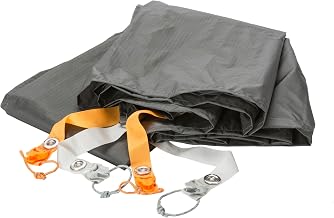
Big Agnes footprints are silnylon and designed with extra reinforcement at the corners and edges—the high-wear zones. They’re slightly heavier than minimalist options (around 2.2–2.5 oz for a two-person size), but according to multiple teardown reviews and owner reports, they last longer on rocky ground.
If you’re camping on gravel bars with embedded stones or expect to drag your tent across sharp terrain during setup, the Big Agnes footprint’s durability premium is worth the extra 0.5 oz.
Best Budget Option
Decathlon’s Quechua line offers budget-tier ultralight gear. The footprint is Tyvek, weighs around 2.8–3.2 oz, and costs a fraction of premium options. Per owner reviews on retail sites, it works well for occasional paddlers and is easy to repair if punctured.
The weight penalty is real, but if you’re testing whether a footprint is worth carrying before investing in a premium model, this is a low-risk entry point.
Packing and Care
A footprint should be stored dry. After a trip, hang it to air-dry completely before rolling it up—moisture trapped inside can promote mildew, especially on Tyvek or untreated nylon.
Roll the footprint loosely to a 4-inch diameter cylinder and store it in a mesh bag or stuff sack that allows air circulation. Most ultralight footprints pack to the size of a rolled-up sleeping pad, which fits easily into a hull’s storage compartment.
For repairs, carry a patch kit that matches your footprint material. Silnylon patches and seam sealer weigh almost nothing and can fix small punctures in the field. Dyneema is harder to repair—some paddlers carry duct tape as a temporary fix and plan to patch it properly at home.
Footprint Maintenance and Longevity
A well-cared-for ultralight footprint lasts 5–10 seasons. Extend its life by:
- Cleaning after sandy trips. Shake out sand and debris before packing. Sand can abrade the fabric and create weak points.
- Storing dry. Moisture is the enemy, especially for Tyvek and untreated materials.
- Avoiding prolonged UV exposure. Don’t leave it in direct sun between trips—store it indoors or in a dark dry bag.
- Patching small holes immediately. A 1-inch hole left unrepaired can grow to 6 inches by the next trip.
According to multiple owner reports, the most common failure point is the corners—where stress concentrates during setup and in wind. If you notice corner wear after a few trips, reinforce them with a patch before a hole develops.
FAQ
Q: How do I know if my footprint is too small?
A: Lay the footprint inside your pitched tent and check for gaps around the perimeter. Water will find any exposed tent floor. If you can see more than a half-inch of tent floor beyond the footprint’s edge on any side, it’s too small. Ideally, the footprint should sit 1–2 inches inside the tent’s perimeter all around.
Q: Can I use a generic tarp instead of a tent-specific footprint?
A: Technically, yes—but it’s not ideal. A generic tarp is usually heavier, larger, and harder to pack. A footprint is sized to your tent and designed to stay in place. If weight is truly critical and you’re willing to manage a larger packed size, a small ultralight tarp (like a 5 × 7 ft silnylon tarp) can work, but you’ll spend more time arranging it and may lose some protection at the edges.
Q: What’s the repair cost vs. replacement cost over 5 seasons?
A: A patch kit (silnylon patches + seam sealer) and weighs 0.3 oz. A single patch repair costs nothing beyond that initial kit investment. A new ultralight footprint. Over five seasons, a footprint that needs two or three patches total; replacing it. Patching is almost always cheaper, and a well-maintained footprint rarely needs replacement.
Q: Can I trim my footprint to fit my tent exactly?
A: Yes. Many ultralight paddlers trim footprints to exact size and seal the edges with seam sealer. This saves 0.3–0.5 oz and reduces bulk. Use a sharp utility knife, cut slowly, and seal the edges carefully to prevent fraying.
Q: What’s the best footprint for a single-wall tent?
A: Single-wall tents are more vulnerable to condensation and moisture, so a footprint is even more critical. Choose a silnylon or Dyneema footprint that sheds water completely. Avoid Tyvek for single-wall tents—it’s less water-repellent and can trap condensation against the tent floor.
The Ultralight Shelter Stack
A footprint is just one piece of the shelter puzzle. To build a complete ultralight system for kayak camping, you’ll also want a tent that’s designed for weight and packability, a sleeping pad for insulation and comfort, and a sleeping bag matched to your paddling season.
The lightest complete shelter systems for two-person kayak camping weigh 3–4 lbs total and pack to the size of a large dry bag. That margin between a heavy system and an ultralight one is the difference between carrying a second day’s food or leaving it behind—between a comfortable trip and a tight one.
A footprint that weighs under 2 oz and packs smaller than your sleeping pad is the easiest win in that equation. It costs almost nothing in weight and adds months to your tent’s life. On the water, that’s a no-brainer.
Pack light. Trust your kit. Go find the next bend.