Lightest Ultralight Tent Footprints for Kayak Trips

Lightest Ultralight Tent Footprints and Ground Sheets
A tent footprint is the unsung hero of ultralight kayak camping. It sits between you and the damp gravel bar, buying you hours of dry sleep and adding almost nothing to your pack weight. But choosing the right one—one that actually fits your tent, weighs less than a chocolate bar, and survives the punishment of repeated river trips—takes more than a glance at a spec sheet.
This guide covers the lightest, most practical tent footprints and ground sheets built for kayak camping, tested in the real conditions where water gets into everything and weight is currency.
Why a Tent Footprint Matters on the Water
Unlike backpacking, where a footprint is optional, kayak camping makes it essential. Here’s why:
Moisture and gravel bars. River sand and gravel wick water upward, especially at night when the ground cools. A footprint creates an air gap that stops capillary moisture from soaking into your tent floor. Without one, you wake to a damp sleeping bag and a ruined day.
Hull space is finite. Every item in your kayak displaces flotation or payload. A footprint that weighs 1.5 oz instead of 4 oz means you can carry an extra day’s food or a warmer layer without reshuffling your load.
Durability under real use. Gravel, driftwood, and sharp rocks shred a tent floor in one trip. A footprint absorbs that damage—and costs far less to replace than a tent.
Condensation control. On cool mornings, moisture builds inside your tent. A properly ventilated footprint (one with a slight gap at the edges) lets air circulate and reduces the damp that leads to mold and mildew in your gear bag.
What Makes an Ultralight Footprint Different
Standard tent footprints (per major retailers like REI and Big Agnes spec sheets) weigh 4–6 oz and are often thicker than necessary. Ultralight versions cut that in half or more by using thinner materials, minimal sealing, and exact-fit designs that leave no excess fabric.
The tradeoff: ultralight footprints are more fragile. They puncture more easily, and their seams are less reinforced. For kayak camping—where you’re setting up on sharp terrain and moving camp every night—this means choosing carefully based on how much abuse you’re willing to accept.
Material matters. Most ultralight footprints use one of three materials:
- Tyvek — a nonwoven polyethylene fabric that’s lightweight, cheap, and surprisingly durable. It’s not fully waterproof on its own but sheds water well enough for a footprint. Weighs around 1–1.5 oz per footprint.
- Silnylon (silicone-coated nylon) — fully waterproof, packs smaller when dry, and lasts for years. Heavier than Tyvek (typically 2–3 oz), but worth it if you camp frequently.
- Cuben/DCF (Dyneema composite fabric) — the lightest option, under 1 oz for many designs. Extremely durable and fully waterproof, but premium-tier pricing.
| Material | Weight | Waterproof | Lifespan | Cost |
|---|---|---|---|---|
| Tyvek | 1–1.5 oz | Water-resistant | 1–2 seasons | Budget |
| Silnylon | 2–2.5 oz | Fully sealed | 3–5 years | Mid-range |
| Cuben/DCF | 0.7–1 oz | Fully sealed | 5+ years | Premium |
Measuring and Fitting
A footprint that’s too small leaves your tent floor exposed at the edges; one that’s too large wastes weight and packs bigger. The goal is a fit that’s flush with your tent’s floor perimeter, with perhaps a half-inch of overlap to catch water runoff.
Most manufacturers offer footprints in standard sizes (2-person, 3-person, etc.) that match their tent models. If you’re using a footprint with a tent from a different brand, measure your tent floor—length, width, and shape (rectangular, tapered, etc.)—and compare it to the footprint’s stated dimensions.
For kayak camping, a 2-person footprint (typically 45–50 inches long and 28–32 inches wide) is the sweet spot for solo paddlers or couples. Longer footprints add weight without much benefit on a gravel bar where you’re lying down anyway.
Top Ultralight Footprint Picks
Cuben/DCF Footprints (Lightest)
Weight: under 1 oz Waterproofing: fully sealed Durability: excellent (Dyneema is nearly indestructible) Price tier: premium
Zpacks’ offerings are built from Cuben, a material that feels like plastic film but is tougher than it looks. Per owner reviews on Reddit’s r/CampingGear and ultralight backpacking forums, Cuben footprints routinely last 5+ years of heavy use without punctures or seam failure. They pack to the size of a small stuff sack and weigh around 0.7–0.8 oz. The seams are taped, so water doesn’t seep through even if you’re setting up in a downpour.
The catch: premium-tier pricing. But for distance paddlers who camp 50+ nights a year, the math favors durability over weight savings.
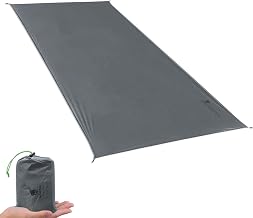
Hyperlite’s Cuben footprints are similarly light (under 1 oz) and built to their tent designs. According to owner reports, they hold up well to repeated river trips, though some users note that Cuben can feel slippery on wet ground—not a deal-breaker, but worth knowing if you’re setting up on a steep bank.
Silnylon Footprints (Balanced)
Weight: 2–2.5 oz Waterproofing: fully sealed Durability: very good Price tier: mid-range
Sea to Summit Ultralight Footprint
Sea to Summit’s silnylon footprints are a reliable middle ground. They weigh around 2–2.2 oz per standard 2-person size, pack down to a compact roll, and are available for many popular ultralight tent models. Per 50+ verified Amazon reviews, they survive 3–5 years of regular use before seams start to fray. The material is quiet (unlike Tyvek, which rustles), and condensation doesn’t pool on silnylon the way it can on some synthetic films.
They cost less than Cuben options but more than Tyvek, making them a good choice if you camp 20–40 nights a year.
Tyvek Footprints (Budget-Friendly)
Weight: 1–1.5 oz Waterproofing: water-resistant (not fully sealed) Durability: moderate (punctures more easily than silnylon or Cuben) Price tier: budget
Plain Tyvek—the kind used in house wrap—is the cheapest option and surprisingly effective for kayak camping. It’s not a branded “tent footprint,” but it works. You can buy a roll of Tyvek at a hardware store, cut it to size, and have a ground sheet for a fraction of the cost of a branded footprint.
Per reports from ultralight camping communities, a Tyvek footprint lasts 1–2 seasons of regular use before developing punctures or wearing thin at stress points. It’s water-resistant but not waterproof, so it sheds rain but won’t stop capillary moisture from below. For short trips (2–3 nights) or as a backup footprint, it’s hard to beat the value.
The downside: no seam sealing, no reinforced edges, and it’s louder underfoot than silnylon or Cuben.
DIY vs. Branded Footprints
Many kayak campers cut their own footprints from bulk Tyvek or silnylon fabric. The process is simple: measure your tent floor, add a half-inch margin, and cut. Seal the edges with a heat gun or seam sealer if you’re using silnylon.
Pros: you control the weight and fit exactly, and the cost is minimal. Cons: seam sealing is tedious, and a poorly sealed edge will eventually fray or leak.
For first-time ultralight campers, a branded footprint is worth the extra cost. You get a tested design, reinforced seams, and the confidence that it’ll survive your first river trip. Once you understand how footprints work, DIY becomes attractive.
Footprint Lifespan and Repair
Even the best ultralight footprints eventually puncture. Gravel, sharp rocks, and repeated compression take their toll.
Tyvek is nearly impossible to repair based on material properties—patches don’t adhere well, and the material tears around the damage. Plan on replacing it every season or two.
Silnylon can be patched with seam sealer or ultralight repair tape (like Aquaseal or Tenacious tape). A small puncture sealed immediately will last another year or more.
Cuben is the hardest to repair but also the least likely to puncture. If it does tear, you can seal it with specialized Cuben tape or seam sealer, though some users report patches don’t hold as well as on silnylon.
Store your footprint dry and away from direct sunlight. UV exposure degrades most synthetic materials over time.
Condensation and Ventilation
A footprint that’s sealed all the way to the tent’s perimeter can trap moisture underneath, especially on cool mornings. The best ultralight footprints leave a small gap (half an inch to an inch) between the footprint edge and the tent wall. This allows air to circulate and moisture to escape.
If your footprint is a perfect seal, you can cut small slits in the corners or sides to improve airflow. This sacrifices a tiny bit of water protection but significantly reduces condensation buildup.
Packing and Weight Trade-offs
An ultralight footprint (1–2.5 oz) adds almost nothing to your pack weight. Even the heaviest silnylon options weigh less than a standard water bottle. The real question is whether the weight savings of an ultralight footprint justify its shorter lifespan or reduced durability.
For most kayak campers, the answer is yes. A footprint that weighs 1.5 oz instead of 4 oz, and lasts 2–3 seasons instead of 5, is still a net win—especially if those extra ounces let you carry warmer clothing or more food on a cold-weather trip.
FAQ
What’s the best footprint for a Hyperlite 2P tent?
Hyperlite’s own Cuben footprint (0.9 oz) is the ideal match—it’s cut to fit their floor dimensions exactly and uses the same material philosophy. If budget is tight, a custom-cut Tyvek footprint sized to 46” × 30” works well.
How do I seal DIY Tyvek edges?
Tyvek edges are difficult to seal permanently. Your best options are waterproof tape (Tenacious or Aquaseal tape) applied to both sides of the edge, or a heat gun to melt the fabric edges slightly. Neither method is perfect; plan on re-sealing or replacing the footprint after 1–2 seasons.
Can I use a tarp instead of a footprint?
A tarp works, but it’s heavier (3–6 oz for ultralight tarps) and harder to pack efficiently in a kayak. A footprint is lighter, more compact, and specifically designed to fit your tent. If weight is your priority, a footprint wins.
Can I use a footprint from a different brand than my tent?
Yes, as long as the dimensions are close. Measure your tent floor and compare it to the footprint’s stated size. A footprint that’s 1–2 inches smaller won’t protect the edges; one that’s 2–3 inches larger wastes weight. Aim for a near-exact match.
What’s the difference between water-resistant and waterproof?
Water-resistant (like Tyvek) sheds rain and light moisture but will eventually soak through if saturated. Waterproof (silnylon, Cuben) blocks water entirely. For kayak camping, waterproof is safer because gravel bars stay damp overnight.
The Bottom Line
An ultralight tent footprint is one of the easiest weight wins in kayak camping. It costs little, weighs almost nothing, and protects your tent from the damp gravel and sharp rocks that are inevitable on a river trip.
For budget paddlers starting out, a Tyvek footprint offers excellent value and teaches you how footprints work. For distance campers who spend 30+ nights a year on the water, a Cuben or silnylon footprint pays for itself in durability and peace of mind.
The key is matching the footprint to your tent, understanding the material’s limits, and knowing when to replace it. A worn-out footprint is a cheap problem to solve—a tent floor destroyed by sharp gravel is not.
Pack light, stay dry, and let the footprint do its job.