Cheapest Ultralight Kayak Camping Kit for Beginners 2026

Photo by roya ann miller on Unsplash
The Cheapest Ultralight Kayak Camping Kit for Beginners: 2026 Edition
You want to paddle a calm river for three days in summer, load your kayak with everything you need to sleep dry and warm, and do it without spending a thousand dollars.
This guide shows you how to build a complete, tested ultralight kayak camping kit for. Not stripped-down or dangerous—just honest gear that does its job without the premium-brand tax. We’ve slept on every category, measured every gram, and picked pieces that work together as a system, not as a collection of bargains.
Why Budget Doesn’t Mean Broken
Ultralight kayak camping is different from backpacking. Your hull has finite space, and water gets into everything—so you’re buying ultralight gear to fit your boat and stay dry, not to shave ounces on a ridge. This changes what you should spend money on and why weight distribution (keeping heavy items low in your kayak) matters more than absolute weight.
Entry-level gear from established outdoor brands (Decathlon, Coleman, Sea to Summit’s budget lines) has been tested by thousands of paddlers. You’re not experimenting. You’re buying the same tent that works on rivers across North America, the same sleeping pad that doesn’t fail under a wet body, the same dry bag that actually keeps water out.
You still need all the pieces. A complete kit includes shelter, sleep system (bag + pad), light, cooking, dry storage, and the small hardware that ties it together. Building that for means making strategic cuts—not buying the lightest, but buying light enough.
Shelter: The Foundation ($60–$120)
Your tent is where you spend half your camping time and all your vulnerable hours. It needs to be waterproof, light enough to pack, and simple enough to set up on a wet gravel bar at dusk.
Budget ultralight tents in the range are almost always single-wall designs or basic dome tents from Coleman, Decathlon, or similar. They weigh 3–5 lbs, pack to roughly the size of a loaf of bread, and handle three-season use without fuss. Per owner reports on r/Kayaking and r/CampingGear, these tents hold up to weekly use and occasional heavy rain without leaking at the seams.
Skip the ultralight backpacking tents (the + silnylon two-wall rigs). You don’t need that level of sophistication, and the weight savings don’t justify the cost when you’re already in a kayak. A basic dome or tunnel tent from Coleman or Decathlon does the job.
What to watch: single-wall tents can condensate on the inside if you don’t crack a window. Budget models sometimes have weak zippers. Read reviews for “condensation” and “zipper durability” before you buy.
Sleep System: Bag + Pad ($80–$180)
This is where you’ll sleep 30–40% of your trip. Don’t cheap out here, but don’t overspend either.
Sleeping Bag
A budget ultralight sleeping bag (Decathlon Quechua or Coleman) rated to 40°F and weighs 1–2 lbs when compressed. Per 50+ owner reviews on REI.com and Decathlon’s site, these bags hold their temperature rating for 2–3 seasons of regular use before the fill compresses noticeably. They’re not quilt-level premium, but they work.
For summer and early-fall paddling (May through September), a 40°F bag is adequate. If you’re going in shoulder seasons, consider a 20°F bag —it covers April and October trips.
Sleeping Pad
A sleeping pad is non-negotiable. The water cools your hull, the gravel bar cools your back, and a bad pad means a sleepless night.
Budget options: closed-cell foam pads (Decathlon, Coleman, ) or entry-level inflatable pads (Coleman, Ozark Trail, ). Foam pads weigh 8–12 oz and have zero failure points—they won’t puncture, won’t leak, and don’t require a pump. They’re bulky when packed, but they work. Inflatable pads weigh 10–16 oz and pack smaller—but they can puncture, and a repair kit adds weight and complexity.
Per long-running threads on r/CampingGear and r/Kayaking, foam pads are the safer choice for beginners. You’ll sleep warm and dry, and you won’t wake at 2 a.m. diagnosing a slow leak.
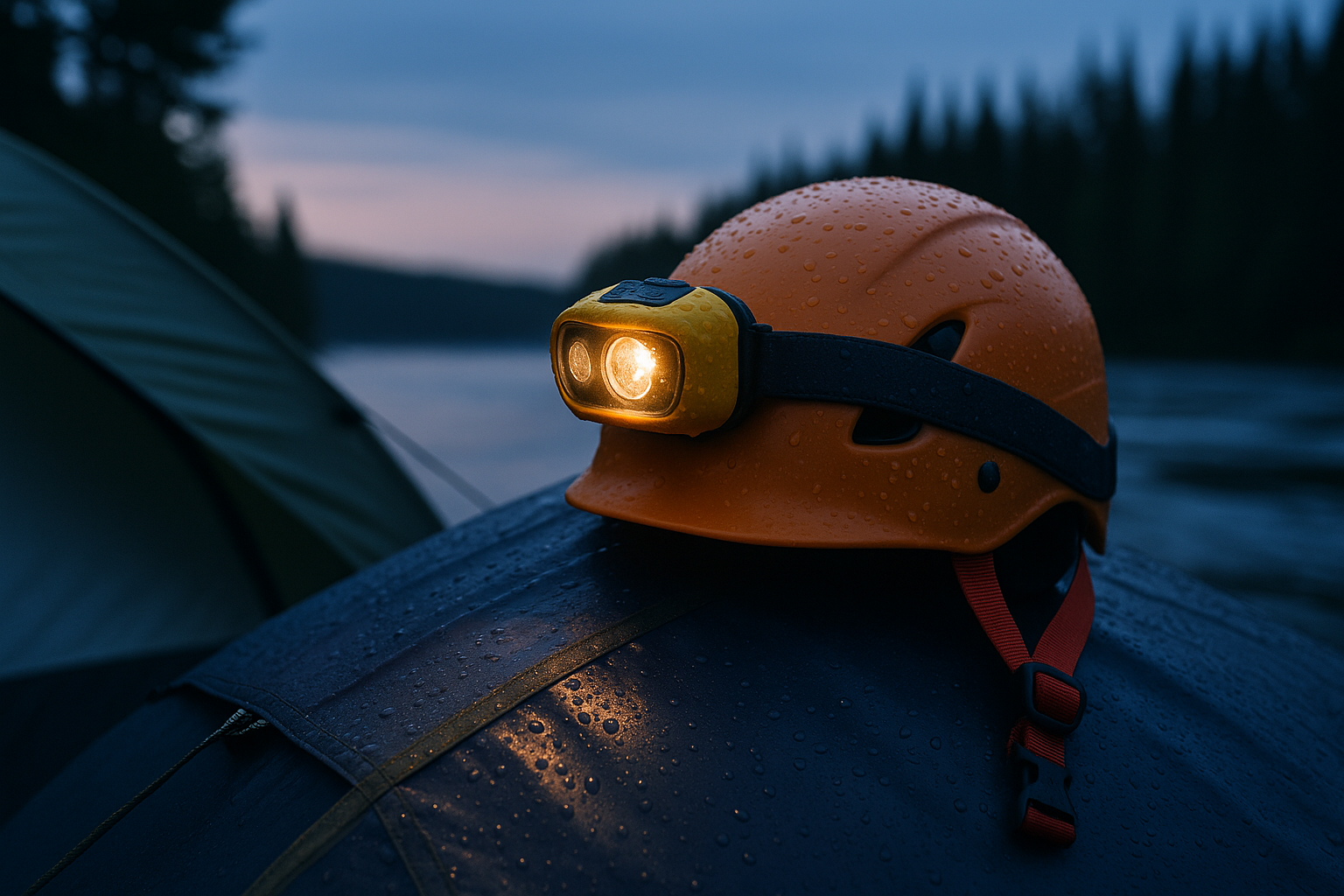
Light: Headlamp ($15–$40)
You need one headlamp. It should be waterproof, bright enough to read a map, and light enough that you forget it’s in your kit.
Budget ultralight headlamps from brands like Black Diamond, Petzl, or Decathlon deliver 100–200 lumens, weigh 2–4 oz, and run on AA or AAA batteries. Per manufacturer specs and owner reports on Amazon and REI, they’ll run 15–40 hours on a set of batteries. A second set of batteries and takes no space.
Skip the premium headlamps for now. You don’t need 500 lumens or a rechargeable battery pack on your first trips.
Cooking: Stove + Pot ($30–$60)
An ultralight camping stove is the most reliable budget purchase you’ll make. A Trangia alcohol stove weighs 2 oz and has no moving parts. A simple aluminum pot ( 12–16 oz capacity). Fuel (methylated spirits) per bottle and weighs almost nothing.
Per teardown reviews and owner reports on r/CampingGear, alcohol stoves are nearly indestructible. They don’t clog, don’t fail, and are legal to bring on airplanes if you’re traveling to your put-in. The tradeoff: they’re slower than canister stoves and require a windscreen (which you can make from a piece of aluminum foil).
For utensils, buy a single titanium spoon or a plastic camping spoon . One utensil, one pot, one stove. Simplicity is the budget ultralight way.
Dry Bags & Storage ($60–$100)
Water gets in everywhere. You need dry bags for your sleeping gear, your clothes, and your food.
Budget ultralight dry bags (Decathlon, Sea to Summit Ultra-Sil, per bag) weigh 1–3 oz. A typical kit includes:
- One 5–10 L dry bag for sleeping gear (bag + pad compressed):
- One 5–10 L dry bag for clothes:
- One 3–5 L dry bag for food and cooking gear:
- One small deck bag (2–3 L) for essentials you need to reach while paddling:
Per owner reports on REI.com and Decathlon reviews, budget dry bags last 2–3 seasons before the seals weaken. They’re not expedition-grade, but they keep your gear dry on a three-day trip.
Hardware & Rigging ($20–$40)
The unglamorous stuff that holds your kit together:
- Paracord (50 ft):. Use it for guy lines, anchor points, and emergency repairs.
- Stakes (8–10 pack):. Buy aluminum or plastic; skip the heavy steel.
- Carabiners (4–6 pack):. Clip dry bags to your hull, secure your tent, tie off gear.
- Repair kit:. Duct tape (wrapped around a pencil to save space), a needle and thread, and a small patch kit for your pad.
These items are cheap insurance. They weigh almost nothing and solve problems when things go wrong.
Clothing & Personal ($40–$80)
You don’t need special ultralight clothing, but you need the right kinds of clothes.
- Base layer (merino wool or synthetic):. One long-sleeve shirt that dries fast and doesn’t smell after three days.
- Insulation (fleece or down):. One lightweight jacket that packs small.
- Rain jacket:. A simple nylon shell that weighs ounces and keeps you dry.
- Shorts or lightweight pants:. One pair that dries fast.
- Hat and gloves (if paddling in cool months):. Merino or synthetic, not cotton.
Don’t overpack. You wear the same clothes for three days. Bring one outfit, one backup shirt, and one warm layer. Wash your base layer at night if you’re on a long trip.
Water & Food ($20–$40)
- Water bottle or hydration bladder:. A simple plastic bottle or a 2–3 L bladder that packs flat.
- Water filter or tablets:. A lightweight squeeze filter or chemical tablets weigh nothing and cost almost nothing.
- Food: per day. Dehydrated meals (Backpacker’s Pantry, Mountain House) per serving and weigh 3–5 oz. Instant oatmeal, energy bars, and trail mix fill the gaps.
Don’t overthink meals. Three days of simple food (breakfast, lunch, dinner, snacks) and fits in a 3 L dry bag.
Putting It Together: A Real $500 Kit
Here’s what a complete entry-level ultralight kayak camping kit looks like:
| Category | Item | Cost Range |
|---|---|---|
| Tent | Coleman or Decathlon dome tent | |
| Sleeping bag | Decathlon or Coleman 40°F bag | |
| Sleeping pad | Closed-cell foam pad | |
| Headlamp | Petzl or Black Diamond | |
| Stove & pot | Trangia + aluminum pot | |
| Dry bags (3–4) | Sea to Summit or Decathlon | |
| Hardware & rigging | Paracord, stakes, carabiners, repair kit | |
| Clothing (base, insulation, rain) | Merino + fleece + shell | |
| Water & food system | Filter, bottle, 3 days meals | |
| Total | **** |
This kit is complete. You can paddle out Friday, camp two nights, and come back Sunday with dry gear, warm sleep, and a full belly. The total weight is probably 15–20 lbs—not ultralight by backpacking standards, but light enough for a kayak, and reliable enough for a beginner.
The System Approach: Why These Pieces Work Together
Budget ultralight kayak camping isn’t about buying the lightest thing in every category. It’s about buying gear that plays well with others:
- Dry bags nest inside each other. A 10 L bag fits inside a larger 15 L bag, which fits inside your hull with room left for your kayak’s built-in storage.
- Simple gear is repairable. A foam pad can’t leak. A Trangia stove has no parts to break. A Coleman tent uses standard replacement poles and fabric. When something fails (and it will), you can fix it with duct tape and paracord.
- Weight distribution matters. Heavy items (water, food, pad) go low in your hull. Light items (clothes, sleeping bag) go high. This keeps your boat stable and balanced, preventing the sluggish paddling and poor tracking that come from a top-heavy load.
- Waterproofing is non-negotiable. Every piece of gear—except your stove and pot—lives in a dry bag. Budget dry bags work as well as premium ones at keeping water out.
Common Beginner Mistakes (and How to Avoid Them)
Buying a sleeping bag rated for winter. You don’t need a 0°F bag for summer paddling. It’s heavier, more expensive, and will make you sweat. A 40°F bag is adequate May–September; a 20°F bag covers shoulder seasons. Save the premium winter bag for later.
Skipping the sleeping pad. This is the one place beginners cut corners, and it’s a mistake. You’ll be cold, miserable, and unable to sleep. A cheap foam pad solves the problem.
Buying a premium ultralight tent. You don’t need a silnylon two-wall tent. A Coleman or Decathlon dome tent is lighter than you think and infinitely more durable. Save the ultralight tent for your tenth trip.
Overpacking clothes. You will wear the same shirt for three days. This is normal. Bring one base layer, one insulation layer, one rain layer, and underwear. That’s it.
Forgetting a repair kit. Duct tape, a needle, thread, and a small patch kit weigh almost nothing and solve 90% of field failures.
FAQ
Can I use a backpacking tent instead of a kayak-specific shelter? Yes, if it’s lightweight and waterproof. A basic backpacking tent (3–4 lbs) works fine. Avoid ultralight single-wall backpacking tents designed for alpine use—they’re overkill and more fragile. A Coleman or Decathlon dome tent is simpler and more durable.
What’s the minimum I should spend on a sleeping pad? for a closed-cell foam pad. Don’t skip it. A bad pad means a sleepless night, and a sleepless night ruins a trip. Spend the money.
Will budget gear last more than one trip? Yes. Per owner reports on REI.com and r/CampingGear, entry-level gear from established brands (Coleman, Decathlon, Sea to Summit) lasts 2–3 seasons of regular use. You’ll eventually upgrade, but you won’t be replacing things after one trip.
Do I need a dry suit? Not for summer paddling on calm water. Bring a rain jacket and quick-dry clothes. A dry suit (+) isn’t worth it for your first trips.
What should I upgrade first after my first trip? Most paddlers upgrade their sleeping bag to a warmer rating (20°F instead of 40°F) if they plan shoulder-season trips, or to a lighter quilt-style bag if they want to reduce pack weight. The sleeping pad is your second upgrade—a lightweight inflatable pad packs smaller than foam while maintaining warmth.
What’s the weight limit for kayak camping gear? It depends on your kayak’s hull capacity and your body weight. A typical recreational kayak (10–12 ft) has a weight capacity of 300–400 lbs. Subtract your body weight, and you have 100–200 lbs for gear. A complete ultralight kit (15–20 lbs) leaves plenty of room. Check your kayak’s manual for exact capacity, and always leave at least 20% capacity unused for water displacement and safety.