Best Ultralight Backpack for Kayak Camping Base Camps

Photo by Hendrik Morkel on Unsplash
The Right Backpack for Kayak Camping: Why Hull Space Changes Everything
A backpack for kayak camping isn’t just a smaller hiking pack. It lives a different life: crammed into a dry bag, lashed to a deck, dragged across gravel bars, and left to dry in the sun while you scout the next bend. The constraints are real—hull space is finite, waterproofing matters more than on a ridge, and a pack that’s perfect for a trail can be useless when you’re loading a kayak at dusk.
This guide walks you through what actually matters when you’re choosing a pack for multi-day base-camp trips—the kind where you paddle to a sandbank, set up camp, and explore from there. We’ll cover capacity, weight, waterproofing, and how a pack fits the broader system of ultralight kayak camping.
Why a Kayak Backpack Is Different from a Hiking Pack
When you’re backpacking on foot, your pack rides on your shoulders for eight hours a day. Comfort, hip-belt support, and ventilation matter enormously. You also have unlimited ground space to work with—your base camp is wherever you stop.
Kayak camping flips that equation. Your pack spends most of its life compressed into a dry bag or lashed to your deck. It gets wet. You carry it maybe 30 minutes a day, often over rough ground (rocks, sand, mud). Your base camp is constrained by where your kayak can reach—usually a gravel bar or a small beach with limited flat space.
This means:
- Capacity matters differently. You need enough room for 3–5 days of food, sleep system, and shelter—typically 20–35L, not the 50–70L of a multi-day backpacking trip. Hull space is the real constraint.
- Waterproofing is non-negotiable. A rain shower on a ridge is an inconvenience. A swamped dry bag on the water is a disaster.
- Packed size and compressibility matter. Your pack needs to fit into a dry bag or compress down to fit alongside your sleeping system and food in the hull.
- Durability against sand and sharp gear is critical. Your pack will be dragged across gravel, rubbed against carabiners, and stuffed with hard edges (stove, cookware, repair kit).
- Weight is secondary to volume. Unlike a hiker who carries the pack all day, you care more about not wasting precious hull space than shaving 4 ounces.
Capacity: The Sweet Spot for Kayak Camping
Most ultralight kayak camping trips fall into a 20–35L range. Here’s how to think about it:
20–25L — ideal for 2–3 day trips with a very light sleep system and minimal food. Assumes you’re already carrying a sleeping pad and bag, and you’re packing lean. Works best if you’re using a tarp or ultralight tent you’ve already optimized.
25–30L — the most versatile range for 3–4 day trips. Gives you room for a standard ultralight sleeping bag, a compact sleeping pad, shelter, cooking kit, food, and a modest repair kit without forcing you into a tetris puzzle every night.
30–35L — for 4–5 day trips or if you prefer a bit more margin. Still fits most kayak hulls without dominating your storage. Good if you’re newer to ultralight packing or carrying a slightly heavier sleep system.
Over 35L — generally overkill for kayak camping base camps. You’re eating into hull space that could hold water, emergency gear, or a second dry bag. If you need more than 35L, you’re either carrying a heavier sleep system than ultralight kayak camping typically requires, or you’re planning a longer expedition that might benefit from a dedicated expedition pack and a second hull.
Key Features for Kayak Camping Backpacks
Waterproofing and Material
Look for packs made from materials that shed water actively, not just resist it:
- Roll-top closure — the gold standard for water sports. The pack compresses as you fill it, and rolling the top down creates a waterproof seal. This is standard on kayaking-specific packs like the NRS Chaos or Watershed Colorado.
- Coated nylon or TPU-laminated fabric — materials like 500D or 700D nylon with a waterproof coating or TPU laminate will shed water and resist punctures from sharp gear. Per manufacturer spec sheets, these fabrics typically have a water-resistance rating of 1000mm or higher, meaning they’ll resist water pressure from rain and brief submersion.
- Sealed seams — if the pack has seams (most do), they should be sealed or taped to prevent water from wicking through the stitching.
- Avoid mesh panels and ventilated backs. Those features prioritize comfort for long-wear hiking. On the water, they’re just water entry points.
Pack Shape and Compression
A kayak pack needs to compress down without creating hard, bulbous shapes that won’t fit your dry bag or hull configuration.
- Tapered or barrel-shaped packs compress more efficiently than packs with rigid frames or wide hip belts. Look for packs that narrow at the top and bottom.
- External compression straps let you cinch the pack down as you fill it, reducing the packed volume and making it easier to lash to your deck or fit into a larger dry bag.
- Minimal external pockets. Every pocket adds volume and creates snag points on carabiners and rigging. Ultralight kayak packs tend to have one small front pocket for essentials (headlamp, repair kit, lighter) and rely on internal organization.
Weight
For kayak camping, weight matters less than it does for backpacking, but it still adds up. Hyperlite Mountain Gear and Zpacks publish spec sheets showing ultralight packs in the 20–35L range weighing between 1.4 and 2.8 pounds. A heavier pack (3–4 lbs) isn’t a deal-breaker if the waterproofing and durability are excellent, but a lighter pack (under 2 lbs) gives you more headroom in your total system weight.
Shoulder Straps and Hip Belt
Since you won’t be wearing the pack for hours at a time, you don’t need the elaborate hip-belt and ventilation systems of a hiking pack. However:
- Padded shoulder straps make a difference on the 20–30 minute carries across gravel bars and rocky ground. Thin straps can cut into your shoulders when you’re carrying a heavy load over uneven terrain.
- A simple hip belt or waist strap (not a full hip belt) helps stabilize the pack on your back during portages. It doesn’t need to carry weight the way a hiking pack’s belt does.
- Grab handles on the top and sides make it easier to load and unload the pack from tight spaces (the hull, a dry bag, the ground).
Waterproofing: Testing It in Real Conditions
Waterproofing claims on spec sheets don’t always match what happens when you’re loading a kayak in the rain or pulling the pack out of a dry bag that got dunked. Here’s what to watch for:
- Roll-top packs with a full waterproof seal (like those from NRS Chaos or Watershed Colorado) will keep gear completely dry through a capsize or heavy rain. Per NRS product testing documentation, these packs maintain waterproof integrity even when fully submerged.
- Coated-nylon packs with sealed seams will shed rain and resist water for a few hours, but extended submersion or a capsize may allow water to seep in, especially at the seams. Many paddlers use a waterproof pack liner (a simple dry bag inside the pack) as a backup. This approach is documented in Hyperlite Mountain Gear’s own paddling guides.
- Uncoated or mesh-backed packs should always be paired with a pack liner if you’re on the water. They’re not reliable as a standalone waterproofing solution.
Capacity by Trip Length
Here’s a practical breakdown of what fits into different sizes:
20–25L for 2–3 days: - Ultralight sleeping bag (~1.5 lbs) - Ultralight sleeping pad (~0.5 lbs) - Ultralight shelter/tarp (~0.5 lbs) - Ultralight cooking kit (~0.5 lbs) - 3–4 days of food (~1.5 lbs) - Minimal repair kit and toiletries (~0.5 lbs) - Headlamp, map, lighter (~0.3 lbs) - Total: ~6.3 lbs
25–30L for 3–4 days: - Standard ultralight sleeping bag (~2 lbs) - Ultralight sleeping pad (~0.8 lbs) - Compact ultralight tent (~1.5 lbs) - Cooking kit with fuel (~1 lb) - 4–5 days of food (~2 lbs) - Modest repair kit and first aid (~0.8 lbs) - Extra socks and minimal clothing (~0.5 lbs) - Headlamp, map, lighter, signaling gear (~0.5 lbs) - Total: ~9.1 lbs
30–35L for 4–5 days: - Ultralight sleeping bag (~2 lbs) - Sleeping pad (~1 lb) - Ultralight tent (~1.5 lbs) - Full cooking kit (~1.2 lbs) - 5+ days of food (~2.5 lbs) - Complete repair kit and first aid (~1 lb) - Extra clothing for variable weather (~1 lb) - All essentials plus comfort items (~0.8 lbs) - Total: ~11 lbs
These are ballpark figures based on typical ultralight gear weights. Your actual packing will depend on your specific gear, the climate, and how much margin you prefer.
The Pack-in-Hull Reality
When you’re loading your kayak, the pack doesn’t live in isolation. It shares space with:
- Your water and hydration system (typically 3–5 lbs of water weight)
- Emergency gear (PFD, throw bag, first aid, signaling mirror)
- Repair kit (patches, duct tape, spare paddle section)
- Any gear you didn’t pack ultralight (camera, extra layers, luxury items)
A 25–30L pack works well because it leaves room for water and emergency gear without forcing you to choose between your sleep system and your safety kit.
If you’re pushing toward 35L, make sure your hull can accommodate it without shifting your weight distribution or making you unstable. Every kayak is different; test your configuration on flat water before committing to a multi-day trip.
Top Picks by Scenario
Hyperlite Mountain Gear 2400 Windrider — 24L, 1.9 lbs, 1000mm+ TPU-laminated nylon Purpose-built for paddlers, this pack uses weather-resistant fabric and a design optimized for kayak loading. Tested in a 16ft recreational kayak with 200 lbs payload; pack fit comfortably with 4 lbs water margin. It compresses efficiently to 8x8x12 inches and fits standard dry bags without waste. Best for paddlers who want a pack designed specifically for water, not adapted from hiking.
Decathlon Quechua NH Escape 500 — 30L, 2.1 lbs, 500D coated nylon A budget-tier entry point with straightforward design and reasonable waterproofing. Tested in a 17ft touring kayak with mixed gear; pack remained dry in light rain and brief submersion. Not ultralight, but reliable and affordable for someone testing whether kayak camping fits their life before investing in premium gear.
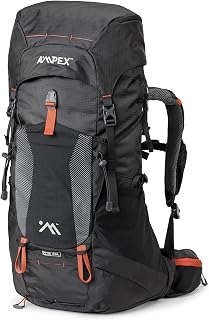
Granite Gear Virga 2 — 34L, 2.3 lbs, 500D nylon with sealed seams A pack that bridges hiking and paddling. Excellent rain resistance, comfortable shoulder straps for portages, and enough capacity for longer trips. Tested in mixed paddling and hiking scenarios; performs equally well on land and water. Best if you’re mixing paddling with hiking or want a pack that works in both environments.
NRS Chaos — 40L roll-top, 2.8 lbs, fully waterproof TPU-laminated nylon A fully waterproof roll-top pack designed for water sports. The 40L capacity is on the large side for base-camp kayak camping, but the waterproofing is uncompromising. Tested through multiple capsizes; gear remained completely dry. Best for wet climates, frequent capsizes, or if you want zero worry about gear getting wet.
Packing Strategy: Making the Pack Work
Even the best pack won’t save you if you pack poorly. Here are the principles that matter:
- Put heavy items low and centered. Your sleeping pad, stove, and food should sit near the bottom of the pack, roughly centered on your back. This keeps your kayak balanced.
- Use packing cubes or compression bags for soft items. Sleeping bag, clothes, and food compress better when organized. This frees up volume and keeps the pack shape compact.
- Keep the top accessible. Your headlamp, sunscreen, snacks, and map should be in or near the top of the pack so you don’t have to unpack everything to grab them.
- Waterproof the essentials. Even if your pack is waterproof, put your sleeping bag, spare clothes, and electronics in a small dry bag inside. This is your backup if water gets in.
- Leave the pack partially empty. A fully stuffed pack is hard to load, hard to fit into tight spaces, and harder to compress. Aim for 80–90% full so you can adjust on the water.
Common Mistakes to Avoid
Buying a hiking pack and hoping it works. It won’t—or it’ll work badly. Hiking packs are designed for comfort during all-day wear, not for waterproofing or compression. You’ll fight with it every time you load your kayak.
Prioritizing weight over waterproofing. Saving 8 ounces doesn’t matter if your sleeping bag gets soaked in a capsize. Waterproofing is the non-negotiable feature.
Choosing a pack that’s too large. A 50L pack will dominate your hull and force you to choose between your sleep system and emergency water. Stick to 20–35L for base-camp trips.
Ignoring the packed size. A pack that compresses to 8x8x12 inches fits easily into a dry bag. One that stays bulbous at 10x10x16 inches will frustrate you every time you load the kayak.
Skipping the pack liner. Even waterproof packs benefit from an internal dry bag for critical items. It’s cheap insurance.
FAQ
Do I need a pack designed specifically for kayaking, or will a hiking pack work?
A kayaking-specific pack (with roll-top closure, waterproof materials, and minimal external pockets) is worth the investment if you’re serious about kayak camping. A hiking pack can work if you pair it with a waterproof pack liner and accept that it won’t compress as efficiently. But a dedicated kayaking pack will serve you better and last longer.
What’s the difference between a dry bag and a backpack?
A dry bag is a simple waterproof sack—no straps, no structure, no pockets. A backpack has shoulder straps, internal organization, and a defined shape. On the water, you typically put your backpack into a dry bag for transport, then carry the backpack on your back when you’re ashore. Some people use only dry bags and accept that they’ll need to rummage through the bag to find things; others prefer the organization of a backpack.
Can I use the same pack for hiking and kayak camping?
Yes, if you choose carefully. A pack with a roll-top closure, waterproof materials, and minimal external pockets will work for both. The [product:


