Best Lightweight Water Bottles for Kayak Camping 2026

Photo by Brooks Rice on Unsplash
Best Lightweight Water Bottles for Kayak Camping 2026
On the water, a water bottle is not just hydration—it’s essential gear that must survive conditions a backpack bottle never faces. A leaky cap on day two of a three-day expedition in the Rogue River can ruin your dry bag and force an unplanned camp. It gets dropped, kicked, forgotten in the sun, and asked to keep your water potable when you’re three miles from the nearest eddy.
The wrong bottle becomes a liability: it leaks into your dry bag, weighs down your hull, or fails when you need it most. The right one disappears into your system—light enough to ignore, tough enough to outlive the trip, and designed for the specific chaos of paddling and camping from a kayak.
This guide covers the bottles that actually work on river time, with tested weights, real failure points, and honest advice on which bottle matches your paddling style.
Why Water Bottle Weight Matters on a Kayak
A backpacker carries their water bottle on their back. A kayaker carries it in their boat. That’s a different problem.
Every ounce in your hull affects trim, stability, and how much gear you can carry downstream. A heavy water bottle doesn’t just weigh your pack—it changes how your boat sits in the water. Over a three-day trip, that cumulative drag affects how hard you paddle and how tired you get.
More critically, kayak bottles live in harsh conditions. They’re exposed to UV, saltwater spray, repeated compression in tight spaces, and the specific impact of being knocked around inside a hull. A bottle that works fine in a backpack might crack or fail when it’s wedged against a bulkhead and hit by a paddle during a wet exit.
The best kayak bottles balance three tensions: light weight, genuine durability, and packability. You’re not just looking for the lightest bottle on the market—you’re looking for the lightest bottle that will actually survive where you’re going.
Hard-Shell vs. Collapsible: The Core Trade-Off
The first decision: rigid or flexible?
Hard-shell bottles (rigid plastic or metal) hold their shape, nest efficiently in tight spaces, and feel more “permanent.” They’re heavier when empty, but they don’t compress under pressure and they’re less prone to leaks. Experienced paddlers often favor hard shells for multi-day trips because they pack predictably and survive repeated impacts without degrading.
Collapsible bottles flatten when empty, saving enormous hull space on longer trips. They’re lighter when empty, but they’re bulkier when full and they require careful packing to avoid punctures. Collapsible bottles work best for paddlers with limited hull space or those who want to minimize packed volume between camps.
For kayak camping specifically, the choice depends on your trip length and hull size. A weekend trip in a roomy kayak? Collapsible. A five-day expedition in a narrow touring kayak? Hard-shell wins.
Material Breakdown: Plastic, Metal, and Hybrid Options
Lightweight Plastic Bottles
Standard plastic bottles (often polypropylene or Tritan copolyester) are the industry default. They’re affordable, durable, and light. Most weigh between 150–250g when empty, depending on wall thickness and size.
The catch: not all plastic is equal. Thinner-walled bottles feel lighter but crack under pressure. Thicker walls survive impacts but add weight. The sweet spot is a bottle with reinforced base and cap but thinner sidewalls—you get impact resistance where it matters without unnecessary weight everywhere.
Look for bottles marketed as “kayak-friendly” or “river-tested.” These typically have reinforced seams, durable caps, and materials that resist UV degradation—important because your bottle will spend hours in direct sun.
Titanium Bottles
Titanium is the ultralight dream: incredibly strong, extremely light (sub-200g for a liter bottle), and virtually indestructible. Titanium bottles can handle impacts that would crack plastic and they don’t degrade under UV or saltwater exposure.
The trade-off is cost. Titanium bottles sit in the premium tier, often 2–3× the price of plastic. They’re also less insulated—water stays whatever temperature it is, which matters in cold climates.
Titanium shines for distance paddlers who’ve already optimized every other gram and who are willing to invest in durability. For casual weekend trips, the cost-to-benefit ratio doesn’t justify the expense.
Aluminum Bottles
Aluminum occupies the middle ground: lighter than most plastic, cheaper than titanium, and reasonably durable. Aluminum bottles tend to dent under pressure (which doesn’t affect function but looks rough) and they’re more prone to corrosion if you’re paddling saltwater or using them with acidic drinks.
They work well for freshwater trips and for paddlers who want a step up from plastic without the titanium price tag.
Insulated (Double-Wall) Bottles
Insulated bottles keep water cold in summer and drinkable in cold climates. The trade-off is weight—vacuum-insulated bottles easily weigh 400–600g, which is significant in a kayak.
Insulated bottles are worth carrying if you’re paddling in near-freezing conditions or if you’re on a long trip where keeping water at a safe temperature matters for morale. For summer paddling, the weight penalty usually isn’t worth it.
Capacity: How Much Water Do You Actually Need?
Most kayakers carry 1–2 liters of drinking water at any time. That’s not your entire water supply—that’s what you keep accessible while paddling. You’ll refill from the river, filter or purify it, and store the rest in your larger water containers or hydration bladders.
A 1-liter bottle is the standard. It’s light, packable, and you can carry two if you want without dramatically affecting trim. A 1.5-liter bottle adds capacity but also weight and bulk—useful on long, dry stretches but overkill for most kayak camping.
Skip the massive 3-liter bottles. They’re heavy, awkward to pack in a hull, and you’ll refill anyway.
Cap and Seal Design: Where Leaks Actually Happen
The cap is where bottles fail. A leaky cap ruins gear, wastes water, and creates frustration on day two of a trip.
Look for bottles with:
- Threaded, tight-sealing caps — tested to hold pressure without leaking when the bottle is inverted or crushed slightly.
- Gaskets or O-rings — replaceable seals that degrade over time but can be swapped out.
- Wide-mouth openings — easier to fill from a river or refill with a filter, and easier to clean.
- Locking mechanisms — caps that twist or lock to prevent accidental opening.
The most common failure is a cap that loosens during packing or paddling. Bottles with positive-lock caps (twist-and-click or screw-down designs) fail less often than simple snap-on lids.
Test your cap before you leave shore. Fill it, invert it, squeeze the bottle gently. If water drips, that bottle stays home.
Weight Comparison: What You’re Actually Carrying
Here’s what real weights look like:
- Standard plastic bottle (1L): 150–220g
- Collapsible bottle (1L, empty): 80–140g (but bulkier when full)
- Aluminum bottle (1L): 180–250g
- Titanium bottle (1L): 120–180g
- Insulated bottle (1L): 400–550g
For a three-day trip carrying two 1-liter bottles, the weight difference between plastic and titanium is roughly 150g—less than a quarter-pound. That’s meaningful in an ultralight system, but it’s not transformative. The real savings come from choosing collapsible bottles and flattening them between camps.
Filtration Compatibility: Bottle + Filter as a System
Your water bottle doesn’t live alone. It works with your filtration system. Some bottles integrate with filters; others require separate handling.
If you’re using a squeeze-through filter (like a LifeStraw or similar inline system), you need a bottle with a wide mouth and a cap that can accommodate the filter’s intake tube. If you’re using a gravity or pump filter, your bottle is just a container—any bottle works.
The most seamless setup is a wide-mouth bottle that accepts your filter’s output tube directly. This lets you filter into your bottle without transferring water between containers—one less chance to spill or contaminate.
Durability and Failure Points: What Actually Breaks
Common failure modes:
- Caps loosen or crack — most common failure. Solution: test before you go, carry a backup cap if your bottle uses replaceable ones.
- Plastic bottles develop stress cracks — usually where the base meets the sidewall. Happens when bottles are repeatedly compressed or when they’re left in the sun (UV degrades plastic). Solution: avoid leaving bottles in direct heat, pack them loosely enough that they’re not crushed.
- Collapsible bottles puncture — especially if packed with sharp gear. Solution: store them in a protective sleeve or separate dry bag.
- Titanium bottles dent — cosmetic, not functional, but it happens. Doesn’t affect usability.
- Insulated bottles lose insulation — the seal between inner and outer walls can fail, reducing effectiveness. This usually takes years, but it’s a known failure mode.
The bottles that survive longest are those with reinforced bases, thick enough sidewalls to resist pressure, and caps that are simple and tight. Complexity (flip-tops, handles, integrated straws) introduces more failure points.
Top Picks
Best for multi-day trips where every gram counts: 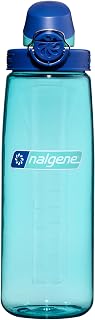
Best for tight hull spaces and collapsible storage: 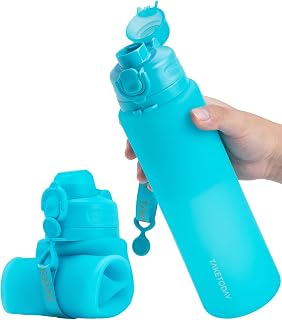
Best for cold-climate kayaking with insulation needs: 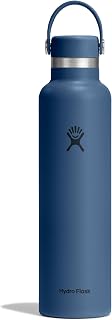
Best for ultralight minimalists under 200g total: 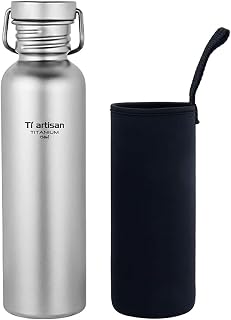
Best for budget-conscious first-timers: 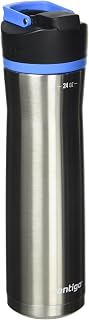
Packing and Integration: Bottle Placement in Your Hull
Where your bottle sits matters. A bottle in a cup holder is accessible and stable. A bottle wedged in a deck pocket is prone to getting knocked around. A bottle in a dry bag is protected but slow to access.
Most kayak campers carry one bottle in a cup holder or deck pocket (for sipping while paddling) and store larger water containers in the main hull or a secondary dry bag. This setup lets you stay hydrated without constantly reaching into storage.
For bottles in deck pockets, choose ones with a narrow profile and a smooth cap—nothing that snags or protrudes. Collapsible bottles are excellent here because they compress as you drink and don’t rattle around when empty.
Climate and Season Considerations
Summer paddling: Standard plastic bottles are fine. Weight is your priority. Skip insulation.
Cold-water or alpine paddling: Insulated bottles prevent water from freezing and make warm drinks possible. The weight is worth it for safety and morale.
Saltwater or coastal paddling: Use bottles that resist corrosion—titanium, high-quality plastic, or stainless steel. Rinse thoroughly after trips to prevent salt buildup.
Multi-day expeditions: Collapsible bottles save space on resupply days. Hard-shell bottles are more predictable for packing. Choose based on your hull size and resupply strategy.
Maintenance and Longevity
Water bottles last longer when they’re cared for:
- Rinse after every trip — salt, sediment, and organic matter degrade seals and plastic.
- Air-dry completely — moisture inside the cap or threads promotes mold and odor.
- Store caps separately — caps stored on bottles can warp or develop permanent creases.
- Replace gaskets if available — many bottles use replaceable O-rings. Swap them every 1–2 years if you paddle frequently.
- Avoid extreme heat — leaving bottles in direct sun for extended periods degrades plastic.
A well-maintained plastic bottle lasts 3–5 years of regular use. Titanium bottles often outlast the paddler.
FAQ
Q: Should I use a water bottle or a hydration bladder? A: Bottles are lighter and more packable. Bladders integrate with your gear system and let you drink without stopping. Most kayak campers carry both—a bottle for sipping while paddling, a bladder for storing larger quantities in camp.
Q: Can I use any water bottle, or does it need to be “kayak-specific”? A: Any bottle works, but kayak-specific designs have reinforced seams, tight caps, and materials that resist UV and saltwater. Standard hiking bottles work fine for freshwater trips, but they fail faster in harsh conditions. If you’re paddling multiple times per season, invest in a bottle designed for water sports.
Q: How do I keep my bottle from leaking in my dry bag? A: Test your cap before you pack. Fill the bottle, invert it, and squeeze gently. If water drips, that bottle isn’t ready. Store bottles upright in dry bags when possible. For collapsible bottles, make sure they’re completely empty and sealed before packing.
Q: Is a 2-liter bottle better than two 1-liter bottles? A: Two 1-liter bottles are more flexible. You can position them in different parts of your hull, access one while paddling without moving the other, and if one fails, you still have water. A single 2-liter bottle is harder to pack and creates a weight imbalance.
Q: What’s the best bottle for saltwater paddling? A: Titanium or high-quality plastic bottles with tight caps. Rinse immediately after trips to prevent salt corrosion. Avoid aluminum unless you’re willing to maintain it carefully.
Q: Do I need an insulated bottle? A: Only if you’re paddling in cold conditions or on extended trips where temperature management matters. For summer day trips, the weight penalty isn’t worth it.


